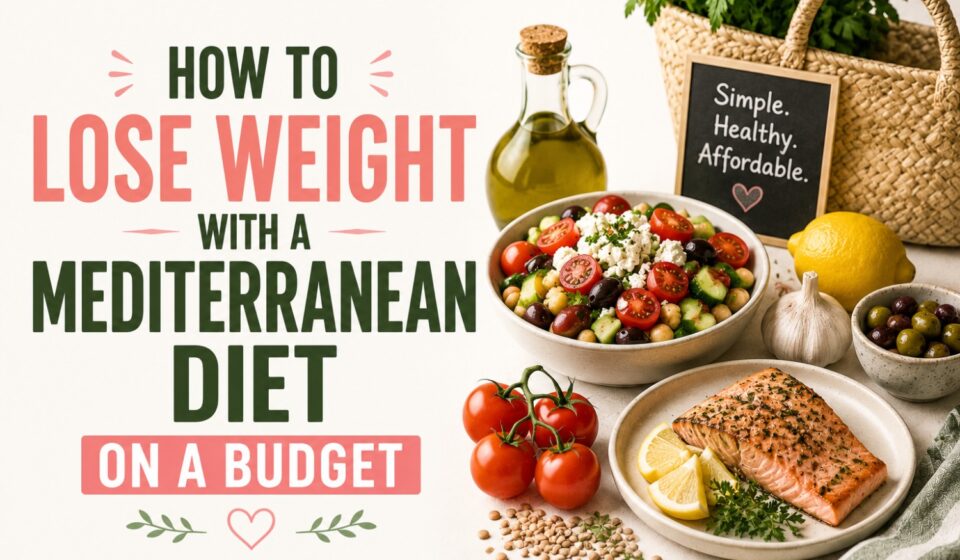

The world’s most evidence-backed diet doesn’t have to be expensive — here’s how to eat Mediterranean on $50 a week or less
The Mediterranean diet consistently ranks as the best overall diet in evidence-based rankings — and for weight loss specifically, it has stronger long-term evidence than virtually any other dietary pattern. But it has a reputation for being expensive: olive oil, fresh fish, feta cheese, imported olives, and sun-dried tomatoes don’t come cheap.
The reality: the Mediterranean diet is built on some of the cheapest foods available — legumes, whole grains, seasonal vegetables, and eggs. The expensive items (fresh seafood, premium olive oil, artisan cheeses) are enhancements, not requirements.

Here’s the complete guide to eating Mediterranean on a genuine budget.
Why the Mediterranean Diet Works for Weight Loss
Before the budget strategies — understanding why this pattern works explains what’s essential vs. what’s optional.
The core mechanisms:
High fiber from legumes and vegetables: As covered in our guide to the best high fiber foods for weight loss, fiber is one of the most powerful satiety tools available. The Mediterranean diet is extraordinarily high in fiber from its emphasis on legumes, vegetables, and whole grains — producing satiety that naturally reduces calorie intake without counting.
Adequate protein: Fish, legumes, eggs, and dairy provide complete, satisfying protein that preserves muscle during fat loss.
Anti-inflammatory foods: As covered in our guide to the best anti-inflammatory foods for weight loss, reducing dietary inflammation directly supports fat loss. Olive oil, fatty fish, vegetables, and herbs produce one of the most anti-inflammatory dietary patterns available.
Minimal ultra-processed food: The Mediterranean diet’s natural emphasis on whole foods eliminates the primary drivers of excess calorie intake — ultra-processed snacks, sweetened beverages, and refined carbohydrates.
Sustained adherence: The most evidence-backed finding on the Mediterranean diet — people stick to it. The food is genuinely satisfying and delicious. Long-term adherence produces long-term results.
The Budget Mediterranean Pantry
These are the foundation foods — all inexpensive, all genuinely Mediterranean, all central to the diet’s weight loss benefits:
Legumes (Cheapest High-Protein, High-Fiber Foods Available)
Dried lentils: $1-2 per pound — produces 3x the volume when cooked. Lentils cook in 20-30 minutes without soaking. Per cup cooked: 18g protein, 15g fiber, 230 calories.
Dried chickpeas: $1-2 per pound — soak overnight, cook 1-2 hours (or use a slow cooker). Per cup cooked: 12g protein, 12g fiber, 270 calories. Or canned chickpeas for convenience at slightly higher cost.
Canned beans (black, kidney, white/cannellini): $1-1.50 per can — rinse and use immediately. Per cup: 15g protein, 11-15g fiber.
Split peas: Among the cheapest legumes — high fiber, high protein, cooks quickly.
Legumes are the cornerstone of budget Mediterranean eating — providing protein and fiber at a cost per gram that significantly undercuts meat and fish.
Whole Grains
Oats (rolled): $2-3 for a large bag — dozens of servings. The most affordable whole grain breakfast.
Brown rice or white rice: $1-2 per pound. White rice is more Mediterranean-traditional; brown rice has more fiber.
Whole grain pasta: $1.50-2.50 per package — multiple servings. Whole grain provides more fiber and protein than refined.
Barley: One of the most Mediterranean grains — underused, very cheap, extremely high in beta-glucan fiber.
Bulgur wheat: Very cheap, cooks quickly (just soak in boiling water), high fiber — used in tabbouleh and grain bowls.
Vegetables
Seasonal and frozen: Seasonal fresh vegetables are significantly cheaper than out-of-season. Frozen vegetables are nutritionally equivalent to fresh and dramatically cheaper year-round.
Budget vegetable staples:
- Canned tomatoes (diced, crushed, whole): $0.75-1.50 per can — essential in Mediterranean cooking
- Onions: among the cheapest vegetables, form the flavor base of most dishes
- Garlic: cheap, essential to Mediterranean flavor
- Carrots, celery: cheap, versatile
- Frozen spinach: fraction of fresh spinach cost, equivalent nutrition
- Frozen mixed vegetables: cheap, convenient
- Cabbage: one of the cheapest vegetables per pound
- Sweet potatoes: cheap, nutritious, versatile
Protein
Eggs: $3-6 per dozen — one of the best protein-per-dollar foods available. Central to Mediterranean breakfast and as protein in many dishes.

Canned sardines and mackerel: $1.50-3 per can — the most affordable fatty fish, with the highest omega-3 content of any canned fish. More Mediterranean-authentic than tuna, arguably more nutritious, and often cheaper.
Canned tuna: $1-2 per can — 34g protein, widely available, versatile.
Whole chicken: Significantly cheaper than chicken parts — roast whole, use for 2-3 days across multiple meals.
Chicken thighs: Usually cheaper than breast, more flavorful, forgiving to cook.
Fats
Olive oil: Buy a mid-size bottle rather than premium small bottles — the price per ounce drops significantly. Look for sales and buy in larger quantities. A bottle used wisely lasts weeks.
Important: You don’t need extra virgin olive oil for everything. Use regular olive oil for cooking (cheaper), reserve extra virgin for dressing and finishing (where the flavor actually matters).
Dairy
Plain yogurt (full-fat or low-fat): Often cheaper than Greek yogurt — you can strain regular yogurt through a cheesecloth overnight to make your own “Greek” yogurt at significantly lower cost.
Feta cheese: Used in small amounts as a flavor agent — a block of feta goes a long way if used as a garnish rather than a primary ingredient.
Parmesan: Used grated in small quantities — a block lasts weeks. The strong flavor means a small amount provides significant impact.
The $50 Weekly Mediterranean Shopping List
Approximate prices — varies by location and season
Proteins:
- 1 dozen eggs: $4
- 3 cans sardines or mackerel: $5
- 3 cans tuna: $4
- 500g dried lentils: $2
- 2 cans chickpeas: $3
Vegetables:
- 2 cans diced tomatoes: $2
- 1 bag frozen spinach: $2
- 1 bag frozen mixed vegetables: $2
- 1 head of garlic: $1
- 3 onions: $2
- 1 bag carrots: $2
- 1 cucumber: $1
- Cherry tomatoes: $3
- 1 bell pepper: $1
- 2 sweet potatoes: $2
Grains:
- 1 bag rolled oats: $3
- 1 bag whole grain pasta: $2
- 1 bag brown rice: $2
Fats and flavor:
- Olive oil (mid-size bottle, replenish weekly): $5
- 1 lemon: $0.75
- Fresh herbs (parsley, basil — optional): $2
Dairy:
- Plain yogurt (500g): $3
- Small block feta: $3
Total: approximately $50-55
This shopping list enables a week of genuinely Mediterranean eating with substantial protein, high fiber, and excellent nutritional variety.
Budget Mediterranean Meal Ideas
Breakfasts
Overnight oats (Mediterranean style): Oats + plain yogurt + honey + cinnamon + walnuts (small amount) + berries. Prepare night before. ~300 calories, 15g protein, 6g fiber
Egg and vegetable scramble: 2 eggs + frozen spinach + cherry tomatoes + feta (small amount) + olive oil. ~280 calories, 18g protein, 3g fiber
Yogurt with fruit and seeds: Plain yogurt + seasonal fruit + chia seeds + drizzle of honey. ~250 calories, 12g protein, 4g fiber
Lunches
Lentil soup: Dried lentils + canned tomatoes + onion + garlic + cumin + turmeric + vegetable broth + lemon. Batch cook Sunday — 5 lunches from one pot. ~280 calories, 18g protein, 14g fiber
Chickpea salad: Canned chickpeas + cucumber + cherry tomatoes + red onion + feta + lemon juice + olive oil + fresh herbs. ~350 calories, 15g protein, 10g fiber
Sardine and white bean salad: Canned sardines + canned white beans + cherry tomatoes + lemon + olive oil + parsley. ~380 calories, 30g protein, 8g fiber
Pasta e fagioli (pasta and beans): Whole grain pasta + canned white beans + canned tomatoes + garlic + olive oil + parmesan. ~380 calories, 18g protein, 10g fiber
Dinners
Baked eggs in tomato sauce (Shakshuka): Canned tomatoes + onion + garlic + spices + 2-3 eggs poached in sauce + feta. ~300 calories, 18g protein, 4g fiber
Lentil and vegetable stew: Dried lentils + frozen mixed vegetables + canned tomatoes + garlic + cumin + paprika. ~320 calories, 20g protein, 16g fiber
Sardine pasta: Whole grain pasta + canned sardines + olive oil + garlic + lemon + capers + fresh parsley. ~420 calories, 28g protein, 5g fiber Sardines in pasta is deeply traditional Mediterranean — and one of the cheapest, most nutritious pasta dishes available.
Roasted chicken thighs with vegetables: Chicken thighs (skin-on during cooking, remove if watching calories) + sweet potato + zucchini + olive oil + herbs. ~380 calories, 32g protein, 5g fiber
Chickpea curry (Mediterranean style): Canned chickpeas + canned tomatoes + onion + garlic + cumin + turmeric + smoked paprika + spinach. ~340 calories, 14g protein, 12g fiber
Budget Mediterranean Hacks
Make Your Own Greek Yogurt
Regular plain yogurt strained through cheesecloth or a fine mesh strainer overnight produces Greek-style yogurt at 50-60% of the cost of store-bought Greek yogurt. The whey that drains off can be used in smoothies or bread baking.
Buy Dried Legumes, Not Canned
Dried lentils and beans cost 50-70% less per serving than canned equivalents. The time investment (soaking beans overnight, longer cooking) is the trade-off — but for batch cooking it’s minimal active effort.
Use Sardines and Mackerel More Than Tuna
Canned sardines and mackerel are often cheaper than tuna, contain more omega-3s, have a stronger Mediterranean tradition, and are more sustainable. The flavor is stronger — pair with lemon, herbs, and capers to balance.
Buy Seasonal Produce
Seasonal vegetables cost 30-50% less than out-of-season equivalents and taste significantly better. Build meals around what’s cheapest at the market rather than what the recipe specifies.
Cook Grains in Bulk
Cooking a large pot of rice, lentils, or chickpeas at the start of the week provides the base for multiple different meals — changing the protein and vegetables changes the dish entirely while using the same grain base.
Use Herbs to Create Variety
Dried herbs (oregano, thyme, rosemary, cumin, smoked paprika) cost very little and completely transform simple ingredients. The same lentil soup with different herb combinations becomes a different meal. Fresh herbs are better when available — grow basil and parsley in small pots for near-zero cost.
A Sample Week of Budget Mediterranean Eating
Monday: B: Overnight oats with yogurt and berries L: Lentil soup (batch cooked Sunday) D: Baked eggs in tomato sauce with whole grain bread
Tuesday: B: Egg scramble with spinach and feta L: Lentil soup D: Sardine pasta with lemon and parsley
Wednesday: B: Yogurt with fruit and chia seeds L: Chickpea salad with cucumber and tomatoes D: Lentil and vegetable stew
Thursday: B: Overnight oats L: Sardine and white bean salad D: Roasted chicken thighs with sweet potato
Friday: B: Egg scramble L: Pasta e fagioli D: Chickpea curry with frozen spinach
Saturday: B: Full Mediterranean breakfast: eggs + tomatoes + olives + feta + whole grain bread L: Leftovers from the week D: New batch of something for next week
Sunday: Batch cook: large pot of lentil soup, cook rice or grain, hard-boil eggs.
What to Skip on a Budget
Fresh fish fillets every day: Beautiful Mediterranean ideal, budget reality. Use canned sardines and mackerel for omega-3s and reserve fresh fish for 1-2 meals per week when on sale.
Imported specialty items: Kalamata olives in brine, imported feta, authentic San Marzano tomatoes — lovely additions when affordable, completely optional for the diet’s weight loss benefits.
Pre-made hummus: Homemade hummus costs a fraction of store-bought — blend canned chickpeas, tahini, lemon, garlic, olive oil, salt. Takes 5 minutes.
Ready-made Mediterranean meals: Pre-packaged Mediterranean-branded products are expensive and often contain more sodium and less nutrition than equivalent homemade versions.
The Bottom Line
The Mediterranean diet on a budget is built on:
- Legumes (lentils, chickpeas, beans) — cheapest high-protein, high-fiber foods
- Eggs — best protein-per-dollar whole food
- Canned fish (sardines, mackerel, tuna) — affordable omega-3s
- Seasonal vegetables + canned tomatoes — variety at low cost
- Whole grains (oats, whole grain pasta, rice, barley) — fiber and satiety
- Olive oil — used wisely, not lavishly
- Herbs and spices — create variety from simple ingredients
The weekly system:
- Sunday batch cook: lentil soup, cooked grains, hard-boiled eggs
- Shop seasonal produce, canned fish, and legumes
- Budget: $45-55 per week for one person eating well
As covered in our guide to how to lose weight with the Mediterranean diet, the diet’s weight loss power comes from its pattern — not from any specific expensive ingredient. The pattern is entirely achievable on a budget.
For the complete meal prep framework, our guide to how to meal prep for weight loss covers the Sunday batch cooking system in detail.
What’s your go-to budget Mediterranean meal — and have you found ways to eat this way affordably that others might not know about? Share in the comments.
Stop Wondering What to Eat This Week
Get my free 7-Day High-Protein Weight Loss Meal Plan delivered straight to your inbox — a simple week of satisfying, protein-focused meals designed to make healthy eating easier without complicated calorie tracking.
- 7 full days of breakfast, lunch, dinner & snacks
- One complete shopping list for the whole week
- A quick high-protein food cheat sheet
- Simple daily tips to help you stay on track
Free PDF • Delivered by email • Unsubscribe anytime
Check your inbox 💜
Your free 7-day high-protein meal plan is on its way.