
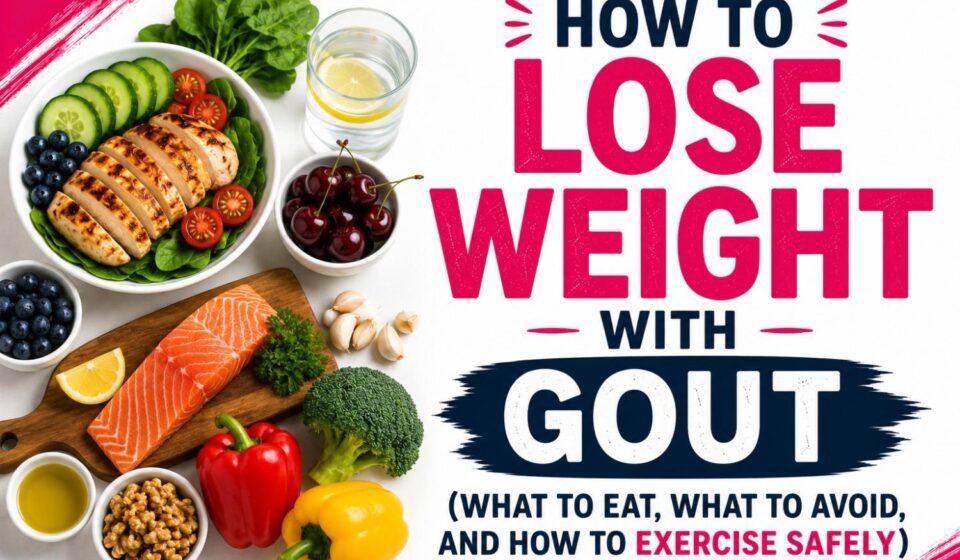
How to Lose Weight With Gout (What to Eat, What to Avoid, and How to Exercise Safely)

Gout and weight loss have a complicated relationship — here’s how to navigate both simultaneously
Gout and excess weight are deeply connected. Excess body weight raises uric acid levels — the primary driver of gout attacks — and gout attacks limit the physical activity that supports weight loss. Like so many conditions, gout and weight form a cycle that’s hard to break without understanding both sides.
This guide covers the specific dietary and lifestyle approach for people with gout who want to lose weight — including what to eat, what to avoid, how to exercise during and between attacks, and how to do it without triggering more flares.

What Is Gout and Why Does Weight Matter?
Gout is a form of inflammatory arthritis caused by the accumulation of uric acid crystals in joints — most commonly the big toe, but also knees, ankles, wrists, and elbows. Attacks are intensely painful, often developing overnight, and can last days to weeks.
Uric acid is a breakdown product of purines — compounds found in many foods and produced naturally by the body. When uric acid levels in the blood become too high (hyperuricemia), crystals can form and deposit in joints.
How excess weight raises uric acid:
- Fat tissue increases uric acid production
- Excess weight impairs kidney clearance of uric acid
- Insulin resistance — very common with obesity — reduces uric acid excretion by the kidneys
- Fructose (from sugar and high-fructose corn syrup) directly increases uric acid production
How weight loss helps gout:
- Reduces uric acid production
- Improves kidney uric acid clearance
- Reduces insulin resistance that impairs uric acid excretion
- Reduces inflammation throughout the body
- Reduces the joint loading that makes gout attacks more symptomatic
Even modest weight loss — 5–10% of body weight — produces meaningful reductions in uric acid levels and gout attack frequency for most people.
The Critical Caution: Rapid Weight Loss Can Trigger Gout Attacks
This is the most important thing to know before starting any weight loss approach with gout: rapid weight loss can trigger gout attacks.
When fat cells break down rapidly, they release uric acid — temporarily raising blood uric acid levels and precipitating attacks. Crash diets, very low calorie diets, and rapid weight loss are particularly likely to trigger flares.
The solution: Lose weight slowly and steadily — 0.5–1 lb per week is appropriate for gout, rather than the 1–1.5 lbs per week that might be appropriate otherwise. This allows uric acid levels to reduce gradually without the rapid spike that triggers attacks.
A moderate calorie deficit of 300–500 calories per day is more appropriate than aggressive restriction. As covered in our guide to how to lose weight with a calorie deficit, slow and steady produces better long-term outcomes anyway — particularly with conditions that respond poorly to rapid changes.
Dietary Strategy for Gout and Weight Loss
Foods That Raise Uric Acid (Limit or Avoid)
High-purine animal proteins:
- Organ meats (liver, kidneys, sweetbreads) — extremely high purine, avoid entirely
- Red meat in large amounts — limit to 2–3 times per week
- Shellfish (shrimp, lobster, crab, mussels) — moderately high purine
- Anchovies, sardines, herring, mackerel — high purine fish
Fructose — the most important dietary change: Fructose is uniquely problematic for gout — it directly stimulates uric acid production in the liver, independently of purine content. The primary fructose sources to eliminate:
- Sugar-sweetened beverages (soda, fruit juice, sweetened sports drinks)
- High-fructose corn syrup in processed foods
- Excessive added sugar in any form
This is actually great news for weight loss — eliminating sugar-sweetened beverages and added sugar is also one of the most impactful weight loss interventions available.
Alcohol — particularly beer: Alcohol raises uric acid through multiple mechanisms — it increases uric acid production and reduces kidney excretion simultaneously. Beer is particularly problematic because it’s also high in purines (from brewer’s yeast).
Even moderate alcohol consumption significantly increases gout attack risk. Reducing or eliminating alcohol addresses both gout management and weight loss simultaneously.
Foods That Lower Uric Acid (Emphasize)
Cherries and tart cherry juice: This is one of the most consistently supported dietary interventions for gout. Multiple studies have found that cherry consumption reduces uric acid levels and significantly reduces gout attack frequency — by up to 35% in some studies. The mechanism involves anthocyanins that reduce uric acid production and inflammation.
Aim for 10–12 fresh cherries per day, or 8oz of tart cherry juice (unsweetened). This is one of the few food interventions with genuine clinical evidence for gout specifically.
Vitamin C-rich foods: Vitamin C increases kidney uric acid excretion. Regular consumption of citrus fruit, bell peppers, strawberries, and kiwi supports uric acid reduction.
Coffee: Regular coffee consumption is associated with significantly lower uric acid levels — coffee appears to reduce uric acid production. This is relevant for people who already drink coffee; it’s not a reason to start.
Dairy — particularly low-fat: Low-fat dairy consumption is associated with lower uric acid levels and reduced gout risk. The mechanism involves dairy proteins (casein and lactalbumin) that promote uric acid excretion. Low-fat milk, yogurt, and cottage cheese are gout-friendly protein sources.
Adequate hydration: High fluid intake — 8–12 glasses of water per day — supports kidney uric acid excretion and reduces the concentration of uric acid in urine. Adequate hydration is one of the most consistent gout management recommendations.
The Protein Question for Gout
High protein intake is important for weight loss — as covered in our guide to how much protein you actually need per day. But gout adds nuance to protein source selection:
Gout-friendly protein sources:

- Low-fat dairy (cottage cheese, Greek yogurt, milk) — actively beneficial
- Eggs — low purine, excellent protein
- Plant proteins (lentils, beans, tofu, tempeh) — moderate purine but not associated with increased gout risk in research
- Chicken and turkey (in moderate amounts)
- Fish other than the high-purine species above (salmon is moderate purine and acceptable in moderate amounts)
Protein sources to limit:
- Red meat — limit to 2–3 times per week
- Organ meats — avoid
- High-purine fish (sardines, anchovies, herring, mackerel) — limit significantly
Plant-based protein emphasis is particularly appropriate for gout — plant proteins from legumes, while containing purines, are not associated with the same uric acid increases as animal purines in research.
Anti-Inflammatory Eating
Gout involves significant joint inflammation — dietary anti-inflammatory approaches directly reduce both attack frequency and severity:
- Olive oil as primary cooking fat
- Colorful vegetables and berries
- Omega-3 fatty acids from low-purine fish (salmon in moderate amounts) or walnuts
- Turmeric with black pepper (curcumin reduces inflammatory markers)
- Reduced processed food and added sugar
The Mediterranean dietary pattern — covered in our guide to how to lose weight with Mediterranean diet — is well-aligned with gout management: it emphasizes plant foods, healthy fats, and lean protein while limiting red meat and processed food.
Exercise With Gout
During Acute Attacks
During an active gout attack — when a joint is acutely inflamed, red, swollen, and painful — rest is the appropriate response for the affected joint. Exercising through an acute attack worsens inflammation and prolongs recovery.
Low-impact movement that doesn’t load the affected joint may be possible — seated upper body exercises if the attack is in the foot or knee, for example. But the primary focus during attacks is rest, medication, ice, and elevation of the affected joint.
Between Attacks
Between attacks, regular exercise is beneficial for gout in multiple ways:
- Supports weight loss that reduces uric acid levels
- Improves insulin sensitivity that improves uric acid excretion
- Reduces systemic inflammation
- Supports cardiovascular health that is otherwise impaired by gout
Low-impact exercise is preferable to high-impact: High-impact exercise (running, jumping) can stress joints that are vulnerable to gout crystal deposits — even between attacks. Low-impact alternatives are safer:
Walking — the most accessible option and appropriate between attacks for most people. As covered in our guide to how to lose weight by walking, consistent daily walking provides meaningful fat loss and metabolic benefits.
Swimming and water exercise — excellent for gout. Water buoyancy eliminates joint loading while providing genuine cardiovascular exercise. As covered in our guide to how to lose weight swimming, swimming burns significant calories with minimal joint stress.
Cycling (stationary) — low-impact cardiovascular exercise with no direct joint impact.
Strength training with good form — builds muscle that raises metabolic rate. Avoid exercises that create high compressive joint forces (very heavy squats and lunges initially). Progress gradually and prioritize form.
Stay Hydrated During Exercise
Dehydration during exercise concentrates uric acid in the blood and joints — increasing attack risk. Drink adequate water before, during, and after exercise. This is more important for gout patients than for most people.
Medications and Weight Loss
Several medications commonly used for gout affect weight loss:
Allopurinol and febuxostat (uric acid-lowering medications) — generally weight-neutral. These medications reduce baseline uric acid levels and gout attack frequency.
Colchicine (attack prevention and treatment) — generally weight-neutral.
NSAIDs (used during attacks) — short-term use is generally weight-neutral.
Corticosteroids (used for acute attacks) — even short courses can cause fluid retention and temporary weight increase. Long-term corticosteroid use for gout management would significantly impair weight loss.
Medical Considerations
Work With Your Rheumatologist
If you have frequent gout attacks or high uric acid levels, uric acid-lowering medication (allopurinol, febuxostat) should be considered alongside lifestyle changes. Medication reduces the baseline uric acid burden, making dietary and lifestyle changes more effective.
Weight loss itself reduces uric acid — but the initial period of weight loss (before levels stabilize lower) may temporarily increase attack frequency. Starting or maintaining uric acid-lowering medication during active weight loss helps manage this transitional period.
Breeze Meds — Medical Weight Loss Support
For gout patients who struggle with weight despite dietary effort — particularly those with obesity-driven insulin resistance that impairs uric acid excretion — medical weight loss support may be appropriate.
GLP-1 medications improve insulin resistance alongside producing significant weight loss — potentially addressing one of the primary mechanisms by which excess weight elevates uric acid.
Breeze Meds offers telehealth medical evaluations to assess whether prescription weight loss treatment is appropriate for your situation.
Check eligibility & pricing at Breeze Meds →Affiliate disclosure: We may earn a commission if you use this link. Breeze Meds provides telehealth weight-loss services. Prescription medication is only provided following an evaluation by a licensed healthcare professional and is not guaranteed.
The Bottom Line
Losing weight with gout requires adapting the standard approach in specific ways:
- Lose slowly (0.5–1 lb per week) — rapid weight loss triggers attacks
- Eliminate sugar-sweetened beverages and fructose — most impactful single change
- Reduce or eliminate alcohol — particularly beer
- Limit organ meats and high-purine fish; moderate red meat
- Emphasize dairy protein, eggs, plant proteins, and low-purine fish
- Eat cherries or tart cherry juice daily
- Stay very well hydrated
- Exercise between attacks with low-impact modalities (walking, swimming, cycling)
- Rest the affected joint during acute attacks
- Discuss uric acid-lowering medication with your doctor
The good news: many of the changes that reduce gout attacks — eliminating sugar, reducing alcohol, increasing hydration, eating more plant foods — are also excellent weight loss interventions. Addressing both simultaneously is more achievable than it might initially seem.
For the foundational fat loss framework that applies alongside gout-specific modifications, our guide to how to get rid of belly fat covers everything in one place.
Are you managing gout alongside weight loss — and have you found specific dietary changes that reduced your attack frequency? Share in the comments.
Stop Wondering What to Eat This Week
Get my free 7-Day High-Protein Weight Loss Meal Plan delivered straight to your inbox — a simple week of satisfying, protein-focused meals designed to make healthy eating easier without complicated calorie tracking.
- 7 full days of breakfast, lunch, dinner & snacks
- One complete shopping list for the whole week
- A quick high-protein food cheat sheet
- Simple daily tips to help you stay on track
Free PDF • Delivered by email • Unsubscribe anytime
Check your inbox 💜
Your free 7-day high-protein meal plan is on its way.