
High in fat, high in calories — but the evidence tells a more interesting story

Avocado is one of the most polarizing foods in weight loss discussions. On one side: it’s packed with healthy fats, fiber, and nutrients that support fat loss. On the other: it’s calorie-dense and easy to overeat. Both observations are correct — which is why the honest answer requires more nuance than a simple yes or no.
The Nutritional Profile of Avocado
One medium avocado (approximately 150g flesh) contains:
- 240 calories
- 22g fat (mostly monounsaturated — the same healthy fat as olive oil)
- 3g saturated fat
- 10g fiber (one of the highest-fiber foods available)
- 3g protein
- 13g carbohydrates (but 10g is fiber, so only 3g net carbs)
- Potassium (more than a banana)
- Vitamins K, C, B5, B6, E, folate
- Magnesium, copper, manganese
Avocado is nutritionally exceptional — dense in beneficial fats, fiber, and micronutrients. The question is whether that nutritional quality outweighs the calorie density for weight loss purposes.
The Case For Avocado in a Weight Loss Diet
Monounsaturated Fat Supports Fat Loss
The primary fat in avocado is oleic acid — the same monounsaturated fatty acid that makes olive oil so beneficial. Oleic acid:
- Reduces inflammation
- Improves insulin sensitivity
- May directly support fat oxidation (fat burning)
- Provides sustained energy without blood sugar spikes
The Mediterranean diet — which includes significant amounts of olive oil and avocado — is consistently associated with better weight loss and cardiovascular outcomes than low-fat dietary approaches.
Exceptional Satiety
The combination of fat and fiber in avocado produces powerful and lasting satiety. Studies have specifically tested avocado’s satiety effects:
- A 2013 study found that adding half an avocado to lunch reduced hunger by 40% over the following 3 hours compared to a lunch without avocado
- Participants reported 28% less desire to eat in the 5 hours following the avocado meal
The fiber (10g per avocado) and fat work together to slow digestion, extend stomach emptying, and produce satiety signals that persist for hours.
High Fiber Content
10g of fiber per avocado is extraordinary — one of the highest fiber concentrations of any commonly eaten food. Fiber:
- Slows digestion and extends fullness
- Blunts blood sugar response to other foods eaten alongside it
- Feeds beneficial gut bacteria
- Reduces total calorie absorption from a meal
Half an avocado added to a meal adds 5g of fiber — a meaningful contribution toward daily fiber targets that most people fall significantly short of.

Blood Sugar Stabilization
Avocado has an essentially negligible effect on blood glucose — due to its very low net carbohydrate content (3g per whole avocado) and high fat and fiber. Adding avocado to higher-GI foods (toast, rice, potatoes) measurably reduces the glycemic response of the meal.
This blood sugar stabilizing effect reduces the post-meal insulin spike that promotes fat storage and the blood sugar crash that drives subsequent hunger.
Population Data Supports It
Studies examining avocado consumption and body weight in large populations consistently find that avocado eaters have lower body weight and better metabolic health than non-avocado eaters — despite consuming more calories and fat overall.
This doesn’t prove avocado causes weight loss — people who eat avocado may have generally healthier dietary patterns. But it does contradict the idea that avocado’s calorie density causes weight gain.
The Case Against (Or At Least: The Caution)
Extremely Calorie Dense
One whole avocado contains 240 calories. Half an avocado: 120 calories. These are meaningful calorie amounts from a relatively small volume of food.
For comparison: 120 calories of avocado (half an avocado) has significantly less volume and arguably less satiety than 120 calories of strawberries (approximately 2 cups).
For people with limited daily calorie budgets (1,200–1,500 calories for fat loss), using 240 calories on a whole avocado leaves significantly less room for everything else.
Easy to Over-portion
The satiety from avocado is real but doesn’t always prevent over-consumption of the avocado itself. It’s easy to eat an entire avocado when making guacamole, spreading on toast, or slicing onto a salad without fully accounting for the calories.
A generous avocado spread on toast plus guacamole as a snack later can easily add 400–500 calories of avocado to a day — a significant proportion of any fat loss calorie target.
Guacamole and Prepared Avocado Dishes
Avocado itself is nutritious. Guacamole — avocado mixed with lime, onion, cilantro — is basically the same. But the chips typically eaten with guacamole can easily add 300–500 calories alongside the guacamole itself.
Restaurant avocado dishes often come with high-calorie accompaniments (sour cream, cheese, fried tortillas) that make the “healthy avocado” a calorie-dense meal component.
The Verdict: Good or Bad for Weight Loss?
Avocado is a genuinely excellent food for weight loss — when portioned appropriately.
The satiety, fiber, healthy fat, and blood sugar stabilizing effects make it a valuable dietary addition. The calorie density means it needs to be accounted for rather than eaten freely.
The sweet spot for most people: Half an avocado per day (120 calories) — enough to get the satiety and nutritional benefits without using an excessive proportion of the daily calorie budget.
How Much Avocado Per Day for Weight Loss?
Half an avocado (120 calories, 5g fiber, 11g fat): Ideal daily amount for most people in a fat loss phase. Provides significant satiety and nutritional benefits without excessive calorie contribution.
One whole avocado (240 calories): Fine for people with higher calorie targets or on days where total intake is otherwise lower. Still nutritionally excellent, just requires accounting for.
More than one avocado daily: The calorie contribution becomes significant. Unless calorie targets are high (maintenance or muscle building phases), this is difficult to accommodate within a fat loss deficit.
The Best Ways to Use Avocado for Weight Loss
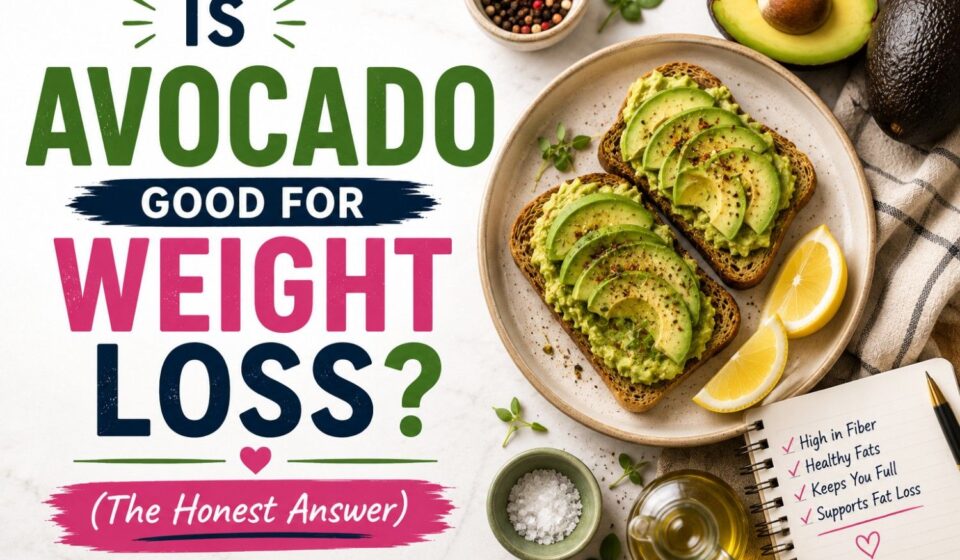
Avocado toast (done right): One slice of whole grain toast + half an avocado + salt, pepper, lemon juice + optional poached egg = approximately 300 calories, high fiber, high protein, genuinely satisfying breakfast. As covered in our article on the best high protein breakfast ideas, adding an egg to avocado toast makes it substantially more filling.
On salads: Half an avocado sliced onto a large salad adds creaminess, fat, and fiber that dramatically improves satiety from what would otherwise be a low-calorie meal. This use is particularly high-value — the fat helps absorb fat-soluble vitamins from the salad vegetables.
In smoothies: Quarter to half an avocado blended into a smoothie adds creamy texture and satiety without detectable avocado flavor. Works particularly well with chocolate or berry smoothies.
As a spread instead of butter or mayo: Half an avocado spread on a sandwich instead of mayo saves calories while adding fiber and healthy fat. Mayo: approximately 100 calories per tablespoon. Avocado: approximately 23 calories per tablespoon — and far more nutritious.
In eggs: Diced avocado added to scrambled eggs or an omelette — the fat from avocado complements the protein from eggs and dramatically extends post-meal satiety.
What to avoid: Eating avocado mindlessly from the fruit itself without measuring, or using it as a justification for other high-calorie additions (“the guacamole is healthy so I can eat extra chips”).
Avocado vs. Other Healthy Fats
How does avocado compare to other commonly used healthy fat sources?
| Food | Serving | Calories | Fiber | Satiety |
|---|---|---|---|---|
| Avocado | ½ fruit | 120 | 5g | High |
| Olive oil | 1 tbsp | 120 | 0g | Moderate |
| Almonds | 28g (23 nuts) | 164 | 3.5g | High |
| Peanut butter | 2 tbsp | 190 | 2g | High |
| Walnuts | 28g | 185 | 2g | High |
Avocado provides comparable calories to a tablespoon of olive oil — but with 5g fiber that olive oil completely lacks. This fiber content gives avocado a meaningful satiety advantage over other fat sources at equivalent calorie levels.
The Bottom Line
Is avocado good for weight loss?
Yes — with appropriate portion awareness. The combination of monounsaturated fat, exceptional fiber content, and documented satiety effects makes avocado one of the most valuable foods for fat loss when included in appropriate amounts.
The key rules:
- Half an avocado per day as the sweet spot for most people in a fat loss phase
- Account for the calories — don’t treat it as a “free” food
- Use it to replace less nutritious fat sources (butter, mayo) rather than as an addition to an already adequate diet
- Avoid the guacamole-with-chips trap
For the complete framework for including calorie-dense healthy foods within a fat loss diet, our guide to how to get rid of belly fat covers everything in one place.
Do you eat avocado regularly while losing weight — and have you found it helps or hinders your progress? Share in the comments.