
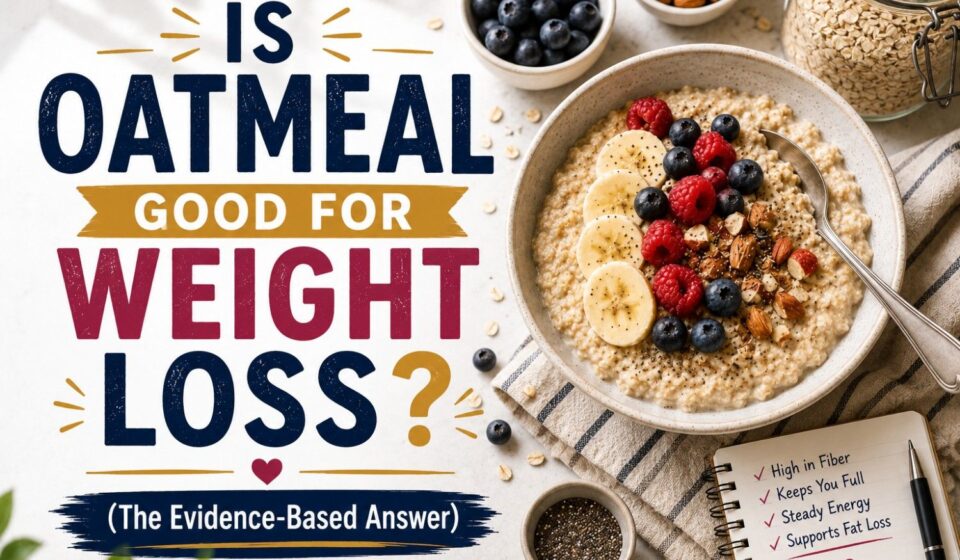

One of the most popular breakfast foods in the world — here’s what the science actually shows about oats and fat loss
Oatmeal is one of the oldest and most universally recommended breakfast foods. It shows up on virtually every “healthy eating” list, and for good reason — the evidence behind oats is genuinely strong. But does oatmeal specifically help with weight loss? And are all oatmeal preparations equally beneficial?
Here’s the honest, evidence-based answer.
The Nutritional Profile of Oatmeal
One cup of cooked rolled oats (from approximately 80g dry oats) provides:
- Calories: 300
- Protein: 10g
- Carbohydrates: 54g
- Fiber: 8g (4g soluble, 4g insoluble)
- Fat: 5g
- Beta-glucan: 4g (the specific soluble fiber responsible for most of oats’ health benefits)
- Manganese, phosphorus, magnesium, copper, iron, zinc, folate, B vitamins
Oats are nutritionally dense — providing real protein, exceptional fiber, and a wide range of micronutrients at a moderate calorie cost.
Why Oatmeal Is Good for Weight Loss
Beta-Glucan: The Standout Ingredient
The most important component of oats for weight loss isn’t the protein or the general fiber — it’s beta-glucan, a specific type of soluble fiber found in significant quantities only in oats and barley.
Beta-glucan:
- Forms a thick gel in the digestive tract that slows gastric emptying dramatically
- Significantly blunts the post-meal blood sugar and insulin response
- Stimulates the release of PYY (peptide YY) — a satiety hormone that reduces appetite for hours after eating
- Reduces total cholesterol and LDL cholesterol (strong evidence, FDA-approved health claim)
- Feeds beneficial gut bacteria that produce short-chain fatty acids with appetite-suppressing effects
The satiety effects of beta-glucan are among the most well-documented of any dietary component — multiple meta-analyses confirm that oat consumption reduces hunger and calorie intake at subsequent meals.
Exceptional Satiety for the Calories
Oatmeal consistently ranks among the highest foods on the Satiety Index — the measure of how filling different foods are per calorie. Studies have found oatmeal to be significantly more satiating than many common breakfast foods at equivalent calorie levels, including cold cereals, toast, and pastries.
A bowl of oatmeal at breakfast means eating less throughout the rest of the morning — and often eating less at lunch.
Stabilizes Blood Sugar
Despite being a carbohydrate-rich food, oatmeal has a moderate glycemic index (55–60 for rolled oats, 42 for steel-cut oats) — significantly lower than most breakfast cereals, white toast, or pastries.
The beta-glucan gel slows starch digestion, producing a gradual glucose release rather than a spike. This produces sustained energy without the mid-morning crash that drives hunger and poor food choices.
High Fiber Content Supports Fat Loss
At 8g of fiber per cup, oatmeal is one of the highest-fiber breakfast foods available. As covered in our guide to how to stop hunger while dieting, adequate fiber is one of the most effective dietary tools for appetite management during fat loss.
Budget-Friendly and Convenient
Plain rolled oats cost approximately $0.15–0.20 per serving — making oatmeal one of the cheapest high-quality breakfast options available. It takes 5 minutes to prepare on the stove or overnight in the fridge.
The Research on Oatmeal and Weight Loss
The evidence for oats and weight management is substantial:
Meta-analysis (2016): A systematic review of 27 clinical trials found that beta-glucan from oats produced significant reductions in body weight, BMI, and waist circumference compared to control groups.
Breakfast satiety studies: Multiple controlled studies have found that people who eat oatmeal at breakfast consume significantly fewer calories at lunch compared to those eating ready-to-eat cereals of equivalent calories — typically 30–50% less at the subsequent meal.
Cholesterol reduction: Strong evidence (and FDA-approved health claim) that 3g of beta-glucan daily (approximately 1.5 cups of cooked oats) reduces LDL cholesterol by 5–10%.
Gut microbiome: Beta-glucan selectively feeds Lactobacillus and Bifidobacterium species — producing short-chain fatty acids (particularly butyrate) that reduce inflammation, improve insulin sensitivity, and may directly influence appetite hormones.
Types of Oats: Which Is Best for Weight Loss?
Not all oats are nutritionally equivalent. Processing affects glycemic index, beta-glucan integrity, and satiety:
| Type | GI | Cook Time | Beta-Glucan | Satiety | Notes |
|---|---|---|---|---|---|
| Steel-cut oats | 42 | 20–30 min | High | Highest | Best for blood sugar |
| Rolled oats | 55 | 5 min | High | High | Best balance of nutrition and convenience |
| Quick oats | 65 | 1–2 min | Moderate | Moderate | More processed, higher GI |
| Instant oats (plain) | 72 | 1 min | Lower | Lower | Significant processing |
| Instant oats (flavored) | 75+ | 1 min | Low | Low | Added sugar — avoid |
Best for weight loss: Steel-cut or rolled oats — lowest GI, most intact beta-glucan, highest satiety.
Acceptable: Quick oats — slightly more processed but still nutritious.
Avoid: Flavored instant oatmeal packets — typically contain 10–15g added sugar and have a significantly higher GI than plain oats.
The Critical Distinction: Plain vs. Loaded Oatmeal
Plain oatmeal is an excellent weight loss food. What most people add to it determines whether it remains one.
Additions that keep oatmeal weight-loss friendly:
- Berries (blueberries, strawberries, raspberries) — low sugar, high antioxidant
- A small amount of honey or maple syrup (1 teaspoon — adds flavor without excessive sugar)
- Cinnamon — improves insulin sensitivity, adds sweetness perception without calories
- Nuts or nut butter in small amounts — adds healthy fat and protein
- Protein powder — dramatically improves the protein profile (10g protein → 30g+ protein)
- Greek yogurt mixed in — adds protein and creaminess
Additions that undermine oatmeal’s weight loss benefits:
- Large amounts of brown sugar (common — often 2–3 tablespoons, adding 60–90 calories of pure sugar)
- Flavored instant packets — 10–15g added sugar per packet
- Large amounts of honey or maple syrup
- Full-fat cream instead of water or low-fat milk
The difference between a well-made bowl of oatmeal and a sugar-loaded one can be 200+ calories and dramatically different blood sugar responses.
How to Make Oatmeal More Filling and Protein-Rich
Plain oatmeal’s protein content (10g per cup) is decent but not exceptional for weight loss. These additions significantly improve the satiety profile:
Add protein powder: Stir 1 scoop of vanilla or unflavored protein powder into cooked oatmeal = +20–25g protein. One of the most effective and underrated oatmeal upgrades for weight loss.
Mix in Greek yogurt: Stir 100–150g of plain Greek yogurt into warm oatmeal = +10–15g protein, creamier texture.
Add eggs: Scramble 1–2 eggs into cooking oatmeal — this sounds unusual but produces a creamy, protein-rich porridge. +12g protein.
Top with cottage cheese: 100g cottage cheese on top of oatmeal = +11g protein. Works better than it sounds.
The goal: a bowl of oatmeal with 25–35g total protein produces satiety that lasts until lunch without mid-morning hunger — dramatically outperforming the standard 10g protein bowl. As covered in our guide to the best high protein breakfast ideas, combining oats with a protein source transforms breakfast from a hunger-management problem into a genuine fat loss tool.
Overnight Oats: A Convenient Option
Overnight oats — rolled oats soaked in milk or yogurt overnight in the fridge — are ready to eat in the morning with zero cooking. The soaking process:
- Makes oats easier to digest
- Increases resistant starch content (lower glycemic impact)
- Allows flavor development overnight
A basic overnight oats recipe for weight loss:
- 80g rolled oats
- 150ml milk (or plant milk)
- 150g plain Greek yogurt
- Berries
- 1 teaspoon honey
Result: approximately 400 calories, 25g protein, 10g fiber — an extremely filling breakfast that’s assembled in 3 minutes the night before.
Oatmeal vs. Other Common Breakfasts
| Breakfast | Calories | Protein | Fiber | Satiety (hours) |
|---|---|---|---|---|
| Oatmeal (plain, 1 cup cooked) | 300 | 10g | 8g | 3–4 |
| Corn flakes (1 cup + milk) | 250 | 8g | 1g | 1–2 |
| White toast (2 slices + butter) | 280 | 7g | 2g | 1–2 |
| Bagel (plain, medium) | 270 | 10g | 1g | 1–2 |
| Eggs (2 scrambled) | 140 | 12g | 0g | 2–3 |
| Oatmeal + protein powder | 420 | 32g | 8g | 4–5 |
Oatmeal significantly outperforms most common breakfast foods for fiber and satiety. The protein-enhanced version is one of the most satiating breakfast options available.
Is Oatmeal Too High in Carbohydrates for Weight Loss?
For people following low-carb or ketogenic approaches, oatmeal at 54g carbohydrates per cup is too high to fit the dietary framework. As covered in our guide to how to lose weight on a keto diet, keto requires under 30g net carbs per day — a single bowl of oatmeal would exceed this.
For everyone else: the carbohydrate content of oatmeal is not problematic. The fiber, protein, and beta-glucan produce a metabolic response significantly better than equivalent carbohydrate loads from refined sources. Oatmeal’s carbs behave very differently from white bread or cereal carbs.
The Bottom Line
Is oatmeal good for weight loss?
Yes — one of the best breakfast options available for fat loss. The combination of beta-glucan, exceptional fiber, moderate protein, and documented satiety effects make it a genuine dietary asset.
The key rules:
- Choose steel-cut or rolled oats — avoid flavored instant packets
- Add protein (powder, Greek yogurt, or eggs) to significantly improve the satiety profile
- Top with berries and cinnamon rather than sugar and syrup
- Account for the calories — 300 calories per cup, meaningful but moderate
For the complete breakfast and dietary framework that puts oatmeal to work in a fat loss approach, our guide to how to get rid of belly fat covers everything in one place.
How do you make your oatmeal — and what additions have you found make it most filling? Share in the comments.
Stop Wondering What to Eat This Week
Get my free 7-Day High-Protein Weight Loss Meal Plan delivered straight to your inbox — a simple week of satisfying, protein-focused meals designed to make healthy eating easier without complicated calorie tracking.
- 7 full days of breakfast, lunch, dinner & snacks
- One complete shopping list for the whole week
- A quick high-protein food cheat sheet
- Simple daily tips to help you stay on track
Free PDF • Delivered by email • Unsubscribe anytime
Check your inbox 💜
Your free 7-day high-protein meal plan is on its way.