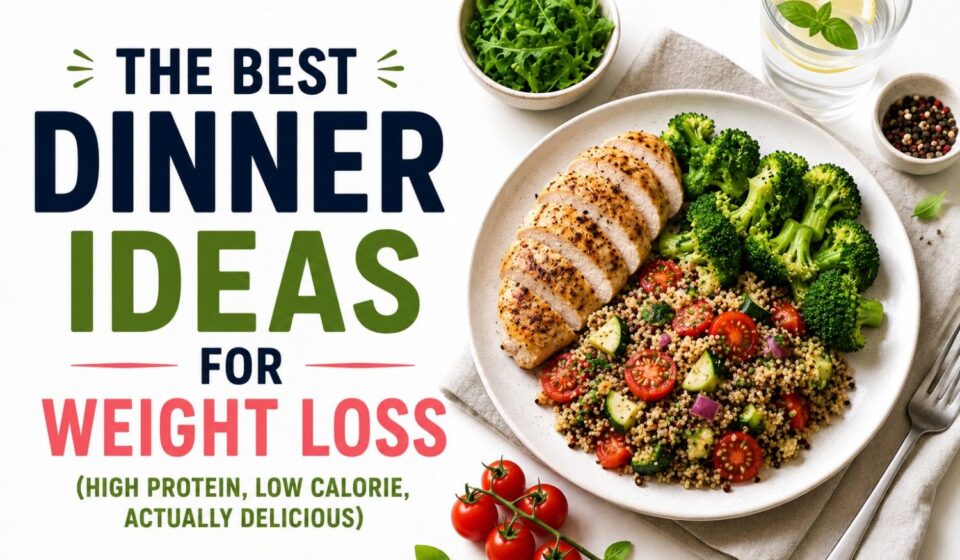
The Best Dinner Ideas for Weight Loss (High Protein, Low Calorie, Actually Delicious)

Dinner is where most diets fall apart. These recipes fix that.

Dinner is the most dangerous meal of the day for anyone trying to lose weight.
You’re tired. Your willpower is at its lowest point after a full day of decisions. You’re hungry — possibly ravenously so if lunch wasn’t filling enough. And the easiest options — takeout, delivery, whatever’s quickest — are almost always the worst ones for your goals.
The solution isn’t more willpower. It’s better options that are just as fast and easy as the bad ones, but built around the nutritional principles that actually drive fat loss.
Every dinner idea below is high in protein, high in fiber or volume, low in added sugar and refined carbs, and takes under 30 minutes. Many take under 15.
What Makes a Good Weight Loss Dinner?
The same principles that apply to all fat loss eating apply at dinner — with a few specific considerations:
High protein is essential. Dinner is typically the meal where people eat the most protein, and it needs to be substantial — 30–40g is the target. This supports muscle protein synthesis overnight, controls the next morning’s hunger, and helps hit daily protein targets as covered in our guide to how much protein you actually need per day.
High volume, moderate calories. A dinner that looks and feels like a large meal but comes in at 400–500 calories is the ideal — and it’s achievable with the right ingredients.
Lower carbohydrates than earlier in the day. Insulin sensitivity is at its lowest in the evening, meaning carbohydrates consumed at dinner are more likely to be stored as fat compared to the same carbohydrates eaten earlier. This doesn’t mean zero carbs at dinner — it means prioritizing protein and vegetables and keeping starchy carbs modest.
Easy and fast. If dinner takes 45 minutes to prepare after a long day, it won’t happen consistently. Every recipe below is practical for real weekday evenings.

The Best Weight Loss Dinner Ideas
1. Sheet Pan Chicken Thighs With Roasted Vegetables
~420 calories | 38g protein | 5 min prep, 25 min cooking (mostly passive)
Season chicken thighs with olive oil, garlic powder, smoked paprika, salt, and pepper. Place on a sheet pan with broccoli florets, sliced zucchini, cherry tomatoes, and red onion. Roast at 425°F for 25 minutes.
Everything goes on one pan. The cooking is completely passive — you can decompress, help kids with homework, or do whatever while it cooks. The result is a genuinely delicious, high-protein dinner with minimal washing up.
Why it works: Chicken thighs are more flavorful and cheaper than chicken breast with nearly identical protein content. Roasting vegetables caramelizes them in a way that makes them genuinely craveable — not just tolerated.
Batch tip: Double the recipe and have lunch sorted for tomorrow.
2. Salmon With Asparagus and Lemon Butter
~390 calories | 36g protein | 15 min
Season a salmon fillet with salt, pepper, and lemon zest. Pan-sear skin-side down in a hot pan for 4 minutes, flip for 2 minutes. Remove and rest. In the same pan, sauté asparagus spears for 3–4 minutes with garlic and a small knob of butter. Serve together with a squeeze of lemon.
This feels like a restaurant meal. It takes 15 minutes. It delivers omega-3 fatty acids that reduce inflammation and improve insulin sensitivity — particularly relevant for visceral belly fat reduction as covered in our guide to how to get rid of belly fat.
Budget alternative: Swap salmon for frozen tilapia or pollock — cheaper, nearly zero prep, still high protein.
3. Turkey and Vegetable Stir-Fry With Cauliflower Rice
~360 calories | 40g protein | 15 min
Brown lean ground turkey in a wok or large pan with garlic, ginger, and a splash of low-sodium soy sauce. Add frozen mixed vegetables (broccoli, edamame, snap peas, carrots) and cook until tender. Serve over microwaved frozen cauliflower rice.
Frozen cauliflower rice microwaves in 4 minutes and replaces regular rice at roughly one-quarter the calorie count while dramatically increasing vegetable content. Combined with the turkey, this is an extraordinarily protein-dense, low-calorie dinner that genuinely satisfies.
Flavor variations: Add chili flakes and sesame oil for an Asian-inspired version. Add cumin and coriander for a more Mexican flavor profile.
4. Black Bean and Egg Skillet
~380 calories | 28g protein | 15 min
Sauté diced onion, bell pepper, and garlic in olive oil spray. Add a can of black beans (drained), diced tomatoes, cumin, smoked paprika, and chili powder. Create four wells in the mixture and crack an egg into each. Cover and cook until egg whites are set but yolks are still slightly runny. Top with fresh cilantro and hot sauce.
A complete plant-based dinner (or vegetarian) that delivers protein from both beans and eggs, significant fiber from the beans, and a deeply satisfying flavor. This is the kind of dinner that people who don’t think they like “healthy food” genuinely enjoy.
5. Greek Chicken Bowl
~410 calories | 42g protein | 15 min
Slice chicken breast and season with dried oregano, garlic, lemon juice, salt, and pepper. Pan-cook until golden. Serve over a base of mixed greens with cucumber, cherry tomatoes, red onion, kalamata olives, and a tablespoon of feta. Dress with olive oil and lemon.
High protein, high volume, genuinely Mediterranean flavor. The large salad base provides fiber and bulk that makes this feel like a much more calorie-dense meal than it is. The feta adds flavor intensity that makes a small amount go a long way.
6. Lentil and Vegetable Soup (Batch Cook)
~280 calories | 18g protein | 30 min (makes 4 servings)
Sauté onion, carrot, celery, and garlic until soft. Add red lentils, canned diced tomatoes, vegetable broth, spinach, cumin, turmeric, and coriander. Simmer 20 minutes. Season with salt, pepper, and lemon juice.
One batch makes four servings — Sunday cooking that provides multiple weeknight dinners with zero additional effort. Red lentils provide exceptional protein and fiber for the calorie cost. This soup genuinely improves in flavor over several days.
Add protein: Stir in a can of drained chickpeas for extra protein and texture, or serve with a poached egg on top.
7. Shrimp Tacos in Lettuce Wraps
~320 calories | 32g protein | 15 min
Season shrimp with cumin, chili powder, garlic, lime juice, and salt. Cook in a hot pan for 2 minutes per side until pink and slightly charred. Serve in large lettuce leaves (butter lettuce works perfectly) with pico de gallo, sliced avocado, and a dollop of plain Greek yogurt instead of sour cream.
Lettuce wraps replace tortillas at a fraction of the calorie cost while adding crunch and freshness. Shrimp is one of the highest protein-to-calorie proteins available. This is a genuinely enjoyable dinner that most people are surprised to find is this low in calories.
8. Baked Cod With Herb Crust and Green Beans
~310 calories | 36g protein | 5 min prep, 15 min cooking
Mix breadcrumbs (or crushed almonds for lower carb), fresh herbs (parsley, dill), lemon zest, and a little olive oil. Press onto cod fillets. Bake at 400°F for 12–15 minutes. Serve with steamed green beans tossed in a little olive oil and garlic.
Cod is one of the cheapest, most protein-dense fish available — often overlooked in favor of more expensive options. The herb crust adds flavor and texture without significant calories. Clean, simple, restaurant-quality in appearance.
9. Chicken and Spinach Stuffed Sweet Potato
~440 calories | 36g protein | 10 min prep, 45 min cooking (mostly passive)
Bake a medium sweet potato at 400°F for 45 minutes. While it bakes, cook diced chicken breast with spinach, garlic, and a tablespoon of Greek yogurt. Slice the sweet potato open, fluff the flesh, and fill with the chicken mixture. Top with hot sauce.
The sweet potato provides complex carbohydrates with fiber and micronutrients — better than white rice or pasta as an evening carbohydrate source. Combined with the chicken and yogurt, this is a complete, filling dinner at under 450 calories.
Time-saving tip: Microwave the sweet potato for 8–10 minutes instead of baking — same result in a fraction of the time.
10. Egg and Vegetable Fried Cauliflower Rice
~300 calories | 22g protein | 15 min
Heat a wok or large pan with a spray of oil. Add frozen cauliflower rice and cook until slightly charred. Push to the side, scramble 3 eggs in the cleared space, then mix together. Add frozen peas, soy sauce, sesame oil, and garlic. Top with green onions and chili.
A genuinely satisfying alternative to takeout fried rice at roughly one-quarter the calorie count. The eggs provide protein and richness. The cauliflower rice provides bulk. This is the kind of dinner that makes “eating healthy” feel sustainable rather than punishing.
11. Turkey Meatballs With Zucchini Noodles
~380 calories | 40g protein | 20 min
Mix lean ground turkey with egg, garlic, Italian seasoning, salt, and a little parmesan. Form into small meatballs and bake at 400°F for 15 minutes or pan-cook. Serve over spiralized zucchini noodles with warmed jarred tomato sauce (check the sugar content — choose one with under 5g per serving).
Turkey meatballs deliver excellent protein at very low fat content compared to beef. Zucchini noodles replace pasta at a tiny fraction of the calories. The tomato sauce adds flavor and lycopene — an antioxidant with genuine health benefits — without meaningful calories.
12. Spiced Chickpea and Tomato Stew
~340 calories | 16g protein | 20 min
Sauté onion and garlic, add two cans of chickpeas (drained), one can of crushed tomatoes, spinach, cumin, coriander, turmeric, and a pinch of chili. Simmer 15 minutes. Finish with lemon juice and fresh cilantro.
A plant-based dinner with exceptional fiber content and enough protein from chickpeas to qualify as a complete meal. Deeply flavored from the spices, genuinely filling from the fiber, and cheap to make.
Add more protein: Serve with a side of Greek yogurt or a poached egg on top.
Quick Dinner Formula for Any Night
When you don’t have a specific recipe in mind, use this formula:
1 protein source + 2 vegetables + 1 sauce or seasoning = dinner
- Protein: chicken, fish, shrimp, eggs, turkey, lentils, beans, tofu
- Vegetables: whatever is in the fridge or freezer — broccoli, spinach, zucchini, peppers, cauliflower, green beans
- Sauce: soy sauce and sesame, lemon and herbs, tomato-based, yogurt-based
This formula produces a high-protein, high-vegetable dinner in 15 minutes from whatever happens to be available. No recipe required.
The Biggest Dinner Mistakes for Weight Loss
Eating too late. Finishing dinner within 2–3 hours of bedtime allows digestion to complete before sleep and avoids the elevated blood sugar that late eating produces. This aligns with the time-restricted eating approach covered in our article on whether intermittent fasting is worth it.
Having seconds out of habit rather than hunger. Serve a single portion and put the rest away before sitting down. The visual cue of an empty plate drives eating beyond fullness — removing the option removes the temptation.
Eating in front of the TV. Distracted eating consistently increases calorie intake. A meal eaten while watching TV is a meal where you eat more and enjoy it less.
Saving calories all day and eating a huge dinner. Severe hunger by dinner time almost always leads to overeating. Eating adequate protein earlier in the day — particularly at breakfast as covered in our article on the best high protein breakfast ideas — makes dinner portion control effortless rather than a battle.
Relying on willpower to avoid post-dinner snacking. If post-dinner snacking is a consistent problem, it’s a hunger problem (dinner wasn’t filling enough) or an emotional eating problem — not a willpower deficit. Address the root cause rather than fighting the symptom.
The Bottom Line
Dinner doesn’t have to be complicated, time-consuming, or boring to support fat loss. The recipes above are proof that high-protein, high-volume, genuinely satisfying dinners are achievable on any weeknight in under 30 minutes.
Build dinner around a protein source. Add volume with vegetables. Keep carbohydrates moderate in the evening. Eat away from screens. Finish 2–3 hours before bed.
Do these things consistently and dinner stops being the meal that derails your progress and starts being the meal that supports it.
Which of these dinner ideas are you going to try first? And if you have a go-to healthy dinner that’s fast and filling, share it in the comments — we’re always looking for new ideas.