
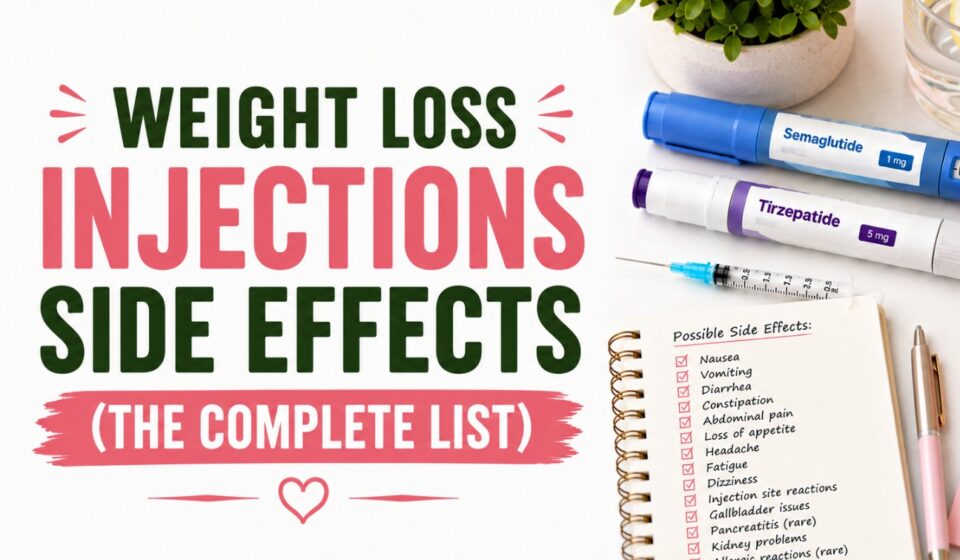

Every side effect — common, uncommon, and rare — with honest frequency data and practical management strategies
Side effects are one of the primary reasons people stop weight loss injections before reaching effective doses — and before experiencing meaningful results. Understanding what to expect, how common each side effect actually is, and what actually helps manages them makes the difference between successfully completing dose escalation and abandoning the medication unnecessarily.
This is the complete, honest list — organized by frequency and severity.

How to Read Side Effect Data
Before the list — context for interpreting side effect frequencies:
“Common” in clinical trials = occurring in more than 10% of participants “Uncommon” = 1-10% of participants “Rare” = less than 1% of participants
These frequencies come primarily from the STEP trials (semaglutide) and SURMOUNT trials (tirzepatide) — the pivotal clinical trials for these medications at weight loss doses.
Important: Most side effects are worst during dose escalation (the first 4-5 months) and improve significantly once at maintenance dose. The side effect experience in month 1 is not representative of long-term treatment.
Very Common Side Effects (More Than 10% of Users)
Nausea — Most Common (44% of semaglutide users, 31% with tirzepatide)
Nausea is by far the most common side effect — affecting nearly half of people on semaglutide at some point during treatment.
When it occurs: Worst in the first 4-8 weeks and with each dose increase. Typically improves significantly once at maintenance dose.
What it feels like: Ranges from mild background queasiness to significant nausea that affects daily functioning. Usually not accompanied by vomiting but can be.
What actually helps:
- Eat small, bland meals — large meals on these medications cause significant nausea
- Avoid high-fat foods completely when nausea is worst — fat further slows gastric emptying
- Cold foods and beverages are better tolerated than hot when nauseated
- Eat slowly — 20-30 minutes per small meal
- Ginger (tea, chews, capsules) — genuine anti-nausea evidence
- Peppermint tea — mild anti-nausea benefit
- Crackers and bland carbohydrates — classic nausea management
- Ask prescriber about ondansetron (Zofran) if nausea is severe and affecting quality of life
- Timing the injection when you can rest the following day
What doesn’t help: Pushing through large meals hoping to “get used to it” — this reliably worsens nausea. Eat small.
Diarrhea (30% semaglutide, 23% tirzepatide)
Loose stools or diarrhea — common particularly in the first weeks of treatment and after dose increases.
What it feels like: Increased frequency and looser consistency of bowel movements. Rarely severe enough to cause dehydration but uncomfortable.
What helps:
- Adequate hydration — diarrhea causes fluid loss
- Reduce high-fiber foods temporarily during flares
- BRAT diet during acute episodes (bananas, rice, applesauce, toast)
- Avoid artificial sweeteners — these worsen diarrhea for many people
- Discuss loperamide (Imodium) with prescriber for acute management
Vomiting (24% semaglutide, 12% tirzepatide)
Less common than nausea but affects a meaningful proportion of users — typically accompanying severe nausea episodes.
When it occurs: Most commonly in the first month and after dose increases. Usually episodic rather than continuous.
What helps:
- Same strategies as nausea management
- Stay hydrated — vomiting causes fluid loss
- Wait at least 30 minutes after vomiting before eating or drinking anything
- Small sips of clear fluids to rehydrate
- If vomiting is severe or persistent (more than 24-48 hours), contact prescriber
Constipation (24% semaglutide, 17% tirzepatide)
Counterintuitively common alongside diarrhea — some people experience one, others the other, and some alternate.
Why it happens: GLP-1 medications slow gastric emptying and intestinal transit — constipation is a direct consequence of this mechanism.
What helps:
- Adequate hydration — critical for managing constipation
- Gradually increase fiber intake (not rapidly — this worsens bloating)
- Daily walking — physical movement stimulates intestinal motility
- Prunes and prune juice — mild natural laxative effect
- Magnesium citrate or magnesium oxide (gentle osmotic laxative)
- Discuss polyethylene glycol (Miralax) with prescriber for persistent constipation
- Avoid iron supplements if possible — significantly worsen constipation
Abdominal Pain (20% semaglutide, 14% tirzepatide)
General abdominal discomfort — cramping, bloating, or pain in the stomach/intestinal area.
When it occurs: Throughout treatment but typically worst early. Usually mild to moderate.
Important distinction: Mild abdominal discomfort is common and manageable. Severe abdominal pain — particularly radiating to the back — requires immediate medical attention as it may indicate pancreatitis.
What helps:
- Same dietary modifications as nausea
- Heat pad on abdomen for cramping
- Peppermint capsules — reduce intestinal spasm
- Avoid carbonated beverages when bloating is significant
Fatigue (11% semaglutide)
Tiredness and low energy — particularly in the first weeks of treatment.
Why it happens: Multiple possible mechanisms — significant calorie reduction, the body adapting to new hormonal signaling, possible direct GLP-1 effects on energy metabolism.
What helps:
- Adequate sleep — prioritize 7-9 hours
- Adequate protein — inadequate protein worsens fatigue
- Light activity (walking) rather than complete rest — gentle activity can improve energy
- Usually resolves within the first month as the body adapts
Headache (14% semaglutide)
Headaches — particularly in the first weeks of treatment.
Why it happens: Often related to reduced calorie and food intake, possible mild dehydration, or direct medication effects.
What helps:
- Adequate hydration — dehydration is a common headache trigger
- Adequate sodium intake — reduced food intake sometimes reduces sodium intake
- Standard headache management (paracetamol/acetaminophen, ibuprofen)
- Usually resolves as the body adapts
Common Side Effects (1-10% of Users)
Injection Site Reactions (3-5%)
Redness, swelling, itching, or bruising at the injection site.
What helps:
- Rotate injection sites — use different locations each week
- Let medication reach room temperature before injecting (cold medication increases site reactions)
- Inject slowly rather than rapidly
- Clean injection site before injecting
Gastroesophageal Reflux / Heartburn (4-5%)
Acid reflux worsening or appearing for the first time — a consequence of slowed gastric emptying keeping food and acid in the stomach longer.
What helps:
- Avoid large meals (the most important intervention)
- Avoid lying down for 2-3 hours after eating
- Elevate head of bed slightly
- Avoid trigger foods (caffeine, alcohol, spicy food, fatty food, citrus)
- Antacids for acute relief
- Discuss H2 blockers or proton pump inhibitors with prescriber if persistent
Belching and Burping (3-5%)
Increased burping — related to slowed gastric emptying and gas accumulation in the stomach.
What helps:
- Eat slowly
- Avoid carbonated beverages
- Avoid chewing gum (increases swallowed air)
- Simethicone (Gas-X) for acute relief
Dizziness (5-6%)
Lightheadedness — particularly when standing up quickly.
Why it happens: Reduced calorie intake can cause mild hypoglycemia or dehydration. Blood pressure reduction from weight loss. Possible direct medication effects.
What helps:
- Rise slowly from sitting or lying positions
- Adequate hydration
- Adequate food intake — don’t undereat to the point of dizziness
- Check blood pressure if persistent
Reduced Appetite Beyond Expected (Significant — but also the mechanism)
While reduced appetite is the intended effect, some people experience appetite suppression so extreme that eating adequate amounts becomes difficult.
The concern: People who can barely eat risk inadequate nutrition — particularly protein.
What helps:
- Prioritize protein-dense foods first at every meal
- Protein shakes when appetite is very low
- Calorie-dense but protein-rich foods (Greek yogurt, cottage cheese, eggs)
- Discuss dose reduction with prescriber if unable to meet nutritional needs
Less Common Side Effects (Under 5% but Clinically Important)
Hair Loss / Telogen Effluvium (2-3% reported, likely underreported)
Temporary hair shedding — typically beginning 2-4 months after significant weight loss starts.
Why it happens: Significant calorie restriction and rapid weight loss triggers hair follicles to enter a resting phase — hair sheds 2-4 months later. This is a consequence of the weight loss, not direct drug toxicity.
The reassurance: Almost always temporary. Hair regrows as the body adapts to the new weight.
What helps:
- Adequate protein — hair is made of keratin (protein), inadequate protein accelerates loss
- Biotin supplementation — limited evidence but safe and commonly recommended
- Iron testing — low ferritin dramatically worsens hair loss
- Patience — regrowth typically begins within 3-6 months
As covered in our guide to weight loss injections — what nobody tells you, hair loss is one of the most alarming but least dangerous side effects — affecting people who aren’t warned about it disproportionately.
Hypoglycemia (Low Blood Sugar) — Primarily in Diabetes Patients
GLP-1 medications improve insulin sensitivity and reduce blood sugar — in people with type 2 diabetes taking insulin or sulfonylureas alongside GLP-1 medications, this can cause hypoglycemia.
In people without diabetes: GLP-1 medications rarely cause clinically significant hypoglycemia — the mechanism is glucose-dependent (only active when blood sugar is elevated).
What helps (for diabetes patients):
- Discuss medication dose adjustment with prescriber — insulin or sulfonylurea doses often need reduction when adding GLP-1 medication
- Know hypoglycemia symptoms (shakiness, sweating, confusion, rapid heartbeat)
- Carry fast-acting glucose (glucose tablets, fruit juice)
Muscle Loss (Not a direct side effect — a consequence of rapid weight loss)
As covered in our complete guide to weight loss injections and muscle loss, significant calorie restriction causes both fat and muscle loss. Without resistance training and adequate protein, a meaningful proportion of total weight loss is lean mass.
Prevention:
- Protein: 0.8-1g per pound of bodyweight daily
- Resistance training: 2-3x per week
- Both are significantly easier to implement on these medications than without them
Gallbladder Disease (Cholelithiasis/Cholecystitis) — 2-3%
Gallstones and gallbladder inflammation — approximately 2x more common in people on semaglutide than placebo in clinical trials.
Why it happens: Rapid weight loss increases bile lithogenicity (tendency to form gallstones). GLP-1 medications may also reduce gallbladder motility.
Symptoms requiring medical attention: Right upper abdominal pain, pain after fatty meals, nausea/vomiting with abdominal pain, fever with abdominal pain.
Risk reduction: Gradual weight loss (the dose escalation protocol helps), adequate hydration, maintaining some dietary fat (zero-fat diets increase gallstone risk paradoxically).
Pancreatitis (Rare — less than 1%)
Inflammation of the pancreas — a rare but serious side effect listed in prescribing information.
Symptoms requiring immediate emergency care: Severe abdominal pain, particularly if radiating to the back, accompanied by nausea and vomiting.
Risk factors: History of pancreatitis, heavy alcohol use, gallstones, high triglycerides.
The data context: Large cardiovascular outcomes trials involving tens of thousands of patients have not found statistically significant increased pancreatitis rates compared to placebo — suggesting the risk, while real, may be smaller than initially feared.
Rare but Serious Side Effects (Less Than 1%)
Thyroid Tumors (Theoretical — not established in humans)
GLP-1 receptor agonists caused thyroid C-cell tumors in rodents at high doses. This led to the black box warning and contraindication for people with personal or family history of medullary thyroid carcinoma.
In humans: Multiple large epidemiological studies have not established a clear causal link between GLP-1 medications and thyroid cancer. The risk, if it exists, appears to be very small.
Symptoms to report: New neck lump, hoarseness, difficulty swallowing, persistent neck pain.
Diabetic Retinopathy Worsening (In People With Pre-Existing Retinopathy)
Rapid blood sugar improvement can paradoxically worsen pre-existing diabetic eye disease temporarily — a well-established phenomenon with any diabetes treatment that improves control rapidly.
Who’s affected: Only relevant for people with pre-existing diabetic retinopathy.
Management: Ophthalmology evaluation before starting treatment in people with known retinopathy.
Kidney Injury (Very Rare)
Severe dehydration from vomiting and diarrhea can theoretically cause acute kidney injury — not a direct drug effect but a consequence of fluid loss from GI side effects.
Prevention: Stay adequately hydrated, particularly if experiencing significant GI symptoms. Seek medical attention if unable to maintain hydration due to vomiting.
Allergic Reactions (Very Rare)
Serious hypersensitivity reactions — anaphylaxis, angioedema — are rare but possible.
Symptoms: Rash, itching, swelling (particularly of face, lips, tongue, throat), difficulty breathing, rapid heartbeat. Seek emergency care immediately.
Side Effects by Medication — Key Differences
Semaglutide vs. Tirzepatide:
Tirzepatide generally shows lower rates of GI side effects than semaglutide in head-to-head comparisons despite producing greater weight loss. This is attributed to the dual GIP/GLP-1 mechanism — GIP receptor activation may buffer some of the GI effects of pure GLP-1 activation.
Practical difference:
- Nausea: 44% semaglutide vs. 31% tirzepatide
- Vomiting: 24% semaglutide vs. 12% tirzepatide
- Diarrhea: 30% semaglutide vs. 23% tirzepatide
For people particularly concerned about GI side effects, tirzepatide’s profile may be preferable.
When to Contact Your Prescriber
Contact within 24-48 hours:
- Nausea or vomiting preventing adequate fluid intake
- Diarrhea lasting more than 48 hours
- Significant injection site reaction (increasing redness, warmth, swelling)
- New or worsening heartburn not responding to over-the-counter treatment
- Dizziness affecting daily function
Contact same day:
- Suspected hypoglycemia (shaking, confusion, rapid heartbeat) not resolving with glucose
- Severe persistent headache
- Signs of allergic reaction (mild — rash, itching without other symptoms)
Seek emergency care immediately:
- Severe abdominal pain (possible pancreatitis)
- Signs of serious allergic reaction (difficulty breathing, throat swelling)
- Chest pain or signs of heart attack
- Signs of stroke (facial drooping, arm weakness, speech difficulty)
- Inability to maintain hydration from severe vomiting/diarrhea
The Side Effect Timeline — What to Expect
Weeks 1-4 (starting dose): Mild side effects for most people — nausea, mild GI discomfort. Body beginning to adapt.
Weeks 5-12 (dose increases): Each dose increase may temporarily worsen GI side effects before improving again. This is the most challenging period for most people.
Months 3-6 (approaching maintenance dose): Side effects typically significantly improve. Most people find the medication well-tolerated at maintenance dose after initial adaptation.
Month 6+ (maintenance): Most people experience minimal ongoing side effects — the dramatic GI symptoms of the first months have largely resolved for most users.
How to Access Weight Loss Injections With Proper Medical Support
Side effect management is significantly better with ongoing medical supervision — which is why medical oversight throughout treatment matters.
Breeze Meds provides licensed medical support throughout the treatment process — including guidance on managing side effects and dose adjustment as needed.
Check eligibility & pricing at Breeze Meds →Affiliate disclosure: We may earn a commission if you use this link. Breeze Meds provides telehealth weight-loss services. Prescription medication is only provided following an evaluation by a licensed healthcare professional and is not guaranteed.
The Bottom Line
Most common side effects (affecting 20-44% of users): Nausea, diarrhea, vomiting, constipation, abdominal pain, fatigue, headache
Clinically important but less common: Hair loss, gallbladder disease, injection site reactions, heartburn, hypoglycemia (in diabetes patients), muscle loss
Rare but serious: Pancreatitis, thyroid tumors (theoretical in humans), allergic reactions, diabetic retinopathy worsening
The honest summary: GI side effects are real and can be significant — particularly in the first months. The key is understanding they’re worst during dose escalation and improve substantially over time. Most people who push through the first 3 months find the medication well-tolerated at maintenance dose.
The side effects that cause people to stop prematurely are almost always the temporary GI symptoms of early treatment — not the long-term experience of the medication.
For the complete picture on what to expect, see our guides to how fast weight loss injections work and weight loss injections — what nobody tells you.
Which side effect has been the most challenging for you — and what’s helped you manage it? Share in the comments.
Stop Wondering What to Eat This Week
Get my free 7-Day High-Protein Weight Loss Meal Plan delivered straight to your inbox — a simple week of satisfying, protein-focused meals designed to make healthy eating easier without complicated calorie tracking.
- 7 full days of breakfast, lunch, dinner & snacks
- One complete shopping list for the whole week
- A quick high-protein food cheat sheet
- Simple daily tips to help you stay on track
Free PDF • Delivered by email • Unsubscribe anytime
Check your inbox 💜
Your free 7-day high-protein meal plan is on its way.


