
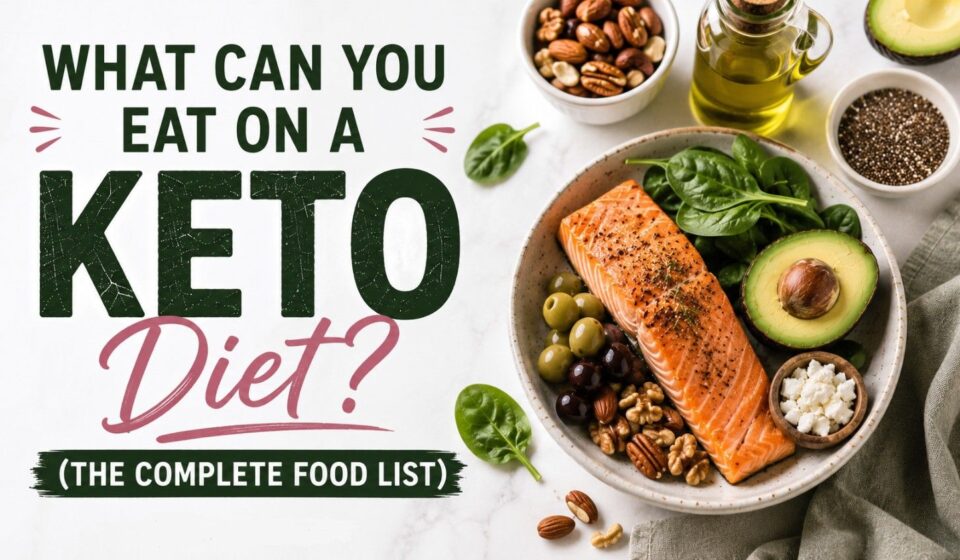

Every food you can eat freely, the ones to eat in moderation, and the ones to avoid — all in one place
One of the most practical questions for anyone starting keto: what exactly can I eat? The keto food list is both simpler and more nuanced than most guides suggest — simple because the core principle is clear (keep net carbs under 20–30g), nuanced because carbs hide in unexpected places.
This is the complete reference guide — bookmark it.

The Core Keto Principle
Net carbs = Total carbohydrates − Fiber
Fiber doesn’t raise blood glucose and doesn’t count toward your carb limit. Focus on net carbs, not total carbs.
Daily net carb target:
- Under 20g: most reliable for ketosis
- 20–30g: standard keto, works for most people
- 30–50g: low-carb but may not produce ketosis for everyone
✅ EAT FREELY — Zero or Very Low Carb
Meat and Poultry
All unprocessed meat is keto-friendly:
- Beef (all cuts — ribeye, sirloin, ground beef, brisket)
- Pork (chops, tenderloin, belly, ribs)
- Lamb and veal
- Chicken (all cuts — thighs, breast, wings, drumsticks)
- Turkey
- Duck
- Venison and other game meats
- Organ meats (liver, heart, kidney — nutrient-dense)
Note: Processed meats (bacon, sausage, deli meats) are often keto-friendly but check labels — some contain sugar or starch fillers. Always check the carb content.
Fish and Seafood
All fish and most seafood:
- Salmon (also high in omega-3s)
- Sardines and mackerel (canned — very keto-friendly)
- Tuna (fresh and canned)
- Cod, halibut, tilapia, sea bass
- Shrimp and prawns
- Crab and lobster
- Oysters and mussels (moderate — contain some carbs, check amounts)
- Scallops (moderate carbs — limit portions)
Eggs
- Whole eggs: essentially zero carbs, excellent protein and fat
- Eat as many as you want — eggs are one of the most keto-perfect foods
Dairy
- Butter and ghee: zero carbs, pure fat
- Heavy cream: very low carb (0.4g per tablespoon)
- Hard cheeses (cheddar, parmesan, gouda, Swiss, brie): very low carb
- Cream cheese: very low carb
- Sour cream: low carb
- Full-fat Greek yogurt: moderate carbs — 6–9g per cup (fit in limited amounts)
- Cottage cheese: moderate carbs — check portions
Avoid: Milk (12g carbs per cup), sweetened yogurt, low-fat dairy products with added sugar
Fats and Oils
All pure fats are zero-carb:
- Olive oil (extra virgin preferred)
- Coconut oil
- Avocado oil
- Butter and ghee
- Lard and tallow
- MCT oil (often used to boost ketone production)
- Sesame oil (small amounts for flavoring)
Non-Starchy Vegetables
These form the foundation of keto vegetable intake — low carb, high fiber and nutrients:
Lowest carb (eat freely):
- Spinach (0.4g net carbs per cup)
- Lettuce and salad greens (0.5–1g per cup)
- Cucumber (1.5g per cup)
- Zucchini (2.5g per cup)
- Celery (1g per cup)
- Asparagus (2g per cup)
- Mushrooms (2g per cup)
- Arugula (0.4g per cup)
- Bok choy (0.8g per cup)
- Radishes (1.8g per cup)
Low carb (eat in good amounts):
- Broccoli (4g per cup)
- Cauliflower (3g per cup)
- Cabbage (3g per cup)
- Brussels sprouts (5g per cup)
- Bell peppers (4–6g per cup — green lowest, red highest)
- Kale (5g per cup)
- Green beans (4g per cup)
- Eggplant (3g per cup)
- Tomatoes (4g per cup — technically a fruit)
- Avocado (2g net carbs per half — also high in healthy fat)
Nuts and Seeds (Moderate Portions)
Nutritious but contain carbs — portion carefully:
| Nut/Seed (28g/1oz) | Net Carbs |
|---|---|
| Macadamia nuts | 1.5g |
| Pecans | 1.2g |
| Brazil nuts | 1.4g |
| Walnuts | 2g |
| Almonds | 2.7g |
| Hazelnuts | 2g |
| Pumpkin seeds | 1.3g |
| Sunflower seeds | 3.5g |
| Cashews | 8.4g — limit |
| Pistachios | 5g — limit |
Avoid: Cashews and pistachios in quantity — higher carb than other nuts.
Condiments and Seasonings
- Salt, pepper, all dry herbs and spices: zero carbs
- Mustard (check labels — yellow mustard is typically very low carb)
- Hot sauce (most varieties — check for added sugar)
- Apple cider vinegar
- Lemon and lime juice (small amounts — 1–2g per tablespoon)
- Soy sauce or tamari (small amounts — 1g per tablespoon)
- Mayonnaise (full-fat, no added sugar)
- Ranch dressing (check labels)
Avoid: Ketchup (high sugar), BBQ sauce (very high sugar), teriyaki sauce, sweet chili sauce, most commercial dressings with sugar
⚠️ EAT IN MODERATION — Track Carefully
These foods are keto-compatible in controlled amounts but can push you over your carb limit if eaten freely:
Berries (Best Keto Fruits)
| Berry (100g) | Net Carbs |
|---|---|
| Raspberries | 5.4g |
| Blackberries | 4.9g |
| Strawberries | 5.7g |
| Blueberries | 12g — limit |
A small handful of raspberries or strawberries fits in a keto day. Blueberries are higher — portion carefully.
Dairy
- Full-fat Greek yogurt: 6–9g net carbs per cup — fits in small portions
- Cottage cheese: 3–6g per half cup — workable in limited amounts
- Milk: 12g per cup — generally too high for regular keto use
Vegetables (Higher Carb)
Track these more carefully:
- Onion: 9g per medium onion (use in small amounts for flavoring)
- Garlic: 1g per clove (fine in normal cooking amounts)
- Leeks: 11g per cup — limit
- Carrots: 7g per medium carrot — limit
- Beets: 13g per cup — avoid or very limited
Alcohol
- Spirits (vodka, gin, whiskey, tequila): 0g carbs per shot
- Dry wine (red or white): 3–4g per 150ml glass
- Dry champagne/prosecco: 1–2g per glass
- Beer: 10–15g per can — generally avoid
- Light beer: 3–6g per can — occasional use
Alcohol itself doesn’t contain carbs but pauses fat burning while being metabolized — use strategically.
Dark Chocolate
- 85%+ dark chocolate: 3–4g net carbs per 30g serving
- 70% dark chocolate: 8–10g per 30g serving — limit to small amounts
- Milk chocolate: too high in carbs and sugar — avoid
❌ AVOID — High Carb Foods
Grains and Starches
These are the primary foods to eliminate on keto:
- Bread (all types — white, whole wheat, sourdough, rye)
- Pasta and noodles
- Rice (white and brown)
- Oats and porridge
- Corn and cornmeal
- Quinoa
- Crackers and pretzels
- Chips
- Breakfast cereals
- Flour (wheat, rice, corn)
Starchy Vegetables
- Potatoes and sweet potatoes
- Parsnips (13g per cup)
- Corn (27g per cup)
- Peas (14g per cup)
- Butternut squash (15g per cup)
- Acorn squash (20g per cup)
Most Fruit
| Fruit | Net Carbs | Why to Avoid |
|---|---|---|
| Banana (medium) | 24g | Too high |
| Apple (medium) | 20g | Too high |
| Orange (medium) | 15g | Too high |
| Grapes (1 cup) | 26g | Very high |
| Mango (1 cup) | 22g | Very high |
| Pineapple (1 cup) | 19g | Too high |
| Watermelon (1 cup) | 11g | Borderline |
Legumes
Despite being nutritious, legumes are too high in carbs for keto:
- Lentils (30g per cup cooked)
- Black beans (26g per cup)
- Chickpeas (32g per cup)
- Kidney beans (29g per cup)
Sugar and Sweeteners
- Table sugar, brown sugar, powdered sugar
- Honey, maple syrup, agave
- High-fructose corn syrup
- Most commercial syrups and sauces
Keto-friendly sweeteners: Stevia, erythritol, monk fruit, allulose — these don’t raise blood sugar or insulin meaningfully.
Sugar-Sweetened Beverages
- Soda and soft drinks
- Fruit juice (all types)
- Sweetened coffee drinks
- Sports drinks and energy drinks
- Flavored waters with sugar
Most Processed “Low Fat” Products
Low-fat products typically replace fat with sugar and starch — the opposite of keto requirements.

Keto-Friendly Drinks
Freely:
- Water (still and sparkling)
- Black coffee
- Plain tea (green, black, herbal)
- Bone broth (electrolytes and protein)
In moderation:
- Coffee with heavy cream or full-fat milk (count carbs)
- Unsweetened almond milk (1–2g per cup)
- Kombucha (some contain significant sugar — check labels)
Avoid:
- All sweetened beverages
- Fruit juice
- Regular milk (too high in carbs for regular keto use)
- Beer
Reading Labels on Keto
Hidden carbs are the most common reason people don’t reach or maintain ketosis. Always check:
- Net carbs (total carbs minus fiber)
- Sugar alcohols — erythritol doesn’t count; maltitol and sorbitol partially count
- Serving size — many products show per small serving; actual consumption may be 2–3 servings
- Ingredient list — sugar, corn syrup, maltodextrin, dextrose, starch in the first few ingredients signals high carb content
As covered in our beginner’s guide to how to lose weight on keto, careful label reading is essential in the first weeks until keto-friendly foods become automatic knowledge.
The Bottom Line
Eat freely: Meat, fish, eggs, non-starchy vegetables, full-fat dairy, oils and fats, nuts in moderation.
Eat carefully: Berries, higher-carb vegetables, dark chocolate, spirits and dry wine.
Avoid: Grains, starchy vegetables, most fruit, legumes, sugar, and all sweetened beverages.
The keto food list becomes intuitive quickly — within a few weeks, recognizing high-carb and low-carb foods becomes automatic.
For the complete guide to starting keto, managing the keto flu, and reaching ketosis as quickly as possible, our full keto series covers everything you need in one place.
Is there a food you’re not sure about — high carb or keto-friendly? Share in the comments and I’ll help you figure it out.
Stop Wondering What to Eat This Week
Get my free 7-Day High-Protein Weight Loss Meal Plan delivered straight to your inbox — a simple week of satisfying, protein-focused meals designed to make healthy eating easier without complicated calorie tracking.
- 7 full days of breakfast, lunch, dinner & snacks
- One complete shopping list for the whole week
- A quick high-protein food cheat sheet
- Simple daily tips to help you stay on track
Free PDF • Delivered by email • Unsubscribe anytime
Check your inbox 💜
Your free 7-day high-protein meal plan is on its way.