
The most debated fitness question — here’s what the science actually shows
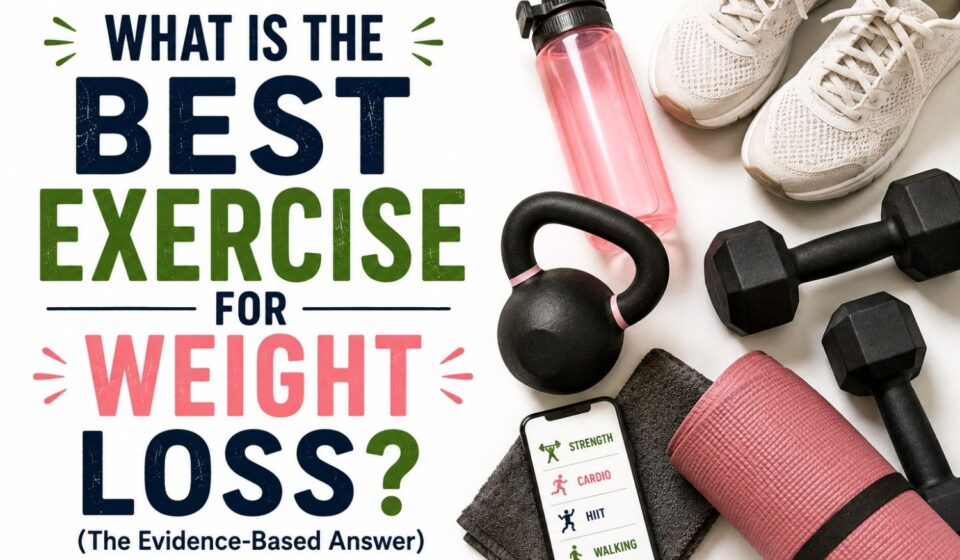
“What’s the best exercise for weight loss?” is one of the most searched fitness questions on the internet — and one that generates enormous debate. Cardio vs. weights. HIIT vs. steady state. Running vs. cycling. Everyone has an opinion.
Here’s the honest, evidence-based answer: the best exercise for weight loss is more nuanced than any single activity — and the research points to a combination approach that most people aren’t doing.
The Honest Answer First
No single exercise type is definitively “best” for weight loss in all contexts. The research shows:
- Cardio burns more calories per session
- Strength training raises resting metabolic rate long-term
- HIIT produces the best results per time invested
- Walking is the most sustainable and most underrated
- The combination of strength training + cardio consistently outperforms either alone
The “best” exercise is ultimately the one you’ll do consistently — because exercise you abandon produces zero results regardless of how optimal it is theoretically.
That said, some approaches are genuinely more effective than others — and understanding why helps make better choices.
How Exercise Actually Causes Weight Loss
Before comparing exercise types, understanding the mechanisms:
Direct calorie burn: Exercise burns calories during the session. This is the most obvious mechanism but often overestimated — most exercise sessions burn 200–500 calories, less than most people think.
EPOC (Excess Post-Exercise Oxygen Consumption): After exercise, the body continues burning calories at an elevated rate during recovery. This “afterburn” effect varies significantly by exercise type — higher intensity exercise produces more EPOC.
Muscle building: Muscle tissue burns calories at rest — approximately 6 calories per pound per day. Building muscle raises resting metabolic rate permanently, producing 24/7 calorie burn increases that compound over months and years.
Improved insulin sensitivity: Exercise dramatically improves the body’s ability to use glucose efficiently — reducing fat storage and improving fat mobilization.
Appetite regulation: Exercise affects hunger hormones — though the relationship is complex. Some exercise suppresses appetite; other types stimulate it.
Cardio for Weight Loss
What It Does Well
Cardio (running, cycling, swimming, rowing, elliptical) burns the most calories per session of any exercise type. A 160 lb person running at moderate pace burns approximately 600 calories per hour — more than most strength training sessions.
Cardio also:
- Improves cardiovascular health significantly
- Reduces stress and cortisol (particularly lower-intensity cardio)
- Is accessible — running requires only shoes
- Has a strong dose-response relationship with health outcomes
The Limitations
Calorie compensation: Research consistently shows that cardio stimulates appetite more than strength training — many people eat more after cardio sessions, partially or fully offsetting the calories burned.
No muscle building: Cardio doesn’t build meaningful muscle mass — meaning it doesn’t raise resting metabolic rate. Two people can burn the same calories from cardio and strength training — but the strength trainer’s body burns more calories the other 23 hours of the day.
Adaptation: The body adapts to cardio efficiently — becoming better at the activity and burning fewer calories per session over time. A beginner burns significantly more calories running a mile than a trained runner.
Muscle loss risk: High volumes of cardio during calorie restriction can accelerate muscle loss — reducing the metabolic rate that makes long-term weight maintenance easier.
Best Cardio for Weight Loss
Zone 2 cardio (conversational pace, 60–70% max heart rate): Burns fat as primary fuel, improves cardiovascular fitness, low cortisol impact, sustainable daily.
Running: High calorie burn, accessible, effective — but high injury rate with excessive volume.
Cycling: Lower impact than running, high calorie burn, sustainable.
Swimming: Full body, low impact, good calorie burn — but appetite stimulation is higher than other cardio types.
Strength Training for Weight Loss
What It Does Well
Strength training is the most underrated weight loss tool — particularly for long-term results:
Muscle building raises resting metabolic rate: Each pound of muscle burns approximately 6 calories per day at rest. Building 5 lbs of muscle raises resting metabolic rate by 30 calories per day — 10,950 calories per year — permanently, without any additional exercise.
Better body composition: Two people can weigh the same but look completely different based on muscle-to-fat ratio. Strength training improves body composition even when scale weight changes minimally.
Less appetite stimulation: Strength training generally stimulates appetite less than cardio — making calorie deficit maintenance easier.
Better insulin sensitivity: Resistance training dramatically improves glucose disposal and insulin sensitivity — reducing the fat-storing hormonal environment.
Long-term metabolism protection: As covered in our article on how to increase metabolism after 40, muscle mass maintenance through strength training is the primary defense against age-related metabolic decline.
The Limitations
Lower acute calorie burn: A strength training session typically burns 200–400 calories — less than equivalent time doing cardio.
Requires equipment or gym access: Though bodyweight training is possible, progressive overload (the mechanism for muscle building) is harder without equipment.
Slower visible results initially: Muscle building is a slow process — body composition improvements from strength training take weeks to months to become visible.
Best Strength Training for Weight Loss
Compound movements: Squats, deadlifts, bench press, rows, overhead press. These recruit maximum muscle mass, burn the most calories, and produce the best hormonal response.
Progressive overload: Consistently increasing weight or volume — this is what produces muscle growth that raises metabolic rate.
3–4 sessions per week: Sufficient stimulus with adequate recovery.
HIIT for Weight Loss
High-Intensity Interval Training — alternating short bursts of maximum effort with recovery periods — has the strongest evidence for time-efficient fat loss.
What Makes HIIT Effective
Superior EPOC: HIIT produces the highest afterburn effect of any exercise type — elevated calorie burn continues for 12–24 hours after a session.
Metabolic adaptations: HIIT produces powerful improvements in insulin sensitivity, fat oxidation capacity, and cardiovascular fitness.
Time efficiency: 20 minutes of HIIT produces comparable or better fat loss outcomes than 45–60 minutes of steady-state cardio in most studies.
Muscle preservation: HIIT preserves muscle better than steady-state cardio during calorie restriction.
The Limitations
High recovery demand: HIIT is genuinely taxing — more than 3 sessions per week impairs recovery for most people and increases injury risk.
Not sustainable daily: Unlike walking or moderate cardio, daily HIIT is counterproductive — recovery is part of the adaptation.
Technically demanding: Proper HIIT requires genuine maximum effort intervals — many people do “medium-intensity interval training” and wonder why they don’t get HIIT results.
As covered in our guide to HIIT for beginners, 2–3 sessions per week of genuine high-intensity intervals produces the best fat loss outcomes for the time invested.
Walking for Weight Loss
Walking is the most underrated weight loss exercise — and the one with the most consistent long-term evidence.
Why Walking Works So Well
Sustainable daily: Unlike HIIT or running, walking can be done every day without recovery issues — producing consistent calorie burn that compounds over months and years.
No appetite compensation: Walking is one of the few exercises that doesn’t significantly stimulate appetite — meaning the calories burned aren’t compensated by eating more.
Low cortisol impact: Walking actually reduces cortisol rather than elevating it — supporting the hormonal environment that facilitates fat loss.
Accessible and free: Requires nothing but shoes and time.
Compounds dramatically: 10,000 steps daily burns approximately 400–500 calories. Over a year, this accumulates to 150,000–180,000 calories — equivalent to 40–50 lbs of fat.
As covered in our guide to how many steps a day to lose weight, daily walking is one of the highest-return, lowest-cost weight loss interventions available.
The Limitation
Walking alone, without calorie restriction or strength training, produces slow fat loss — sufficient for modest goals but insufficient for significant body transformation.
The Evidence on Different Exercise Combinations
Studies comparing exercise types for weight loss:
Cardio only vs. strength training only: Both produce similar weight loss at equivalent time investment — but different body composition outcomes. Cardio loses more scale weight; strength training loses more fat while maintaining or building muscle.
Cardio + strength training vs. either alone: Consistently produces better fat loss outcomes than either modality alone — the combination appears synergistic.
HIIT vs. steady-state cardio: HIIT produces comparable or better fat loss in significantly less time — making it more time-efficient for people with limited exercise availability.
Exercise vs. diet alone: Diet produces faster fat loss than exercise alone. Exercise combined with diet produces better outcomes than diet alone — and much better long-term maintenance.
The Optimal Exercise Combination for Weight Loss
Based on the evidence, the most effective exercise approach for fat loss:
Foundation: Daily walking (8,000–10,000 steps)
- Consistent daily calorie burn without recovery demands
- No appetite stimulation
- Cortisol reduction
- Sustainable indefinitely
Core: Strength training 3x per week
- Muscle building that raises resting metabolic rate
- Best long-term fat loss and body composition outcomes
- Preservation of muscle during calorie deficit
Accelerator: HIIT 2x per week
- Superior calorie burn and EPOC per time invested
- Powerful insulin sensitivity improvements
- Preserves muscle better than steady-state cardio
Total time commitment: 30 minutes strength training × 3 + 20 minutes HIIT × 2 + daily walking = approximately 2.5 hours of structured exercise per week plus walking.
This combination addresses every mechanism of exercise-driven fat loss simultaneously — direct calorie burn (HIIT), metabolic rate elevation (strength), daily consistency (walking), and hormonal optimization (all three).
What Actually Matters Most
Consistency beats optimization. The theoretically optimal exercise program you abandon after 3 weeks produces worse results than a merely good program you stick with for 6 months.
Diet remains primary. Exercise is a fat loss accelerator, not a fat loss driver. As covered in our guide to does exercise actually help you lose weight, you cannot outrun a poor diet — dietary calorie management drives fat loss, exercise supports and enhances it.
Progressive overload matters. Whatever exercise you choose, consistently challenging the body — increasing intensity, duration, or resistance over time — is what produces continued adaptation. Doing the same workout at the same intensity forever produces diminishing returns.
The Bottom Line
What is the best exercise for weight loss?
The combination of strength training + HIIT + daily walking produces the best outcomes across all fat loss mechanisms:
- Walking: sustainable daily calorie burn without compensation
- Strength training: metabolic rate elevation through muscle building
- HIIT: time-efficient calorie burn and superior metabolic adaptations
If you can only do one: Strength training produces the best long-term fat loss outcomes — the muscle built raises metabolic rate permanently, improving results even on rest days.
If time is the constraint: HIIT 2–3x per week + daily walking produces excellent results with minimal time investment.
The non-negotiable: Whatever you choose, do it consistently. Consistency with an imperfect program beats perfection pursued intermittently.
For the complete fat loss framework that integrates exercise with diet and lifestyle, our guide to how to get rid of belly fat covers everything in one place.
What exercise approach has worked best for your weight loss — and what did you try that didn’t work? Share in the comments.
Stop Wondering What to Eat This Week
Get my free 7-Day High-Protein Weight Loss Meal Plan delivered straight to your inbox — a simple week of satisfying, protein-focused meals designed to make healthy eating easier without complicated calorie tracking.
- 7 full days of breakfast, lunch, dinner & snacks
- One complete shopping list for the whole week
- A quick high-protein food cheat sheet
- Simple daily tips to help you stay on track
Free PDF • Delivered by email • Unsubscribe anytime
Check your inbox 💜
Your free 7-day high-protein meal plan is on its way.