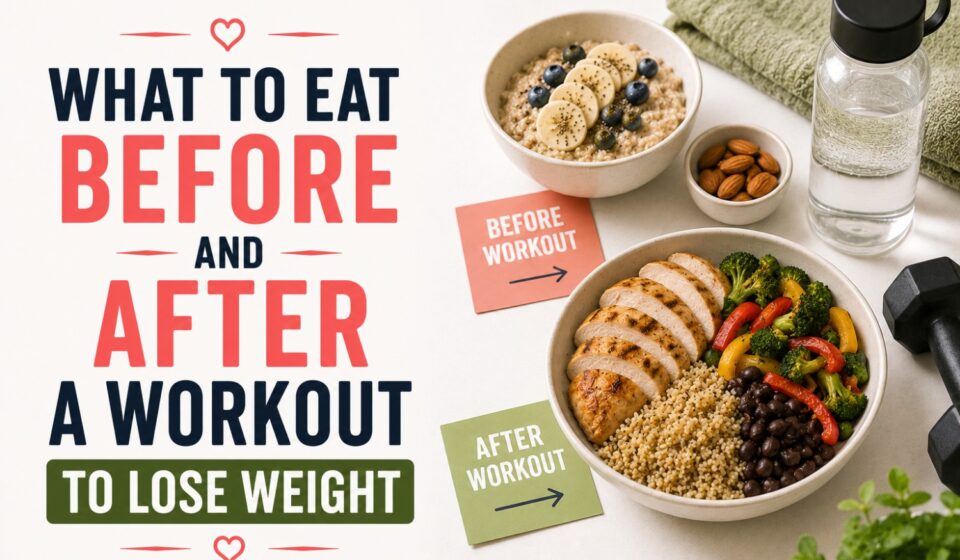

Workout nutrition done right makes fat loss faster and preserves the muscle that keeps your metabolism high — here’s exactly what to eat and when
Workout nutrition is one of the most over-complicated areas of weight loss — surrounded by elaborate supplement protocols, precise timing windows, and conflicting advice that makes most people either obsess over every detail or ignore it entirely.
The honest reality: workout nutrition matters, but not as much as total daily calorie and protein intake. Getting the basics right produces meaningful benefits. Optimizing every detail beyond the basics produces diminishing returns.

Here’s the practical guide — what actually matters, what doesn’t, and exactly what to eat.
Does What You Eat Around Workouts Actually Matter for Weight Loss?
Yes — but the magnitude depends on your goals.
For general weight loss (losing fat while maintaining muscle):
- Total daily protein and calories matter most
- Workout nutrition provides meaningful but secondary benefits
- Getting it right improves results; getting it wrong doesn’t ruin them
For body composition optimization (maximizing fat loss while minimizing muscle loss):
- Workout nutrition becomes more significant
- Pre-workout nutrition affects training quality and therefore calorie burn
- Post-workout nutrition affects muscle protein synthesis and recovery
The practical hierarchy:
- Total daily calories (most important)
- Total daily protein (second most important)
- Pre and post-workout nutrition (meaningful but secondary)
Don’t let workout nutrition complexity become a reason to ignore basics 1 and 2.
Pre-Workout Nutrition for Weight Loss
Why Pre-Workout Nutrition Matters
What you eat before exercise affects:
Training performance: Adequate carbohydrates provide the glycogen (stored glucose) that fuels high-intensity exercise. Exercising in a significantly depleted glycogen state reduces performance — meaning fewer calories burned and less training stimulus for muscle preservation.
Muscle preservation: Training with adequate protein availability reduces muscle protein breakdown during exercise — particularly important during a calorie deficit where muscle loss risk is elevated.
Sustained energy: Proper pre-workout nutrition prevents energy crashes mid-workout that reduce intensity and duration.
The Pre-Workout Meal — Timing
1-3 hours before exercise: Full pre-workout meal — enough time to digest without discomfort. This is the ideal window for most people.
30-60 minutes before: Small, easily digestible snack — if a full meal isn’t possible or comfortable.
Immediately before (under 30 minutes): Very small amount only — a banana, a few dates, or nothing if the previous meal was recent.
What to Eat Before a Workout
The components:
Carbohydrates (primary fuel): Moderate amount of complex or simple carbohydrates — provides glycogen to fuel the workout. More important for cardio and HIIT than strength training.
Protein (muscle preservation): Moderate protein — 20-30g reduces muscle protein breakdown during exercise and contributes to the total daily protein target.
Low fat and fiber immediately before: Fat and fiber slow gastric emptying — causing discomfort during vigorous exercise. Minimize these in the 30-60 minutes immediately before training.
The Best Pre-Workout Foods for Weight Loss
1-3 Hours Before (Full Meal Options):
Chicken and rice: The classic pre-workout meal — moderate carbohydrates from rice, high protein from chicken, low fat. Exactly the macro profile that supports performance without digestive discomfort.
Greek yogurt + banana + honey: 25g protein from yogurt, quick carbohydrates from banana and honey — works well 1.5-2 hours before.
Oatmeal + protein powder: Sustained energy from oats, protein from powder — one of the best pre-workout breakfast options.
Eggs + whole grain toast: 18-20g protein from eggs, moderate carbohydrates from toast. Works 2-3 hours before exercise.

Cottage cheese + fruit: High casein protein + fruit carbohydrates — particularly good before morning workouts.
30-60 Minutes Before (Snack Options):
Banana: The most universally appropriate pre-workout snack — fast-digesting carbohydrates, potassium (supports muscle function), 105 calories. Easy to digest, rarely causes discomfort.
Apple with 1 tablespoon almond butter: Carbohydrates from apple, small protein and fat from almond butter — works 45-60 minutes before.
Rice cake with honey: Very fast-digesting carbohydrates — appropriate 30-45 minutes before.
Dates (2-3): Fast carbohydrates at minimal volume — useful when time is very short before training.
Small Greek yogurt (100g): Protein + carbohydrates in an easily digestible format.
Should You Train Fasted for Weight Loss?
This is one of the most debated questions in weight loss fitness — and the evidence gives a nuanced answer.
What fasted training does:
- Higher fat oxidation during the workout (more fat burned as fuel)
- Slightly elevated growth hormone response
- Potentially useful for lower-intensity cardio (walking, light cycling)
What fasted training doesn’t do:
- Produce more total fat loss over 24 hours (when total calories and protein are matched)
- Preserve muscle better (actually increases muscle protein breakdown risk)
- Improve performance (most people perform worse fasted)
The honest verdict: Fasted training is a personal preference, not a metabolic advantage. If you prefer training fasted and perform well, it’s fine. If training fasted makes you feel weak, lightheaded, or produces poor workouts — eat before training. The workout quality matters more than the fasting state.
For strength training specifically — where performance and muscle preservation are priorities — fasted training is generally suboptimal.
Post-Workout Nutrition for Weight Loss
Why Post-Workout Nutrition Matters
The period after exercise is when the body is primed for:
- Muscle protein synthesis (rebuilding and strengthening muscle)
- Glycogen replenishment (restoring the fuel used during exercise)
- Recovery and adaptation
Providing adequate protein and carbohydrates in this window supports muscle preservation during fat loss — which is critical because losing muscle reduces metabolic rate and undermines long-term weight management.
The Post-Workout Protein Priority
This is the most important post-workout nutrition principle:
As covered in our guide to how much protein you actually need per day, protein distribution across meals matters — and post-workout is one of the most important times to consume protein.
Target: 25-40g protein within 1-2 hours after training
Why it matters: Exercise creates a “window” of elevated muscle protein synthesis — providing protein in this window maximizes the muscle-building and muscle-preserving response to training.
The anabolic window reality: Research has refined the original “30-minute anabolic window” concept — the actual window is considerably longer (1-2 hours), and total daily protein matters more than precise timing. But post-workout protein is still meaningfully beneficial, particularly for people in a calorie deficit where muscle preservation is the priority.
Post-Workout Carbohydrates — How Much?
For weight loss (vs. performance optimization), post-workout carbohydrates are secondary to protein:
For fat loss: Moderate carbohydrates post-workout — 30-50g is appropriate for most people. The muscle glycogen replenishment after a typical workout doesn’t require large carbohydrate loads.
For endurance athletes: Higher carbohydrate needs post-workout — this guide focuses on general weight loss rather than athletic performance.
The practical approach: A balanced meal containing protein + moderate carbohydrates in the 1-2 hours post-workout covers both priorities without requiring separate protein and carbohydrate supplements.
The Best Post-Workout Foods for Weight Loss
Complete Meal Options (Best for Weight Loss):
Grilled chicken + sweet potato + vegetables: The most complete post-workout weight loss meal — high protein from chicken, glycogen-replenishing carbohydrates from sweet potato, micronutrients from vegetables. ~400-450 calories, 40g protein, 6g fiber
Salmon + quinoa + salad: Protein + omega-3s from salmon (reduces exercise-induced inflammation), complete protein + carbohydrates from quinoa. ~450 calories, 38g protein, 5g fiber
Greek yogurt bowl (200g yogurt + berries + granola + honey): Fast-digesting protein from whey in Greek yogurt, carbohydrates from berries and granola. ~350 calories, 22g protein, 4g fiber
Eggs + whole grain toast + avocado: Complete protein from eggs, carbohydrates from toast, healthy fat from avocado. ~380 calories, 22g protein, 6g fiber
Tuna + rice + vegetables: Lean, high protein, moderate carbohydrates — one of the most efficient post-workout weight loss meals. ~350 calories, 38g protein, 4g fiber
Quick Options (When Time Is Limited):
Protein shake + banana: 25-30g protein from shake, fast carbohydrates from banana — the most convenient post-workout option. ~280-320 calories, 28-32g protein
Cottage cheese + fruit: Casein protein from cottage cheese (slow-releasing — beneficial for recovery), natural sugars from fruit. ~250 calories, 22g protein
Greek yogurt + protein powder mixed in: Doubles the protein content of yogurt — 35-40g protein in a convenient format. ~250 calories, 38g protein
Pre and Post-Workout Nutrition by Exercise Type
Strength Training
Pre-workout priority: Protein + moderate carbohydrates Post-workout priority: Protein (25-40g) + moderate carbohydrates Rationale: Muscle protein synthesis from strength training is maximized with adequate protein around the session. Carbohydrates support performance and glycogen replenishment.
HIIT and Cardio
Pre-workout priority: Carbohydrates (primary fuel) + small protein Post-workout priority: Protein + carbohydrates (moderate) Rationale: High-intensity cardio depletes glycogen rapidly — carbohydrates before and after are relatively more important than for strength training.
Low-Intensity Cardio (Walking, Light Cycling)
Pre-workout priority: Optional — low-intensity exercise can be performed fasted without significant performance or muscle loss risk Post-workout priority: Protein — glycogen depletion is minimal at low intensity Rationale: The lower intensity means carbohydrate requirements are lower. This is the exercise type most compatible with fasted training.
What About Supplements?
Protein Powder
The most useful supplement for workout nutrition — provides fast, convenient, precise protein without significant preparation. Whey isolate is absorbed most rapidly (ideal post-workout). Casein is absorbed slowly (better before bed or between meals).
For weight loss: A protein shake post-workout is one of the most efficient ways to hit the protein target without adding significant calories from fat or carbohydrates.
Creatine
The most evidence-backed performance supplement available — increases strength and power output, supports muscle building. Not specifically a fat loss supplement but supports the muscle preservation that protects metabolic rate during weight loss.
For weight loss: Worth considering for anyone doing serious strength training during a calorie deficit.
Caffeine
As covered in our guide to does coffee help you lose weight, caffeine before exercise improves performance, increases fat oxidation, and is one of the few pre-workout supplements with strong evidence.
200-400mg caffeine (1-2 cups of coffee) 30-60 minutes before exercise — the most evidence-backed pre-workout supplement available at zero cost beyond the coffee itself.
What to Skip
Pre-workout supplements beyond caffeine — most contain stimulants at doses not meaningfully different from coffee, with added ingredients of dubious benefit and marketing markup.
BCAAs (branched chain amino acids) — redundant if total daily protein is adequate. Useful only if training fasted and trying to reduce muscle protein breakdown without a full pre-workout meal.
Practical Workout Nutrition for Busy People
Morning workouts:
- No time for a full meal: banana + protein shake before, proper breakfast after
- Time for a small meal (45-60 min before): Greek yogurt + fruit
- Full meal possible (90+ min before): oatmeal + eggs
Lunchtime workouts:
- Pre-workout: morning breakfast (eaten 3+ hours before) is often sufficient
- Post-workout: lunch is the natural post-workout meal — prioritize protein
Evening workouts:
- Pre-workout: afternoon snack (Greek yogurt, apple + nut butter) 1-2 hours before
- Post-workout: dinner is the natural post-workout meal
The simplest possible approach:
- Eat a protein-containing meal 1-3 hours before training
- Eat a protein-containing meal within 2 hours after training
- Hit total daily protein target (0.8-1g per pound of bodyweight)
Everything else is optimization beyond what matters for most people’s weight loss goals.
The Bottom Line
Pre-workout (1-3 hours before):
- 20-30g protein + moderate carbohydrates + low fat/fiber
- Best options: chicken + rice, Greek yogurt + banana, oatmeal + protein powder
- 30-60 min before: banana, apple + almond butter, small yogurt
Post-workout (within 1-2 hours):
- 25-40g protein + moderate carbohydrates
- Best options: chicken + sweet potato, salmon + quinoa, protein shake + banana, Greek yogurt bowl
The priorities in order:
- Total daily calories — most important
- Total daily protein (0.8-1g per pound) — second most important
- Pre/post workout nutrition — meaningful but secondary
The one rule that matters most: Get protein within 2 hours after training. Everything else is secondary to this.
For the complete dietary framework, our guide to how to get rid of belly fat covers everything in one place.
What’s your go-to pre or post-workout meal — and have you noticed a difference in performance or recovery when you eat well around your workouts? Share in the comments.
Stop Wondering What to Eat This Week
Get my free 7-Day High-Protein Weight Loss Meal Plan delivered straight to your inbox — a simple week of satisfying, protein-focused meals designed to make healthy eating easier without complicated calorie tracking.
- 7 full days of breakfast, lunch, dinner & snacks
- One complete shopping list for the whole week
- A quick high-protein food cheat sheet
- Simple daily tips to help you stay on track
Free PDF • Delivered by email • Unsubscribe anytime
Check your inbox 💜
Your free 7-day high-protein meal plan is on its way.