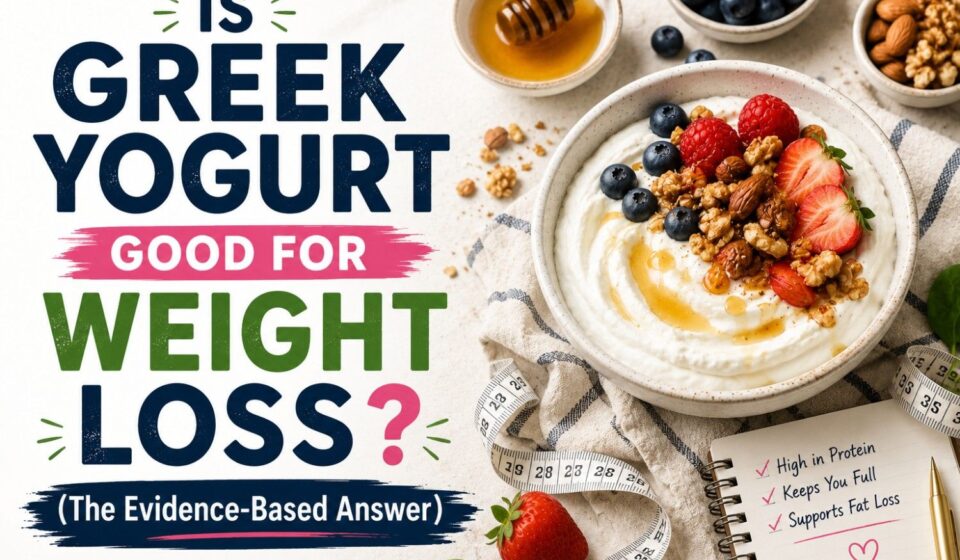

One of the most consistently recommended weight loss foods — here’s why it actually deserves the hype

Greek yogurt appears on virtually every weight loss food list. Unlike many weight loss “superfoods” that don’t hold up to scrutiny, Greek yogurt genuinely earns its reputation. Here’s exactly why — and the important distinctions between types that determine whether it helps or undermines your goals.
What Makes Greek Yogurt Different From Regular Yogurt
Greek yogurt is made by straining regular yogurt to remove most of the whey — the liquid component. This straining process produces a thicker, creamier yogurt with significantly different nutritional properties:
| Regular Yogurt | Greek Yogurt | |
|---|---|---|
| Protein (per 200g) | 6–8g | 17–20g |
| Carbohydrates | 15–20g | 6–10g |
| Fat (non-fat versions) | 0–1g | 0–1g |
| Calories | 100–150 | 100–130 |
| Texture | Thin, liquid | Thick, creamy |
| Satiety | Moderate | High |
The straining removes a large portion of the lactose (milk sugar) alongside the whey — leaving behind a product that’s higher in protein, lower in carbohydrates, and significantly more satiating than regular yogurt.
Why Greek Yogurt Is Excellent for Weight Loss
Exceptional Protein-to-Calorie Ratio
200g of plain non-fat Greek yogurt provides 17–20g of protein at approximately 100–130 calories. This is one of the best protein-per-calorie ratios of any commonly available food — comparable to chicken breast and significantly better than most dairy products.
As covered in our guide to how much protein you actually need per day, protein is the most important single dietary variable for fat loss quality. Greek yogurt is one of the most efficient ways to hit daily protein targets.
High Satiety — Keeps You Full for Hours
The combination of protein and the thick, creamy texture of Greek yogurt produces significant and lasting satiety. Studies comparing Greek yogurt to other afternoon snacks have found it produces greater fullness and reduced hunger before dinner — leading to lower total daily calorie intake.
The casein protein in yogurt (the same slow-digesting protein in cottage cheese) digests gradually — providing sustained amino acid release and extended fullness compared to faster-digesting proteins.
Supports Gut Health
Greek yogurt contains live probiotic cultures — beneficial bacteria that support gut microbiome health. The gut microbiome is increasingly understood to play a direct role in metabolism, fat storage, inflammation, and even appetite regulation.
Regular probiotic food consumption (including Greek yogurt) has been associated with:

- Reduced inflammation
- Improved insulin sensitivity
- Potential modest reductions in body weight in some studies
- Better digestive health that supports overall dietary adherence
Stabilizes Blood Sugar
Greek yogurt’s low carbohydrate content (6–10g per serving, mostly lactose) produces a minimal blood glucose response. Eating it as a snack between meals or with breakfast stabilizes blood sugar — reducing the mid-morning and mid-afternoon energy crashes that drive hunger and poor food choices.
Bone and Immune Support
Greek yogurt is high in calcium, phosphorus, and vitamin B12 — nutrients that support bone density, immune function, and energy metabolism. During a calorie deficit, getting adequate micronutrients becomes harder; Greek yogurt’s nutrient density helps maintain adequacy.
Versatile and Convenient
Greek yogurt requires zero preparation. Open and eat. This zero-friction quality makes it one of the most reliably consumed healthy foods — and consistency matters more for weight loss than theoretical optimality.
The Critical Distinction: Plain vs. Flavored
This is where Greek yogurt’s reputation as a health food either holds up or collapses.
Plain Greek yogurt:
- No added sugar
- 6–10g carbohydrates (natural lactose only)
- 100–130 calories per 200g
- Genuinely excellent for weight loss
Flavored Greek yogurt (strawberry, vanilla, honey, etc.):
- 15–25g added sugar per serving
- 150–200+ calories
- Effectively a dessert masquerading as a health food
- Turns a 10g carbohydrate food into a 25–35g carbohydrate food
The difference between plain and flavored Greek yogurt is substantial. Flavored Greek yogurt consumed under the impression that it’s a health food is one of the most common hidden calorie sources in people who believe they’re eating well.
The rule: Always choose plain Greek yogurt. Add your own fruit, a small drizzle of honey, or other toppings — this way you control exactly what goes in.
Full Fat vs. Low Fat vs. Non-Fat
Another important distinction:
Non-fat (0%) Greek yogurt:
- Lowest calories (100–110 per 200g)
- Highest protein percentage
- Less creamy texture
- Best for maximum protein per calorie
Low-fat (2%) Greek yogurt:
- Slightly more calories (120–140 per 200g)
- Better texture than non-fat
- Good balance of protein and satiety
Full-fat Greek yogurt:
- More calories (150–200 per 200g)
- Richest texture and flavor
- More satisfying — full fat may produce greater satiety
- The additional fat content means slightly fewer protein grams per calorie
For weight loss: Non-fat or 2% plain Greek yogurt offers the best protein-to-calorie ratio. Full-fat is nutritious and satisfying but less calorie-efficient for fat loss goals.
How Much Does Greek Yogurt Help With Weight Loss?
The research is specifically positive:
Study 1: A controlled trial found that participants who snacked on Greek yogurt (higher protein) consumed significantly fewer calories at dinner than those who snacked on crackers or chocolate of equivalent calories — demonstrating the extended satiety effect.
Study 2: Higher-protein dairy consumption (including Greek yogurt) during calorie restriction was associated with better preservation of lean muscle mass — meaning more of the weight lost was fat rather than muscle.
Study 3: Regular probiotic yogurt consumption was associated with modest reductions in body weight and fat mass in overweight adults compared to non-probiotic dairy of equivalent nutrition.
The Best Ways to Use Greek Yogurt for Weight Loss
As a breakfast base: 200g plain Greek yogurt + berries + a small amount of granola or nuts = high-protein breakfast with fiber and healthy fat. As covered in our article on the best high protein breakfast ideas, starting the day with this combination reduces calorie intake throughout the day.
As an afternoon snack: Possibly the single best use. A 200g pot of plain Greek yogurt with some berries at 3–4pm produces satiety that reduces dinner portion size and eliminates late-night snacking for many people.
As a sour cream substitute: Plain Greek yogurt works as a 1:1 sour cream replacement in recipes — slashing calories while maintaining creaminess.
As a base for dips and sauces: Mixed with garlic, herbs, and lemon juice = tzatziki-style dip. Used as a base for salad dressings. Replaces mayonnaise in many contexts.
As a dessert alternative: With a drizzle of honey and berries, plain Greek yogurt satisfies dessert cravings at 150 calories with 17g protein — compared to 300–500 calories for most actual desserts.
In smoothies: Adds protein and creaminess to smoothies. 200g Greek yogurt + frozen berries + a splash of milk = a high-protein, genuinely filling breakfast smoothie.
Mixed into overnight oats: Combining Greek yogurt and oats overnight creates a high-protein, high-fiber breakfast that keeps you full for hours.
What to Look for When Buying Greek Yogurt
Ingredients to look for:
- Milk
- Live active cultures (look for L. acidophilus, Bifidus, S. thermophilus etc.)
That’s it. Plain Greek yogurt needs only two or three ingredients.
Ingredients that indicate it’s not what it seems:
- Added sugar (sucrose, fructose, corn syrup) in the ingredients list
- Modified starch (used to thicken regular yogurt to look like Greek yogurt without straining)
- Artificial sweeteners (common in “diet” Greek yogurt products)
- Cream (used in some versions to add back richness after straining — not problematic but adds calories)
Watch out for: Products labeled “Greek-style” rather than “Greek” yogurt — these are often thickened with additives rather than genuinely strained, and may not have the same protein profile.
Greek Yogurt vs. Cottage Cheese
Both are excellent weight loss foods with similar protein profiles. The comparison:
| Greek Yogurt (200g, non-fat) | Cottage Cheese (200g) | |
|---|---|---|
| Protein | 17–20g | 22–25g |
| Calories | 100–130 | 160–180 |
| Fat | 0–1g | 2–5g |
| Texture | Creamy, smooth | Chunky curds |
| Flavor | Mild tang | Mild, slightly salty |
| Versatility | Very high | High |
Cottage cheese has more protein per serving; Greek yogurt has fewer calories per serving. Both are excellent — use whichever you prefer eating. Preference determines consistency, and consistency determines outcomes.
As covered in our article on the best low-calorie high-protein snacks, both Greek yogurt and cottage cheese rank among the best protein-to-calorie foods available.
The Bottom Line
Is Greek yogurt good for weight loss?
Yes — one of the best foods available for fat loss. It provides:
- Exceptional protein per calorie (17–20g per 200g serving at 100–130 calories)
- High and sustained satiety
- Probiotic benefits for gut health
- Blood sugar stabilization
- Zero preparation required
The critical caveats:
- Always choose plain — flavored versions contain 15–25g added sugar that negates the benefits
- Non-fat or 2% for maximum protein efficiency
- Account for the calories — even healthy foods count
For the complete dietary framework that puts Greek yogurt to work as part of a fat loss approach, our guide to how to get rid of belly fat covers everything in one place.
How do you eat Greek yogurt — and have you found specific combinations that make it more satisfying? Share in the comments.