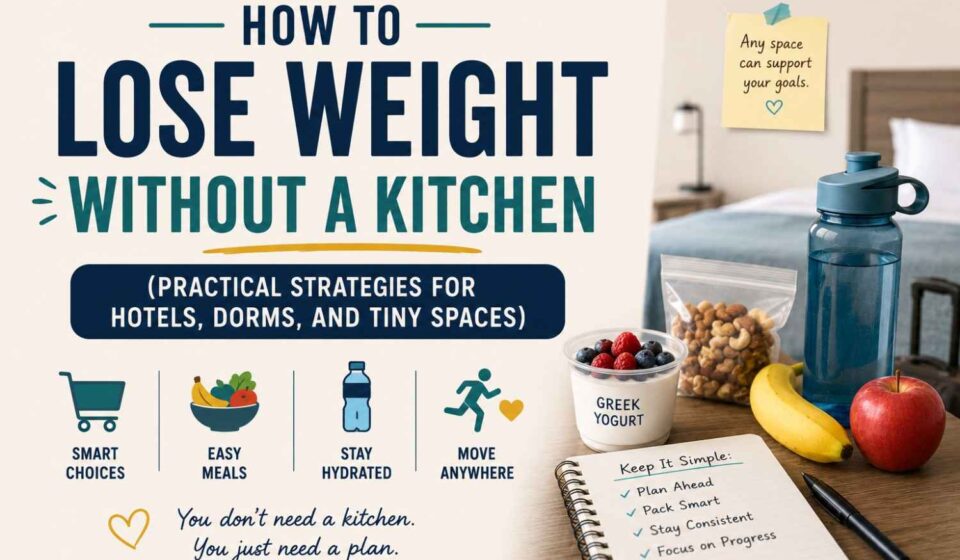
How to Lose Weight Without a Kitchen (Practical Strategies for Hotels, Dorms, and Tiny Spaces)

No stove, no oven, no kitchen — here’s how to eat well and lose weight anyway
Not having a kitchen isn’t just a temporary inconvenience for a small number of people — it’s the daily reality for millions. Hotel workers and business travelers living out of rooms for weeks at a time. College students in dorms with only a mini fridge and a microwave. People between homes, in extended-stay accommodations, or in living situations with no cooking facilities.
Standard healthy eating and weight loss advice assumes a fully equipped kitchen. This guide doesn’t. It’s built for people who genuinely don’t have one — and provides practical, immediately usable strategies for eating well and losing weight regardless.

The Core Challenge: No-Kitchen Nutrition
The absence of a kitchen removes:
- The ability to cook protein from raw (no grilled chicken, no scrambled eggs, no cooked fish)
- The ability to prepare vegetables through cooking (no roasting, no steaming)
- The ability to batch cook and meal prep in the conventional sense
What remains available:
- Anything that doesn’t require cooking
- Anything that can be prepared with a microwave (if available)
- Anything from food service (restaurants, cafeterias, takeout)
- Anything from grocery stores and convenience stores that’s ready to eat
This is more than enough to eat well and lose weight — with the right approach.
The Equipment Worth Having
Even without a kitchen, a few pieces of equipment dramatically expand food options:
Mini fridge — if not provided, often worth renting or purchasing for extended stays. Allows refrigerated foods (proteins, dairy, vegetables) to be kept safely.
Microwave — available in most hotel rooms, dormitories, and many non-kitchen living situations. Dramatically expands what’s possible. Microwaves can: heat foods, cook eggs, steam vegetables in microwave-safe bags, heat canned foods.
Electric kettle — allows oatmeal, instant soups, instant rice, and hot drinks. Compact, cheap, widely available.
Small cooler — maintains food temperature without electricity. Useful for grocery store purchases when a mini fridge isn’t available.
Microwave-safe containers — for cooking and storing.
Sharp knife and cutting board — for preparing fruits, vegetables, and other no-cook foods.
The Best No-Kitchen Protein Sources
Protein is the most important macronutrient for fat loss — and it’s entirely accessible without a kitchen. As covered in our guide to how much protein you actually need per day, adequate protein is the single most important dietary variable for fat loss quality.
No refrigeration needed:
- Canned tuna, salmon, sardines, and mackerel (pull-tab cans, fork to eat)
- Beef and turkey jerky (portable, high protein, no prep)
- Individual peanut butter packets or nut butter pouches
- Protein bars (Quest, RXBar, and similar with 15–25g protein, minimal sugar)
- Protein shakes (ready-to-drink cans or powder mixed with water)
- Individual nut packs (almonds, walnuts, mixed nuts)
Requires mini fridge:
- Greek yogurt (20g protein per cup, no preparation needed)
- Cottage cheese (high protein, excellent satiety)
- String cheese and babybel cheese
- Hard-boiled eggs from grocery stores (many sell pre-made)
- Rotisserie chicken (whole chicken lasts 3–4 days refrigerated, enormous versatility)
- Deli turkey or chicken (choose low-sodium versions)
- Smoked salmon (no cooking required)
Microwave options:
- Eggs (scrambled in a mug — 2 eggs, splash of milk, 90 seconds, stir, 30 more seconds)
- Canned beans and lentils (heat in microwave-safe bowl)
- Frozen edamame (microwave in bag)
- Canned chicken or tuna heated in a bowl
The Best No-Kitchen Carbohydrates and Fiber Sources
No refrigeration needed:
- Instant oatmeal packets (just needs hot water from a kettle)
- Whole grain crackers (Wasa, RyVita)
- Apples, bananas, oranges, pears (hardy fruits that don’t need refrigeration)
- Individual nut and fruit packs
Requires mini fridge:
- Baby carrots, celery sticks, cherry tomatoes, cucumber
- Pre-washed salad bags (from grocery stores)
- Berries (high fiber, low calorie density)
- Pre-cut vegetable packs
Microwave options:
- Frozen vegetables in microwave steam bags (broccoli, peas, mixed vegetables — nutritious, cheap, zero prep)
- Instant rice cups (just add water, microwave)
- Sweet potato (whole sweet potato microwaves in 5–7 minutes)
The Best No-Kitchen Meals
Here’s what eating well without a kitchen actually looks like:
Breakfast Options
Overnight oats (no cooking): Pour instant oats into a container, cover with milk or yogurt, add fruit, refrigerate overnight. Eat cold in the morning. Zero cooking required, genuinely nutritious and filling.
Greek yogurt bowl: Greek yogurt + berries + a handful of nuts. 30 seconds to assemble. 20–25g protein.
Protein shake + fruit: A scoop of protein powder in water or milk, plus a banana or apple. Portable, quick, adequate nutrition.
Microwave scrambled eggs: Two eggs whisked in a microwave-safe mug with a splash of milk, microwaved for 60–90 seconds in 30-second intervals, stirred between intervals. Add cheese if desired. 3 minutes total, 14g protein.

Lunch Options
Tuna salad: Canned tuna + individual mayonnaise packet (or just olive oil) + whatever vegetables are available. Eat on whole grain crackers or lettuce leaves.
Rotisserie chicken + salad bag: Pull chicken from the rotisserie (purchased from grocery store deli) and add to a pre-washed salad bag. Add dressing from a small packet or bottle. Assembly only, genuinely nutritious.
Cottage cheese + vegetables: A cup of cottage cheese with cherry tomatoes, cucumber, and carrots. Minimal assembly, high protein, filling.
Smoked salmon + crackers + cream cheese: Ready-to-eat protein with whole grain crackers. No preparation required.
Dinner Options
Microwave sweet potato + rotisserie chicken: Microwave a sweet potato (5–7 minutes, pierce with fork first). Serve with rotisserie chicken and microwaved frozen vegetables. Genuinely satisfying, nutritious dinner with minimal equipment.
Canned salmon salad: Canned salmon mixed with a small amount of olive oil, lemon juice (individual packets work), herbs, and whatever vegetables are available. Serve on crackers or as a salad.
Bean bowl: Canned black beans or chickpeas (heated in microwave) with salsa, pre-packaged guacamole, and deli chicken strips. Adequate protein and fiber, easy assembly.
Instant soup + protein: A low-sodium instant soup (add just-boiled kettle water) with canned chicken or tuna added for protein. Warming and filling with minimal equipment.
Making Grocery Shopping Work Without a Kitchen
The grocery store is your kitchen when you don’t have one. Shopping with the right approach transforms what’s available:
Produce section:
- Pre-washed salad bags (ready to eat)
- Baby carrots, cherry tomatoes, pre-cut vegetable packs
- Fruit (apples, bananas, berries, oranges)
Deli section:
- Rotisserie chicken (best single purchase for protein without cooking)
- Pre-made hard-boiled eggs
- Low-sodium deli turkey or chicken
Dairy section:
- Greek yogurt
- Cottage cheese
- String cheese
Canned goods:
- Tuna, salmon, sardines (pull-tab cans)
- Beans and lentils
- Canned chicken
Frozen section (if microwave available):
- Frozen vegetable steam bags
- Individual portion frozen meals (choose higher protein, lower sodium options)
Snack section:
- Protein bars
- Individual nut packs
- Jerky
Dry goods:
- Instant oatmeal
- Whole grain crackers
- Protein powder
Eating Out Strategically
When eating from restaurants or takeout is necessary, strategic ordering makes a significant difference:
Best restaurant options:
Chipotle and similar build-your-own: Burrito bowl with extra protein (chicken, steak, or sofritas), brown rice or no rice, beans, plenty of vegetables, guacamole. Avoid the tortilla and sour cream. Highly customizable, protein-rich.
Subway: Whole grain bread, lean protein (turkey, chicken, tuna), load on vegetables, minimal high-calorie sauces. Ask for extra protein.
Salad restaurants (Sweetgreen, Chop’t): Build with a protein base, plenty of vegetables, and a light dressing. Skip croutons. One of the best restaurant options for fat loss.
Asian restaurants: Steamed chicken or tofu with vegetables and rice (order brown rice if available). Avoid fried items and heavy sauces.
Grocery store hot bars: Many grocery stores have prepared food sections with genuinely nutritious options — grilled chicken, roasted vegetables, soups.
Avoid: Fast food combo meals, fried items, pasta-heavy dishes, high-calorie beverages.
The Simple Daily Structure
Without a kitchen, structure matters more — because options are more limited and it’s easier to default to convenient but poor choices.
A simple daily structure that works without a kitchen:
Breakfast: Overnight oats or Greek yogurt bowl. Prepared in 5 minutes the night before or assembled in 2 minutes in the morning.
Lunch: Rotisserie chicken with salad bag + dressing. Or canned tuna with crackers and vegetables.
Snack: Protein bar, hard-boiled eggs, or cottage cheese with fruit.
Dinner: Microwave sweet potato or steam-bag vegetables + rotisserie chicken or canned fish. Or a strategic restaurant meal.
Daily total: Roughly 1,500–1,800 calories with 100–140g protein — a meaningful calorie deficit for most people with excellent macronutrient profile.
Staying Hydrated Without a Kitchen
Hydration is easy without a kitchen:
- Keep a reusable water bottle and refill it everywhere
- Drink water from hotel taps (or filtered water dispensers in many hotels)
- Use the kettle for hot drinks — black coffee, herbal tea, hot water with lemon
Avoid: vending machine sodas and sugary drinks. The calorie cost of these is particularly significant when the rest of the dietary approach is working hard to create a deficit.
Calorie Awareness Without Cooking
Tracking calories is easier with restaurant and packaged food than with home cooking — because nutrition information is widely available on packaging and on restaurant websites. Apps like MyFitnessPal have databases covering most packaged foods and many restaurant items.
Aiming for 1,500–1,800 calories per day (adjusted to individual size and activity) with 100g+ protein provides a meaningful deficit for most people in a no-kitchen situation.
As covered in our guide to how to lose weight with a calorie deficit, a moderate deficit consistently maintained produces real, meaningful fat loss regardless of cooking situation.
The Bottom Line
Not having a kitchen doesn’t prevent healthy eating or weight loss. It requires a different strategy — focused on ready-to-eat proteins (Greek yogurt, rotisserie chicken, canned fish, cottage cheese), no-prep vegetables and fruit, microwave-friendly options, and strategic restaurant ordering.
The approach that works:
- Invest in a mini fridge and electric kettle — the most impactful equipment
- Rotisserie chicken from the grocery store as the primary protein backbone
- Greek yogurt and cottage cheese as daily high-protein staples
- Canned fish for portable, no-prep protein
- Pre-washed salad bags and steam-bag frozen vegetables for produce
- Microwave scrambled eggs for quick hot protein
- Strategic restaurant ordering when eating out
For the foundational fat loss framework that applies in any living situation, our guide to how to get rid of belly fat covers all the strategies in one place.
Are you currently living without a full kitchen — hotel, dorm, or otherwise? Share what food solutions have worked best in the comments.
Stop Wondering What to Eat This Week
Get my free 7-Day High-Protein Weight Loss Meal Plan delivered straight to your inbox — a simple week of satisfying, protein-focused meals designed to make healthy eating easier without complicated calorie tracking.
- 7 full days of breakfast, lunch, dinner & snacks
- One complete shopping list for the whole week
- A quick high-protein food cheat sheet
- Simple daily tips to help you stay on track
Free PDF • Delivered by email • Unsubscribe anytime
Check your inbox 💜
Your free 7-day high-protein meal plan is on its way.