
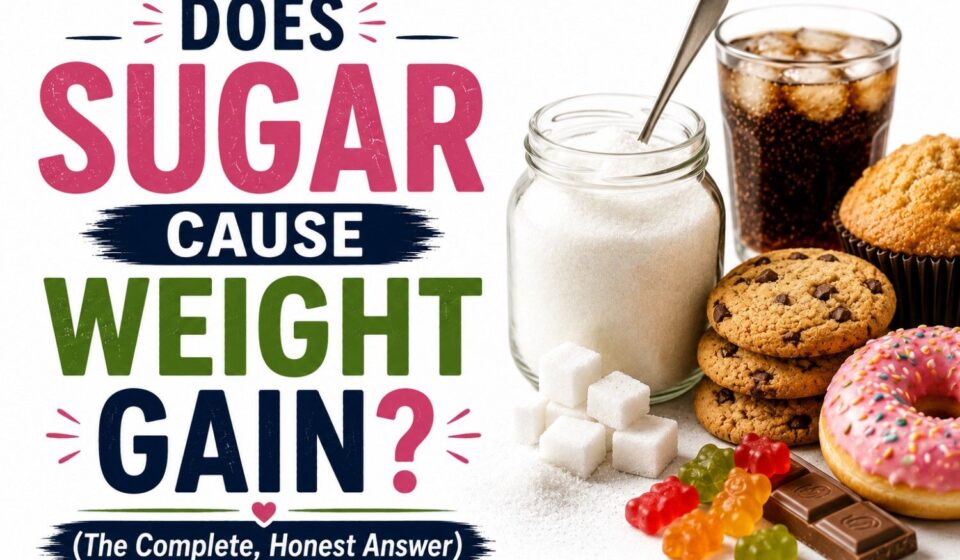

Sugar has been called the primary driver of obesity. Here’s what the evidence actually shows — and what it doesn’t.
Sugar is probably the most demonized ingredient in modern nutrition. It’s been called toxic, addictive, and the primary cause of obesity. Some of this is justified. Some is exaggerated. Here’s the complete, honest picture.
What “Sugar” Actually Means
“Sugar” describes several different things — and the distinction matters enormously:

Naturally occurring sugars: Found in whole fruit (fructose), dairy (lactose), and vegetables. Come packaged with fiber, water, protein, and nutrients that change how they’re absorbed and metabolized.
Added sugars: Sucrose (table sugar), high-fructose corn syrup, honey, maple syrup, and other sweeteners added to food during processing. These are the primary concern for weight gain.
When research talks about sugar causing weight gain, it’s primarily referring to added sugar — not the sugar naturally present in whole fruit or dairy.
How Added Sugar Causes Weight Gain
Empty Calories With No Satiety
The most direct mechanism: added sugar adds calories without meaningful fullness. A 500ml bottle of soda contains approximately 50g of sugar and 200 calories — consumed in minutes with virtually no satiety. Those 200 calories don’t reduce hunger at the next meal. They simply add to total intake.
Blood Sugar Spikes Drive More Eating
High-sugar foods produce rapid blood glucose rises followed by crashes. The crash phase produces genuine physiological hunger — cravings specifically for more high-calorie food. This spike-crash-crave cycle is one of the primary drivers of overeating in people who consume significant added sugar regularly.
Fructose Specifically Promotes Visceral Fat
Fructose — found in table sugar (sucrose is 50% fructose) and high-fructose corn syrup — is metabolized primarily by the liver. When consumed in excess, it’s converted to fat and contributes specifically to visceral belly fat accumulation — the dangerous abdominal fat that drives metabolic disease.
This is why high sugar consumption is specifically linked to belly fat. As covered in our article on how to get rid of belly fat, reducing added sugar is one of the most targeted interventions for visceral fat specifically.
Impairs Insulin Sensitivity
Chronically high sugar intake promotes insulin resistance — the reduced ability of cells to respond to insulin. As covered in our article on how to lose weight with insulin resistance, insulin resistance creates a hormonal environment that directly promotes fat storage and impairs fat mobilization.
The Important Nuances
Natural Sugar in Whole Fruit Is Different
The fructose in an apple and the fructose in apple juice are chemically identical — but metabolically very different. The 4.4g of fiber in a whole apple slows digestion dramatically, producing gradual fructose absorption rather than a rapid surge.
Research consistently finds that whole fruit consumption is associated with lower body weight — not higher. As covered in our article on is fruit bad for weight loss, the packaging matters as much as the sugar content.
Small Amounts of Added Sugar Are Not Catastrophic
A teaspoon of sugar in coffee, a drizzle of honey on yogurt, a small square of dark chocolate — these are not diet-destroying foods. The harm from sugar is primarily from chronic high intake, particularly from sugar-sweetened beverages and ultra-processed foods.
The WHO Target
The World Health Organization recommends limiting free sugars to under 25g (6 teaspoons) per day for health benefit. Most Western adults consume 70–100g daily — two to four times this recommendation.
The target for weight loss is meaningful reduction to under 25–50g daily — not complete elimination.
Hidden Sugar Sources
Most people dramatically underestimate their sugar intake because it’s hidden in “healthy” foods:
| Food | Added Sugar |
|---|---|
| 500ml soda | 52g |
| Flavored yogurt (200g) | 20–28g |
| Granola bar | 12–15g |
| Sports drink (500ml) | 34g |
| Sweetened coffee (medium) | 30–50g |
| Breakfast cereal (1 cup) | 10–20g |
| Tomato sauce (½ cup) | 10–12g |
| Flavored oatmeal packet | 10–15g |
Someone eating “healthy” can easily consume 80–100g of added sugar daily from these sources without awareness.
The Most Impactful Change: Eliminate Liquid Sugar
Sugar-sweetened beverages are the single most impactful source of added sugar — and the easiest to eliminate because they provide zero satiety.
Switching to water, black coffee, and unsweetened tea eliminates the primary sugar source for most people in one change. As covered in our guide to the best and worst drinks for weight loss, liquid calories are the lowest-value, highest-impact dietary change available.
Does Sugar Cause Weight Gain Even in a Calorie Deficit?
This is the key question for weight loss: if you’re in a calorie deficit, does the source of those calories matter?
For pure fat loss: Calorie deficit drives fat loss regardless of food composition. Sugar within a calorie deficit doesn’t prevent fat loss.
For body composition and metabolic health: Yes, sugar source matters. High sugar intake impairs insulin sensitivity, promotes visceral fat specifically, and drives hunger cycles that make the deficit harder to maintain — even when technically in a deficit.
The practical reality: High sugar intake makes maintaining a calorie deficit significantly harder by driving hunger and cravings. Reducing sugar is therefore a fat loss tool not because sugar is uniquely fattening per calorie, but because it undermines dietary adherence.
The Bottom Line
Does sugar cause weight gain?

Added sugar in significant amounts: yes — through multiple mechanisms:
- Empty calories without satiety
- Blood sugar spike-crash cycles driving more eating
- Visceral fat promotion via fructose metabolism
- Insulin resistance impairing fat loss
- Engineered palatability overriding satiety signals
With important nuances:
- Natural sugar in whole fruit is not the problem
- Small amounts of added sugar in an otherwise good diet are manageable
- The target is under 25–50g daily added sugar — not complete elimination
- Liquid sugar (soda, juice, sweetened drinks) is the highest priority to address first
As covered in our article on how to lose weight with a sweet tooth, the goal is managing sugar intelligently — not eliminating sweetness from your life entirely.
What was the biggest change you noticed when you reduced sugar — in energy, hunger, or weight? Share in the comments.
Stop Wondering What to Eat This Week
Get my free 7-Day High-Protein Weight Loss Meal Plan delivered straight to your inbox — a simple week of satisfying, protein-focused meals designed to make healthy eating easier without complicated calorie tracking.
- 7 full days of breakfast, lunch, dinner & snacks
- One complete shopping list for the whole week
- A quick high-protein food cheat sheet
- Simple daily tips to help you stay on track
Free PDF • Delivered by email • Unsubscribe anytime
Check your inbox 💜
Your free 7-day high-protein meal plan is on its way.