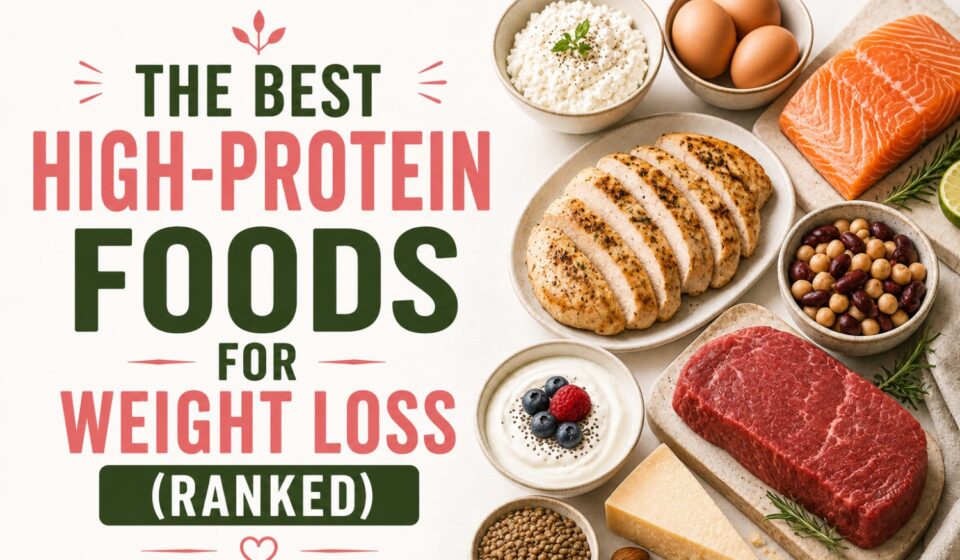

The single most important dietary variable for fat loss — here’s which protein sources produce the best results and why
If there’s one nutritional change that produces more weight loss impact than any other, it’s increasing protein intake. More than any specific diet. More than any supplement. More than any meal timing strategy. As covered in our guide to how much protein you actually need per day, adequate protein is the cornerstone of effective fat loss — producing satiety, preserving muscle, and supporting the metabolic rate that makes weight maintenance possible.
But not all protein sources are equal for weight loss. The protein content, calorie cost, satiety effects, and practical convenience vary dramatically between sources. Here’s the complete ranked guide.

How to Evaluate Protein Sources for Weight Loss
Four factors determine how useful a protein source is for fat loss:
Protein density: Grams of protein per 100g of food (or per serving). Higher protein density = more protein per calorie.
Protein-to-calorie ratio: How many calories come alongside the protein. A food with 30g protein at 150 calories is significantly better for weight loss than one with 30g protein at 400 calories.
Satiety: How filling the protein source is per calorie — influenced by protein content, fiber, water content, and food matrix.
Practical convenience: The most nutritionally perfect protein source is worthless if you won’t eat it regularly. Convenience and palatability matter for long-term adherence.
The Best High-Protein Foods for Weight Loss — Ranked
Tier 1: Exceptional (Best Protein-to-Calorie Ratio)
1. Canned Tuna (in water) — 26g protein per 100g, 116 calories
Canned tuna has one of the highest protein-to-calorie ratios of any food — 26g protein per 100g at 116 calories means nearly 90% of its calories come from protein. A standard 140g can provides 34-36g protein at 163 calories.
Why it’s #1:
- Zero preparation — pull-tab can, fork, done
- Extremely affordable ($1-2 per can)
- Shelf-stable — always available
- Complete protein with all essential amino acids
- Low in fat and calories
The limitation: Canned tuna contains mercury — the FDA recommends limiting consumption to 2-3 servings per week for most adults, less for pregnant women. Rotate with other protein sources.
2. Chicken Breast — 31g protein per 100g cooked, 165 calories
Chicken breast is the most popular weight loss protein for good reason — extraordinarily lean, high protein, versatile, and widely available. 150g provides 47g protein at 248 calories.
Why it’s #2:
- Highest protein of common whole food meats
- Extremely versatile — works in virtually any cuisine
- Widely available, moderate cost
- Satisfying texture that whole food protein provides over supplements
The limitation: Requires cooking, can become dry if overcooked. The air fryer solves this elegantly — as covered in our guide to how to lose weight with air fryer cooking, air-fried chicken breast stays juicy while achieving the satisfying exterior texture that makes lean protein genuinely enjoyable.
3. Non-Fat Greek Yogurt — 10g protein per 100g, 57 calories
Non-fat Greek yogurt has an extraordinary protein-to-calorie ratio for a dairy product — 57 calories per 100g with 10g protein means protein represents 70% of its calories. A 200g serving provides 17-20g protein at approximately 116 calories.
Why it’s #3:
- Zero preparation — open and eat
- Casein protein (slow-digesting) — sustained satiety
- Probiotic benefit for gut health and metabolic function
- Extremely versatile — sweet or savory applications
- Affordable in large containers
Critical: Must be plain — flavored varieties add 15-25g sugar that changes the nutritional profile entirely.
4. Cottage Cheese — 11g protein per 100g, 98 calories
The most underrated protein food in this entire list. Cottage cheese provides more protein per 100g than Greek yogurt at only slightly more calories — yet most people never consider it.
Why it’s #4:
- Highest protein of any dairy food per 100g
- Casein protein — very slow digesting, excellent for satiety
- Works sweet (with fruit) or savory (with cucumber and herbs)
- Very affordable — often cheaper than Greek yogurt
- Filling — a 200g serving provides 22g protein and keeps most people full for 3-4 hours
5. Egg Whites — 11g protein per 100g, 52 calories
Egg whites are essentially pure protein — almost all calories come from protein with minimal fat. Per calorie, they have one of the highest protein ratios of any whole food.

Why they’re #5:
- Extremely high protein-to-calorie ratio
- Complete protein
- Versatile — omelettes, scrambles, baking
- Very affordable
The whole egg caveat: Whole eggs (70 calories each, 6g protein) are slightly less protein-dense but provide egg yolk nutrients — choline, vitamin D, healthy fats — that egg whites alone don’t. For most people, whole eggs are the better choice unless specifically maximizing protein per calorie.
Tier 2: Excellent (High Protein, Reasonable Calories)
6. Shrimp — 20g protein per 100g, 99 calories
One of the leanest animal proteins available — shrimp provides 20g protein per 100g at only 99 calories, making it exceptional for weight loss. Cooks in 3-5 minutes from frozen.
7. White Fish (Cod, Tilapia, Haddock) — 20-23g protein per 100g, 82-105 calories
The leanest fish available — white fish provides exceptional protein at very low calorie cost. As covered in our guide to the best vegetables for weight loss, pairing white fish with non-starchy vegetables creates one of the lowest-calorie, highest-protein complete meals available.
8. Turkey Breast — 29g protein per 100g cooked, 135 calories
Slightly leaner than chicken breast with comparable protein — turkey breast is underused in weight loss cooking. Deli-style sliced turkey (plain, not processed) provides convenient no-cook protein at similar nutrition to cooked turkey.
9. Salmon — 25g protein per 150g, 208 calories per 150g
Salmon is higher in calories than most proteins on this list — the fat content (primarily omega-3 fatty acids) adds calories while providing specific metabolic and anti-inflammatory benefits. As covered in our guide to is salmon good for weight loss, the omega-3s reduce the inflammation that impairs fat loss — making salmon’s higher calorie cost worth paying.
10. Canned Sardines — 25g protein per 100g, 208 calories
Sardines provide comparable protein to salmon with similar omega-3 content — often at lower cost. The calcium from the edible bones adds nutritional value. Strong flavor pairs well with lemon, capers, and herbs.
11. Lean Beef (Sirloin, Eye of Round) — 26g protein per 100g cooked, 175 calories
Lean cuts of beef provide high protein at moderate calories — and the zinc, iron, B12, and creatine in beef have specific benefits for metabolic function and energy. Choose lean cuts: sirloin, eye of round, flank steak.
Tier 3: Plant-Based Proteins (Excellent With Appropriate Context)
12. Tempeh — 19g protein per 100g, 193 calories
The highest protein whole plant food available — tempeh is fermented soybeans with a complete amino acid profile. The fermentation process improves digestibility and adds probiotic benefit. As covered in our guide to how to eat more protein without eating more meat, tempeh is the best plant protein source for people avoiding animal products.
13. Edamame — 11g protein per 100g, 122 calories per cup
Young soybeans — one of the few complete plant proteins with all essential amino acids. Frozen edamame microwaves in 3 minutes with zero preparation. 17g protein per cup.
14. Firm Tofu — 17g protein per 100g, 144 calories
Tofu is underutilized primarily because of poor preparation — when pressed and cooked at high heat (air fryer or pan), it becomes genuinely satisfying. The key is removing water before cooking.
15. Lentils — 18g protein per cup cooked, 230 calories
As covered in our guide to the best high fiber foods for weight loss, lentils provide exceptional fiber (15g per cup) alongside their protein — making them one of the most satiating foods per calorie of any protein source. The protein + fiber combination produces fullness that lasts 4-5 hours.
16. Chickpeas — 12g protein per cup cooked, 270 calories
Lower protein density than lentils but extraordinary fiber content makes chickpeas highly satiating. The protein-fiber combination and versatility (salads, soups, roasted as snacks, hummus) make them a staple weight loss food.
17. Black Beans — 15g protein per cup cooked, 227 calories
Similar to lentils in protein and fiber content — slightly lower protein but comparable fiber. The highest resistant starch content of common legumes, which feeds beneficial gut bacteria producing metabolic benefits.
Tier 4: Protein Supplements (Convenient Tools)
18. Whey Protein Isolate — 24-27g protein per 30g scoop, 110-120 calories
As covered in our guide to is protein powder good for weight loss, whey isolate has the highest protein percentage of any protein supplement — 90%+ protein by weight. Best used post-workout or when whole food protein isn’t convenient.
19. Casein Protein — 22-25g protein per 30g scoop, 115-125 calories
Slow-digesting — absorbed over 7-8 hours rather than 1-2 hours. Best used before bed or between meals for sustained amino acid release supporting muscle preservation.
20. Pea Protein — 20-24g protein per 30g scoop, 100-120 calories
Best plant-based protein supplement — good amino acid profile, allergen-friendly, comparable to whey in most studies when matched for leucine content.
The Protein-to-Calorie Comparison Table
| Food | Serving | Protein | Calories | Protein % of Calories |
|---|---|---|---|---|
| Canned tuna | 140g can | 34g | 163 | 83% |
| Egg whites | 100g | 11g | 52 | 85% |
| Non-fat Greek yogurt | 200g | 20g | 116 | 69% |
| Chicken breast | 150g cooked | 47g | 248 | 76% |
| Cottage cheese | 200g | 22g | 196 | 45% |
| Shrimp | 100g | 20g | 99 | 81% |
| White fish | 150g | 33g | 150 | 88% |
| Turkey breast | 150g | 44g | 203 | 87% |
| Whey isolate | 30g scoop | 25g | 110 | 91% |
| Tempeh | 100g | 19g | 193 | 39% |
| Lentils | 1 cup cooked | 18g | 230 | 31% |
| Salmon | 150g | 30g | 280 | 43% |
How to Hit Your Protein Target Every Day
The target — 0.8-1g per pound of bodyweight — requires deliberate planning. Here’s how to distribute it across meals:
Breakfast (30-40g protein):
- 3 eggs + 200g Greek yogurt: 38g protein
- Protein smoothie (whey + Greek yogurt + milk): 40g protein
- Cottage cheese bowl + 2 eggs: 34g protein
Lunch (30-40g protein):
- 140g canned tuna + chickpeas: 46g protein
- Chicken salad (150g chicken): 47g protein
- Lentil soup + Greek yogurt: 30g protein
Dinner (30-40g protein):
- Salmon fillet (150g): 30g protein
- Chicken breast (150g) + cottage cheese side: 58g protein
- Tempeh stir-fry (150g tempeh): 28g protein
Snacks (10-20g protein):
- Greek yogurt (150g): 15g protein
- 2 hard-boiled eggs: 12g protein
- String cheese + turkey slices: 17g protein
Protein Sources to Be Cautious About
Processed deli meats (bologna, salami, hot dogs): High sodium, often high fat, contain preservatives and fillers. Provide protein but poor overall nutritional profile.
Protein bars: Most contain 200-300 calories with 15-25g sugar alongside protein. Check labels — many don’t justify their calorie cost vs. equivalent whole food protein.
Nut butters as primary protein: Almond and peanut butter are primarily fat sources — the protein is secondary. 2 tablespoons provides 7-8g protein at 180-200 calories. Use as a fat addition, not a protein source.
Cheese as primary protein: Cheese provides moderate protein alongside significant fat — fine in small amounts as a flavor addition, not efficient as a primary protein source for weight loss.
The Practical Protein Priority
For most people, the highest-return change is simply having one of these foods at every meal:
- Fastest: Canned tuna, Greek yogurt, cottage cheese, string cheese, hard-boiled eggs (pre-made)
- Most versatile: Chicken breast, eggs, Greek yogurt
- Most filling: Lentils, cottage cheese, Greek yogurt (casein proteins)
- Best value: Eggs, canned tuna, dried lentils, cottage cheese
- Best plant-based: Tempeh, edamame, lentils, pea protein
The best protein source is the one you’ll eat consistently. Choose based on preference and convenience — then make it a staple.
For the complete dietary framework, our guide to how to get rid of belly fat covers everything in one place.
Which high-protein foods have made the biggest difference to your hunger levels and weight loss — and which ones surprised you with how filling they are? Share in the comments.
Stop Wondering What to Eat This Week
Get my free 7-Day High-Protein Weight Loss Meal Plan delivered straight to your inbox — a simple week of satisfying, protein-focused meals designed to make healthy eating easier without complicated calorie tracking.
- 7 full days of breakfast, lunch, dinner & snacks
- One complete shopping list for the whole week
- A quick high-protein food cheat sheet
- Simple daily tips to help you stay on track
Free PDF • Delivered by email • Unsubscribe anytime
Check your inbox 💜
Your free 7-day high-protein meal plan is on its way.