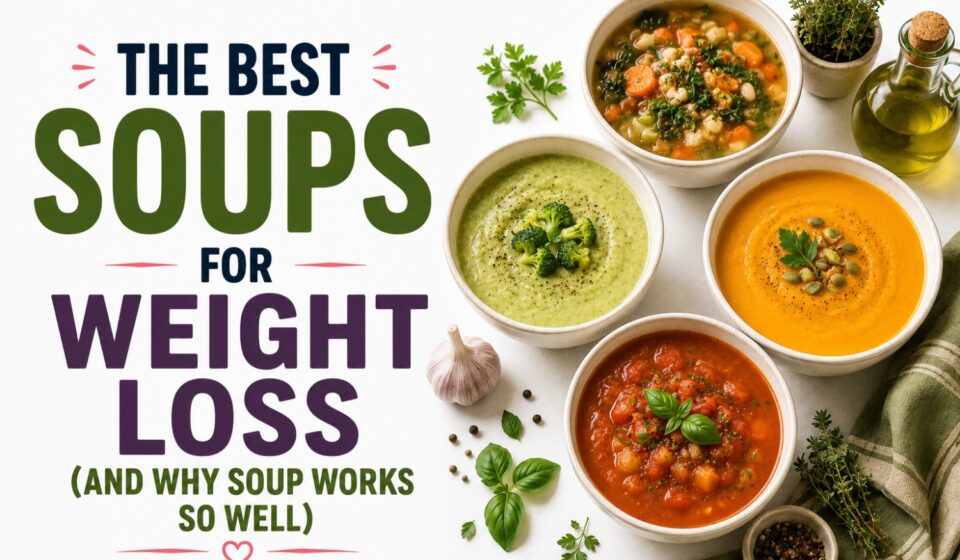

The most underrated weight loss food — here’s the science behind why soup works and which ones to make
Soup is one of the most consistently evidence-backed weight loss foods — not because of any specific ingredient, but because of what happens when you eat liquid and solid food together in a single dish. The science is genuinely interesting, and the practical implications are significant for anyone trying to lose weight.
Here’s the complete guide: why soup works for weight loss, which soups are most effective, and how to use them practically.

Why Soup Is So Effective for Weight Loss
The Gastric Processing Difference
This is the key mechanism — and it’s counterintuitive.
When you eat solid food and drink water separately, the stomach processes them differently: solid food is retained for digestion while water passes through relatively quickly. But when water is incorporated into food — as in soup — the stomach retains the entire mixture, processing it together.
The result: soup stays in the stomach significantly longer than the same food eaten solid with water on the side. This extended gastric retention directly increases satiety — you feel fuller for longer from equivalent calories.
Studies by Barbara Rolls at Penn State (one of the leading researchers on eating behavior) consistently find that consuming soup before a meal reduces calorie intake at that meal by 20% on average — and that this reduction isn’t compensated for at later meals.
Volume Eating at Low Calorie Cost
Broth-based soups are among the lowest calorie-density foods available — a large bowl of vegetable soup might contain 100-150 calories while physically filling the stomach with substantial volume. This volume-to-calorie ratio is difficult to match with any other food category.
As covered in our guide to the best vegetables for weight loss, vegetables are already exceptional for volume eating — soup amplifies this effect by adding liquid volume to the vegetable content.
Fiber and Satiety
Vegetable and legume-based soups provide substantial fiber in a form that’s highly accessible — the cooking process softens vegetables, making their fiber more digestible and available for gut bacteria fermentation that produces satiety-signaling short-chain fatty acids.
Warmth and Slowed Eating
Hot food is eaten more slowly than cold food — and eating speed is one of the most significant predictors of calorie intake at a meal. The temperature of soup naturally slows consumption, allowing satiety signals time to register before overeating occurs.
Hydration Contribution
Soup contributes meaningfully to daily hydration — relevant because dehydration is frequently misinterpreted as hunger. As covered in our guide to how much water to drink to lose weight, adequate hydration directly supports fat metabolism and reduces false hunger signals.
The Most Important Distinction: Broth-Based vs. Cream-Based
This is the single most important soup decision for weight loss:
Broth-based soups: Water-based, very low calorie density, high volume. The weight loss soups.
Cream-based soups: Fat-based (cream, coconut milk, butter roux), dramatically higher calorie density. Can still fit in a weight loss diet in controlled portions — but lack the volume eating advantage that makes broth-based soups so effective.
| Soup Type | Approximate Calories per Cup |
|---|---|
| Clear vegetable broth | 10-15 |
| Minestrone | 80-100 |
| Lentil soup | 130-150 |
| Chicken vegetable | 80-100 |
| Tomato soup (broth-based) | 70-90 |
| Cream of tomato | 160-180 |
| Clam chowder | 190-220 |
| Cream of broccoli | 170-200 |
The Best Soups for Weight Loss
1. Lentil Soup — The Best Overall
Why it wins: Lentil soup combines the volume eating advantage of broth-based soup with the extraordinary fiber and protein content of lentils — producing one of the most satiating meals available per calorie.
A large bowl of lentil soup (approximately 300-350 calories) provides:
- 15-18g protein
- 12-15g fiber
- Significant iron, folate, and potassium
- Satiety that lasts 4-5 hours for most people
The combination of soup’s gastric retention effect with lentils’ high fiber and protein makes lentil soup one of the most evidence-backed single foods for reducing overall daily calorie intake.
Make it: Red lentils dissolve completely in 20 minutes — no soaking required. Olive oil, onion, garlic, cumin, turmeric, lemon juice, salt. One of the simplest high-nutrition meals available.
Add for weight loss: A squeeze of lemon juice before serving — the acidity reduces the glycemic response and brightens the flavor significantly.
2. Minestrone — Best Vegetable Diversity
Why it works: Minestrone is essentially a vehicle for vegetables and legumes in broth — providing exceptional fiber, micronutrient diversity, and volume eating at modest calorie cost.
Traditional minestrone includes: tomatoes, carrots, celery, zucchini, green beans, cannellini beans, and small pasta — a nutritionally complete meal in one bowl.
The bean content adds protein and fiber that dramatically extends satiety beyond what pure vegetable soup provides. The pasta portion is small enough to be nutritionally irrelevant but adds textural satisfaction.
Weight loss tip: Reduce or eliminate the pasta and add more beans — increases protein and fiber while reducing the highest glycemic component.
3. Chicken Vegetable Soup — Best Protein Content
Why it works: Chicken vegetable soup adds meaningful protein (from chicken breast) to the vegetable and broth base — making it more satiating and more nutritionally complete than pure vegetable soups.

The protein in chicken soup supports muscle preservation during calorie deficit and provides the satiety benefit that protein uniquely offers — as covered in our guide to how much protein you actually need per day.
Homemade chicken soup made from bone-in chicken also provides collagen and gelatin from the bones — compounds increasingly studied for gut health and satiety benefits.
The cold and flu angle: The evidence that chicken soup helps with colds is actually real — the hot steam, the glycine from collagen, and the anti-inflammatory compounds from vegetables all have documented benefit.
4. Black Bean Soup — Best for Gut Health
Why it works: Black bean soup provides extraordinary fiber (approximately 15g per cup cooked beans) alongside protein and the volume advantage of broth-based soup.
Black beans are particularly high in resistant starch — a prebiotic fiber that feeds beneficial gut bacteria and produces butyrate, a short-chain fatty acid increasingly associated with metabolic health, reduced inflammation, and appetite regulation.
The dark color of black beans indicates extremely high anthocyanin content — the same antioxidants found in blueberries, with meaningful anti-inflammatory and metabolic benefits.
5. Miso Soup — Best for Gut Microbiome
Why it works: Miso (fermented soybean paste) is a probiotic food that supports the gut microbiome alongside the soup’s satiety effects. At approximately 35-40 calories per cup it’s one of the lowest calorie soups available.
Traditional miso soup with tofu, seaweed, and scallions is a nutritionally complete light meal or starter that adds meaningful nutrition at minimal calorie cost.
Studies in Japanese populations — where miso soup is consumed daily — consistently find lower obesity rates and better metabolic health markers than comparable Western populations. The miso consumption is unlikely to be the sole factor but the fermented food component appears genuinely beneficial.
Sodium note: Miso is high in sodium — relevant for people managing blood pressure. Lower sodium miso varieties are available.
6. Tomato Soup (Broth-Based) — Best Lycopene Source
Why it works: Tomato soup — made with tomatoes, onion, garlic, and vegetable broth without cream — provides lycopene, the antioxidant that gives tomatoes their red color, in a highly bioavailable form.
Cooking tomatoes significantly increases lycopene bioavailability compared to raw tomatoes — making tomato soup one of the best dietary lycopene sources available. Lycopene is associated with reduced cardiovascular risk, lower inflammation, and some evidence for reduced fat accumulation.
The cream version: Cream of tomato soup transforms this from a 70-90 calorie cup to a 160-180 calorie cup — losing most of the volume eating advantage. Make it broth-based or with a small amount of coconut milk rather than heavy cream.
7. Vegetable Broth Soup — Best Pre-Meal Appetite Reducer
Why it works: Simple clear vegetable broth or very light vegetable soup consumed before a meal is the most direct application of Barbara Rolls’ research — reducing subsequent meal calorie intake by approximately 20% through gastric retention and pre-meal satiety.
At 10-15 calories per cup, clear vegetable broth before a meal is essentially calorie-free while producing meaningful appetite reduction. This is the lowest-effort, highest-return soup application for weight loss.
Practical: Low-sodium vegetable broth heated with whatever vegetables are available — or simply heated broth alone. Takes 3 minutes and meaningfully reduces calorie intake at the following meal.
8. Butternut Squash Soup (Broth-Based) — Best for Satisfaction
Why it works: Butternut squash soup — made with squash, vegetable broth, onion, and spices without cream — provides a naturally creamy texture from the starchy squash without the calorie cost of cream.
A broth-based butternut squash soup provides:
- Beta-carotene (one of the richest dietary sources)
- Meaningful fiber
- Natural sweetness that satisfies without added sugar
- Approximately 80-100 calories per cup
The natural creaminess from blending the squash provides the textural satisfaction of cream-based soups without their calorie density.
9. Egg Drop Soup — Fastest High-Protein Option
Why it works: Egg drop soup — chicken broth with beaten eggs stirred in — provides meaningful protein (from eggs) at approximately 65-80 calories per cup with minimal preparation time.
At 3-4 minutes from start to finish, egg drop soup is the fastest protein-containing soup available — relevant for busy people who need satiety quickly.
The protein from eggs directly contributes to satiety and muscle preservation during weight loss.
What to Avoid in Weight Loss Soups
Cream and Butter-Based Thickening
Heavy cream, butter roux (flour + butter), and large amounts of cheese dramatically increase calorie density while reducing the volume eating advantage that makes soup effective. As mentioned, cream of tomato has double the calories of broth-based tomato soup.
Excessive Sodium
Restaurant soups and canned soups are typically extremely high in sodium — causing fluid retention that masks fat loss on the scale and raises blood pressure. Homemade soups allow sodium control. If using canned soups, choose low-sodium varieties.
Refined Pasta and White Rice in Large Amounts
Small amounts of pasta or rice in soup are fine — large amounts shift the nutritional profile toward refined carbohydrates that reduce the soup’s satiety advantage. Prioritize legumes and vegetables over grains in weight loss soups.
Croutons and Bread Accompaniments
A bread roll with soup adds 150-200 calories that eliminate much of the calorie advantage soup provides. The satiety from soup makes bread accompaniment unnecessary — resist the habit.
Practical Strategies for Using Soup for Weight Loss
The Pre-Meal Soup Strategy
Consuming a small cup (approximately 150-200ml) of clear broth or light vegetable soup 10-15 minutes before a main meal consistently reduces calorie intake at that meal by 15-20% in research. This is one of the simplest and most evidence-backed appetite management strategies available.
Batch Cooking
Soup is ideal for batch cooking — most soups improve with 24-48 hours in the refrigerator as flavors develop, and they freeze extremely well. Making a large pot of lentil or minestrone soup on Sunday provides multiple ready meals throughout the week.
Replace One Meal Daily
Replacing one daily meal with a large bowl of protein and fiber-rich soup (lentil, chicken vegetable, black bean) reliably reduces daily calorie intake by 200-400 calories without hunger — because the soup’s satiety properties mean the calorie reduction doesn’t produce compensatory eating.
Use Soup as a Vegetable Delivery System
For people who struggle to eat adequate vegetables — soup is the most effective vehicle for dramatically increasing vegetable intake. A large bowl of minestrone can contain 3-4 cups of vegetables that would be difficult to eat in any other format.
The Bottom Line
Best soups for weight loss — ranked:
- Lentil soup — best overall: protein, fiber, satiety
- Minestrone — best vegetable diversity
- Chicken vegetable — best protein content
- Black bean soup — best for gut health
- Miso soup — best for gut microbiome
- Tomato soup (broth-based) — best lycopene source
- Vegetable broth — best pre-meal appetite reducer
- Butternut squash (broth-based) — best satisfaction
- Egg drop soup — fastest high-protein option
The rules:
- Broth-based always beats cream-based
- Add legumes for protein and fiber
- Use as pre-meal appetite reducer
- Batch cook for the week
- Skip the bread
For the complete dietary framework, our guide to how to get rid of belly fat covers everything in one place.
Which soups do you find most satisfying for weight loss — and do you use soup as a pre-meal appetite reducer? Share in the comments.
Stop Wondering What to Eat This Week
Get my free 7-Day High-Protein Weight Loss Meal Plan delivered straight to your inbox — a simple week of satisfying, protein-focused meals designed to make healthy eating easier without complicated calorie tracking.
- 7 full days of breakfast, lunch, dinner & snacks
- One complete shopping list for the whole week
- A quick high-protein food cheat sheet
- Simple daily tips to help you stay on track
Free PDF • Delivered by email • Unsubscribe anytime
Check your inbox 💜
Your free 7-day high-protein meal plan is on its way.