
What you drink might be doing more damage to your fat loss than what you eat

Most people focus entirely on food when trying to lose weight — carefully choosing meals, tracking macros, avoiding processed snacks. And then they drink 600 calories of flavored coffee, juice, and alcohol without a second thought.
Liquid calories are one of the most significant and most overlooked contributors to weight gain. Unlike solid food, drinks produce almost no satiety response — your brain doesn’t register liquid calories the same way it registers food, meaning you can consume hundreds of calories from beverages and feel just as hungry as before.
But beverages aren’t all bad. Some actively support fat loss through metabolic, hormonal, and appetite mechanisms. Others are essentially sugar delivery vehicles disguised as refreshments.
Here’s the complete ranking — from the drinks that help the most to the ones that hurt the most.
The Best Drinks for Weight Loss
1. Water — The Gold Standard
Water is the most effective weight loss beverage available — not because it burns fat, but because it does everything that supports fat loss with zero caloric cost.
- Drinking 500ml before meals reduces calorie intake at that meal by an average of 13%
- Replaces liquid calories when substituted for sweetened beverages
- Reduces false hunger signals (thirst is frequently mistaken for hunger)
- Has a small thermogenic effect from warming ingested cold water to body temperature
- Supports kidney function, fat metabolism, and digestion
- Reduces water retention when adequate intake signals the body to release held fluid
As we cover in full detail in our article on how to lose weight by drinking more water, the strategies for using water most effectively for fat loss go well beyond simply “drink more.”
How much: Half your bodyweight in ounces per day as a baseline, more with exercise and heat.
Verdict: Drink as much as you want. Replace every other beverage on this list with water where possible.
2. Black Coffee
Coffee is one of the most evidence-backed fat loss beverages available — with documented effects on metabolic rate, fat oxidation during exercise, appetite suppression, and insulin sensitivity.

The key word is black. Adding sugar and cream progressively erodes these benefits and adds significant calories. A large flavored coffee drink can contain more calories than a meal.
Three to five cups of black coffee per day is associated with lower body weight in population studies, improved exercise performance, and meaningful metabolic benefits as covered in our full guide to coffee and weight loss.
Verdict: Excellent for fat loss when consumed black or with minimal milk. Stop by early afternoon to protect sleep.
3. Green Tea
Green tea sits just below coffee because its metabolic effects are real but slightly more modest, and it requires more cups per day to achieve meaningful benefit.
EGCG — the primary catechin in green tea — improves insulin sensitivity, increases fat oxidation during exercise, and has anti-inflammatory effects that remove metabolic obstacles to fat loss. The combination of caffeine and EGCG produces synergistic effects not seen with either compound alone.
Three to five cups of unsweetened green tea per day produces the most significant benefits. Matcha — powdered whole leaf green tea — provides 3–10x the catechin content per cup.
Full details on the evidence and how to use it in our article on green tea and weight loss.
Verdict: Excellent supporting beverage. Unsweetened only.
4. Sparkling Water
Sparkling water provides the carbonation satisfaction that many soda drinkers find most difficult to give up — without any calories, sugar, or artificial sweeteners.
It’s as hydrating as still water, equally effective for pre-meal appetite management, and the carbonation provides a sensory experience that makes replacing soda genuinely sustainable rather than a white-knuckle sacrifice.
Add a squeeze of lemon, lime, or a few slices of cucumber for natural flavor without meaningful calorie addition.
Verdict: Drink freely. One of the best soda replacements available.
5. Herbal Tea (Unsweetened)
Herbal teas — peppermint, chamomile, ginger, dandelion, rooibos — are calorie-free, hydrating, and provide specific benefits relevant to fat loss:
Peppermint tea reduces appetite and has antispasmodic effects that reduce bloating and digestive discomfort.
Ginger tea improves digestion, has mild thermogenic effects, and reduces nausea that can accompany dietary changes.
Dandelion tea has mild natural diuretic effects that reduce water retention.
Chamomile tea reduces cortisol and promotes sleep quality — both indirectly supporting fat loss through their effects on stress hormones and metabolic regulation.
Verdict: Drink freely. Excellent calorie-free alternatives to sweetened beverages, particularly in the evening.
6. Black Tea and Oolong Tea
Both black tea and oolong tea contain caffeine and catechins — similar compounds to green tea but in different ratios and concentrations.
Oolong tea in particular has reasonable evidence for fat oxidation effects, with some studies showing meaningful increases in resting metabolic rate from regular consumption.
Black tea has prebiotic effects that support gut bacteria associated with healthier body weight.
Verdict: Good choices, slightly behind green tea in evidence. Unsweetened only.
7. Diluted Apple Cider Vinegar
One to two tablespoons of apple cider vinegar in a large glass of water before meals provides documented blood sugar management benefits — reducing post-meal glucose spikes by 20–35% — and modest appetite suppression.
As we cover in our article on apple cider vinegar and weight loss, the effects are real but modest — a supporting tool, not a primary strategy.
Verdict: Worth including before carbohydrate-containing meals if you can tolerate the taste. Never undiluted.
8. Protein Shakes (When Needed)
A well-made protein shake — one scoop of quality protein powder with water or unsweetened milk — provides 20–25g of protein for 100–150 calories. It’s not a whole food, but as a tool for hitting protein targets when food options are limited, it earns a place on this list.
As covered in our guide to how much protein you actually need per day, adequate protein is the most important dietary variable for fat loss. A protein shake that closes a protein gap on a busy day is a legitimate fat loss tool.
Verdict: Useful as needed. Choose unflavored or minimally sweetened varieties with no added sugar.
The Worst Drinks for Weight Loss
1. Sugary Sodas
Regular soda is the most straightforward dietary villain in the weight loss conversation — 150 calories per can, 39g of sugar, zero nutritional value, and essentially zero satiety. The fructose in high-fructose corn syrup is metabolized in the liver and stored as fat when consumed in excess.
A single can of regular soda per day adds over 50,000 extra calories per year — roughly 14 lbs of potential fat gain from one daily habit alone.
Verdict: Eliminate entirely. Replace with sparkling water.
2. Fruit Juice
Fruit juice is perhaps the most insidious item on this list because it’s widely perceived as healthy.
A glass of orange juice contains:
- 110 calories
- 26g of sugar
- Almost no fiber (the fiber was removed in juicing)
- Negligible protein
The same calories and sugar as most sodas — but because it comes from fruit, people drink it freely and don’t register the caloric or insulin impact. The fiber that makes whole fruit genuinely healthy was left behind in the pulp.
As we cover in our article on what happens when you cut sugar for 30 days, liquid sugar — whether from soda or juice — is one of the primary dietary drivers of visceral fat accumulation.
Verdict: Replace with whole fruit. The fiber makes an enormous difference to how your body processes the sugars.
3. Sweetened Coffee Drinks
A plain latte: 150–200 calories, 12g sugar — manageable. A large flavored frappuccino: 400–600 calories, 60–80g sugar — a dessert by any reasonable standard.
The coffee shop sector has mastered the art of making sugar consumption feel like a modest caffeine habit. The caffeine is real. The caloric damage from the sugar and cream is also real — and it completely overwhelms any metabolic benefit from the caffeine.
Verdict: Switch to black coffee or a flat white with minimal milk. Treat flavored coffee drinks as an occasional dessert, not a daily beverage.
4. Energy Drinks
Standard energy drinks (Red Bull, Monster, Rockstar) contain 150–300 calories and 25–50g of sugar alongside their caffeine. The caffeine benefit is real — but available far more cheaply and healthily from black coffee.
“Sugar-free” versions replace sugar with artificial sweeteners — which sidestep the calorie issue but raise their own questions around gut health and appetite regulation, and still provide no benefit over coffee.
Verdict: Replace with black coffee for caffeine benefits without the sugar or cost.
5. Alcohol
Alcohol deserves an honest discussion rather than a simple verdict because moderate drinking is a genuine part of life for many people.
The fat loss problems with alcohol:
- High in empty calories (7 calories per gram — nearly as many as fat)
- Beer: 150–200 calories per can. Wine: 120–150 per glass. Cocktails: 200–400+
- Disrupts sleep quality significantly, even when it helps you fall asleep
- Raises cortisol, which promotes visceral fat storage
- Impairs fat oxidation for up to 24 hours after consumption
- Stimulates appetite and reduces inhibition around food choices
One to two drinks on a special occasion: manageable. Three to four drinks several nights per week: a significant obstacle to fat loss that’s hard to compensate for elsewhere.
Verdict: Reduce or eliminate for fastest fat loss results. If drinking, choose dry wine or spirits with soda over beers and cocktails. Limit to 1–2 drinks and have water between drinks.
6. Flavored Milk Drinks
Chocolate milk, flavored lattes, sweetened plant milks — these occupy a caloric middle ground that’s easy to underestimate. A glass of chocolate milk contains 200+ calories and 25g of sugar. A sweetened oat milk latte can contain similar.
These aren’t dramatically worse than some of the other items on this list — but they’re frequently consumed as “healthy” or “just a drink” without the calories being mentally registered.
Verdict: Have them as occasional treats rather than daily habits. Choose unsweetened versions of milk alternatives.
7. Smoothies and Blended Fruit Drinks
Homemade smoothies built around protein, vegetables, and minimal fruit can be excellent — high protein, high fiber, genuinely filling.
Commercial smoothies and most homemade fruit-forward smoothies are a different matter. A typical fruit smoothie can contain:
- 400–600 calories
- 50–80g of sugar (natural, but still sugar)
- Minimal protein
- Reduced fiber compared to whole fruit (blending partially breaks down fiber)
The “healthy” framing leads people to consume these freely without accounting for their significant caloric and sugar impact.
Verdict: Build smoothies around protein (Greek yogurt, protein powder) and vegetables (spinach) with limited fruit. Treat commercial smoothies as an occasional meal, not a snack.
The Liquid Calorie Summary
Here’s a quick reference for the caloric reality of common beverages:
| Drink | Calories | Added Sugar |
|---|---|---|
| Water | 0 | 0g |
| Black coffee | 2 | 0g |
| Green tea (unsweetened) | 2 | 0g |
| Sparkling water | 0 | 0g |
| Regular soda (can) | 150 | 39g |
| Orange juice (glass) | 110 | 26g |
| Beer (pint) | 180 | 0g |
| Glass of wine | 125 | 1g |
| Cocktail (average) | 280 | 20g |
| Flavored latte (large) | 350 | 45g |
| Commercial smoothie | 480 | 65g |
| Protein shake (basic) | 130 | 2g |
The Simple Rule
If in doubt about any beverage: check whether it has calories and sugar. If it does, decide whether the enjoyment is worth the caloric cost — not whether it’s “healthy” or “natural.”
Water, black coffee, and unsweetened tea should form the backbone of your daily fluid intake. Everything else is occasional and intentional rather than habitual and mindless.
This single shift — from drinking habitually and mindlessly to drinking intentionally — is one of the fastest, most sustainable dietary changes available for fat loss. As we cover throughout our articles on how to get rid of belly fat and how to lose weight without counting calories, eliminating liquid calories is one of the highest-leverage changes most people can make.
The Bottom Line
What you drink is as important as what you eat for fat loss — and most people pay far less attention to it.
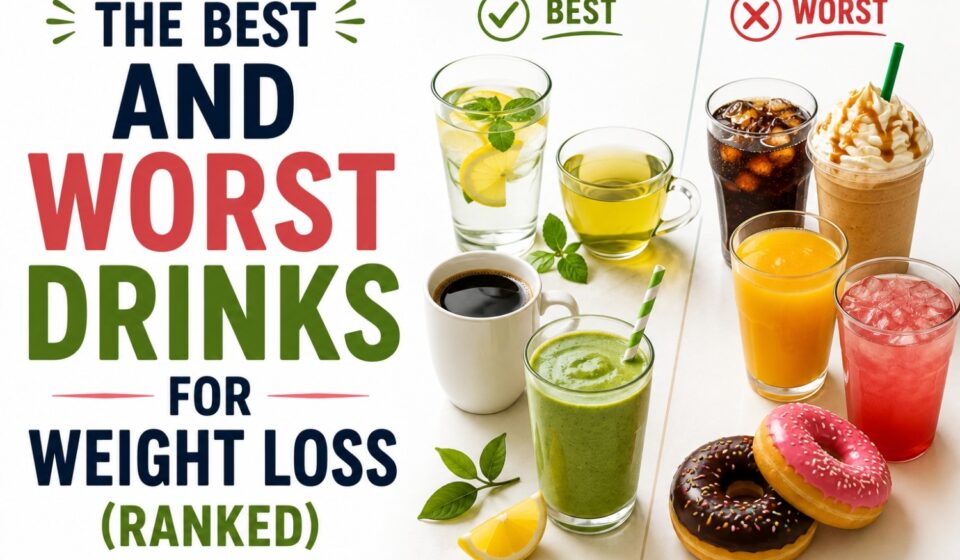
The drinks that help: water, black coffee, green tea, sparkling water, herbal tea. The drinks that hurt: soda, fruit juice, sweetened coffee drinks, alcohol, commercial smoothies.
Make the switch gradually if going cold turkey feels too drastic. Replace one sweetened drink per day with water or unsweetened tea. Then another the following week. Within a month, the habit has changed and the calorie reduction is significant and permanent.
Which drink on the “worst” list is hardest for you to give up? Share in the comments — you’re probably not alone, and the community might have tips that help.