

Back fat is frustrating but fixable. Here’s the complete guide.

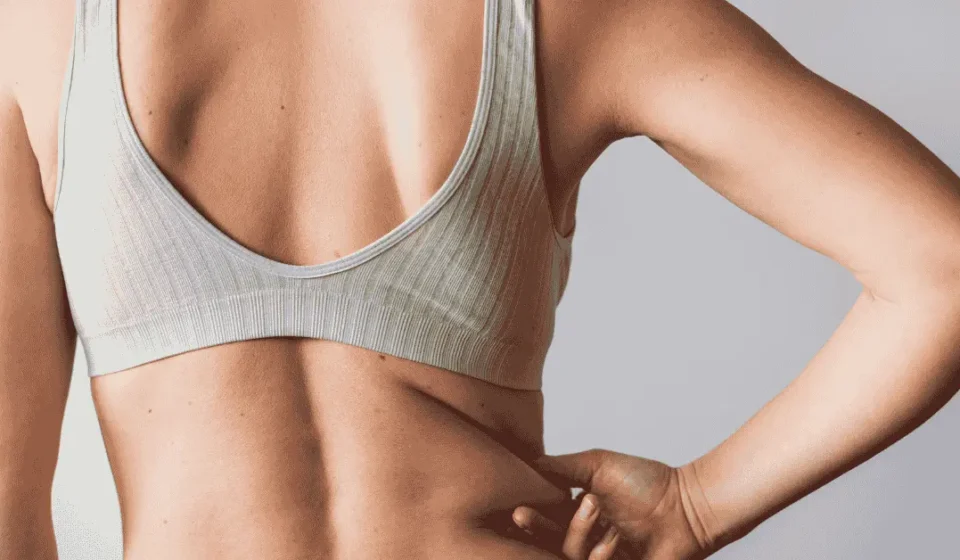
Back fat — whether it’s the rolls visible from behind, the bra bulge that spills over a waistband, the lower back “muffin top,” or the upper back area that shows under clothing — is one of the most complained-about areas for both men and women.
Like all body-specific fat concerns, it requires understanding what drives fat loss in any area — and the specific exercises and strategies that improve the back’s shape and definition as fat reduces.
The Different Types of Back Fat
Back fat isn’t one thing — it appears in several distinct areas that respond somewhat differently:
Upper back fat — the area between the shoulder blades and across the upper back. Often visible under tight clothing. Related to overall upper body fat percentage and upper back muscle development (or lack of it).
Bra fat / bra bulge — the fat that spills over bra straps at the sides and back. Affects women almost exclusively. A combination of actual fat deposits and skin pushed by the pressure of bra straps and bands.
Mid-back fat — the horizontal rolls that can appear across the mid-back, particularly when sitting or bending. Related to overall fat percentage and core/back muscle tone.
Lower back fat — the area just above the hips at the back, sometimes called “back love handles.” Often associated with the same fat deposits as hip fat on the sides of the body.
All of these respond to the same fundamental approach — overall fat loss plus targeted back muscle development — but the specific exercises for each area differ slightly.
Why Back Fat Is Particularly Visible
Back fat has a specific characteristic that makes it psychologically impactful: you can’t easily see it yourself. It shows up in photos, in mirrors you don’t normally use, and in how clothes fit from behind — which means people are often unaware of it until confronted by an unflattering angle.
It’s also one of the first areas to show in tight clothing and one of the last areas where people focus their fitness attention — most people train the front of their body (chest, abs, biceps) far more than the back.
This combination of high visibility to others, low self-visibility, and neglect in training makes back fat particularly frustrating — and the solution of building a stronger, more defined back particularly rewarding.
What Actually Reduces Back Fat
1. Overall Fat Loss
As with all body-specific fat concerns — and as we’ve covered throughout this series of articles on face, thigh, hip, and arm fat — there is no spot reduction. You cannot specifically burn back fat by doing back exercises.
Back fat reduces through overall fat loss — a sustained calorie deficit that draws from fat stores throughout the body, including the back. The complete fat loss framework is in our guide to how to get rid of belly fat — every principle applies equally to back fat.
Most people find that back fat responds to fat loss similarly to upper body fat in general — after the face responds but often before lower body fat shows significant change. The bra area in particular often shows visible improvement relatively early in a fat loss journey.
2. Back Muscle Development — The Game-Changer
This is where back fat transformation goes beyond simply “losing weight.” Building the muscles of the back — the lats, rhomboids, traps, and erector spinae — fills the area with lean, defined muscle that completely changes the appearance of the back as fat reduces.
A back with well-developed muscles and reduced fat looks completely different from a back that has simply lost weight without training. The difference is the muscular architecture underneath — which is entirely within your control.
The best exercises for back fat and back definition:
Bent-Over Rows — the foundation of back muscle development. Hinge forward with a flat back, hold dumbbells or a barbell, and pull the weight toward your lower ribs by driving elbows back and squeezing the shoulder blades together. This targets the entire mid-back musculature. One of the most important exercises for back development.
Lat Pulldowns — if you have gym access, pulling a bar down to your chest while seated develops the latissimus dorsi (the large wing-shaped muscles of the back) that give the back its V-shaped appearance. At home, resistance band pulldowns or pull-up progressions target the same muscles.
Pull-Ups and Chin-Ups — the gold standard of bodyweight back exercises. If you can’t do a full pull-up yet, assisted variations (using a resistance band loop around the bar), negative pull-ups (jumping to the top position and lowering slowly), or inverted rows under a table are all effective progressions.
Inverted Rows — lie under a sturdy table, grip the edge, and row your chest up to the table while keeping your body straight. An excellent bodyweight back exercise that requires no equipment beyond something sturdy to hold.
Single-Arm Dumbbell Rows — supporting one hand and knee on a bench, row a dumbbell from the floor to your hip with the other arm. Allows heavier loading than bilateral rows and provides excellent lat and mid-back development.
Reverse Flyes — hold light dumbbells and hinge forward, then raise arms out to the sides until parallel with the floor. Targets the rear deltoids and upper back muscles (rhomboids and middle trapezius) that are responsible for the defined upper back appearance and improved posture.
Face Pulls — using a resistance band anchored at face height, pull the band toward your face while flaring elbows out and rotating hands back. Targets the rear deltoids and upper back — one of the best exercises for reducing the “rounded shoulder” appearance that makes back fat more prominent.
Superman Hold — lie face down, extend arms in front and lift arms, chest, and legs off the floor simultaneously. Hold for 2–3 seconds. Targets the lower back extensors and glutes — useful for lower back fat alongside building posterior chain strength.
Good Mornings — stand with hands behind your head, hinge forward at the hips maintaining a flat back, then drive hips forward to return upright. One of the best exercises for lower back development and posterior chain strength.
Three sessions per week of these movements, progressively increasing resistance, produces meaningful back muscle development within 8–12 weeks.
3. Posture Improvement
This one produces immediate visible results rather than requiring weeks of fat loss: improving posture dramatically changes how back fat appears.
Slouched, rounded posture pushes fat and skin outward, creating rolls and bulges that are significantly less apparent when standing tall. People who correct their posture through back strengthening and conscious alignment often look as if they’ve lost several pounds from their back immediately — without any actual fat loss occurring.
The exercises above — particularly face pulls, reverse flyes, and rows — directly address the muscle imbalances (tight chest, weak upper back) that cause poor posture. Additionally, conscious posture practice throughout the day reinforces the muscular changes from training.
Immediate posture cue: Imagine a string attached to the top of your head pulling you straight toward the ceiling. Shoulders back and down (not raised). Chest open. Core lightly engaged. This single adjustment changes the appearance of back fat significantly.
4. High Protein Intake
The same protein requirements that support fat loss and muscle development throughout the body apply to back fat — building the back muscles that create the defined appearance requires adequate protein to support muscle protein synthesis.
Aim for 0.7–1g of protein per pound of bodyweight daily. Our comprehensive guide to how much protein you actually need per day covers the practical strategies for hitting this target.
5. Reduce Sodium and Address Fluid Retention
The back — particularly the mid-back and bra area — can retain fluid that significantly exaggerates the appearance of back fat. High sodium intake causes water retention throughout the body, and the way clothing compresses the back makes this fluid retention particularly visible.
Reducing sodium dramatically for a week (under 1,500mg per day) often produces rapid visible improvement in back appearance — particularly for women who notice variation in back fat appearance throughout their menstrual cycle, which is often fluid-driven.
As we cover in our article on how to lose water weight fast, reducing sodium is the fastest intervention for visible reduction in any body area where fluid retention is contributing.
6. Cardio — As a Supplement, Not the Foundation
Cardio contributes to the overall calorie deficit that drives fat loss — but it won’t build the back muscles that create back definition. The optimal approach is back-focused strength training as the primary exercise modality with walking and moderate cardio as supplements.
Daily walking (8,000–10,000 steps) provides meaningful calorie burn without the muscle-wasting risk of excessive cardio. As covered throughout our blog — particularly in our article on how to lose weight without going to the gym — walking is the most accessible, lowest-barrier addition to any fat loss approach.
A Complete Beginner Back Workout
Here’s a full back-focused workout that can be done at home with minimal equipment (a resistance band and optionally light dumbbells):
Warm-up (3 minutes): Arm circles, shoulder rolls, cat-cow stretches
Workout (3 rounds):
- Bent-over rows (dumbbells or resistance band): 12 reps
- Resistance band face pulls: 15 reps
- Inverted rows under a table: 8–10 reps
- Resistance band lat pulldowns: 12 reps
- Reverse flyes (light dumbbells or band): 12 reps
- Superman holds: 10 reps with 2-second hold
Rest: 60–90 seconds between rounds
Cool-down (2 minutes): Child’s pose, doorframe chest stretch, lat stretch
Three sessions per week of this workout, progressively making each exercise harder over time, produces meaningful back muscle development within 8–12 weeks.
Why “Toning” Workouts Don’t Work for Back Fat
Many workouts marketed for back fat — the kind with light weights and high reps claiming to “tone” without “bulking” — produce minimal results because they generate insufficient muscle-building stimulus.
Building enough muscle to visibly change the back’s appearance requires progressive resistance — weights that are challenging enough that the last few reps of each set are genuinely difficult. Light weights performed for many reps build almost no muscle and produce minimal calorie burn.
The myth that women will “bulk up” from lifting heavier weights is exactly that — a myth. Women lack the hormonal environment (primarily testosterone) to build large muscles easily. What they do build is the lean, defined muscle that creates the appearance most people are aiming for.
What to Expect and When
Weeks 1–4: Early strength gains in back exercises. Possible reduction in fluid retention from dietary changes. Posture improvement may produce immediate visual changes. Scale possibly moving.
Weeks 4–8: Back muscles becoming noticeably stronger. Fat loss starting to show. Upper back definition improving. Bra area showing early improvement for many people.
Weeks 8–16: Meaningful changes in back shape. The combination of reduced fat and increased muscle development producing visible definition. Posture significantly improved.
Months 4–6+: Continued improvement as overall body fat decreases. Lower back fat beginning to respond more noticeably.
Back fat responds to fat loss at a moderate pace — faster than lower body fat but sometimes slower than facial fat. Consistent execution of the strategies above over 12+ weeks produces real, visible results.
The Bra Bulge Specifically
Bra bulge is one of the most complained-about back fat areas for women — the fat that spills over bra straps at the back and sides.
What helps specifically:
- Overall fat loss (as above)
- Building the lat and upper back muscles that fill in the area with muscle rather than fat
- Correctly fitted bras — a bra that’s too tight or the wrong size pushes soft tissue outward, creating bulge that isn’t entirely fat. Getting properly fitted for a bra (many department stores offer this free) can produce an immediate visual improvement independent of any fat loss.
- The back exercises above — particularly rows and reverse flyes for the area directly around where bra straps sit
The Lower Back Specifically
Lower back fat (“back love handles”) often connects to the same fat deposits as hip fat and responds to similar strategies — including the hip and glute exercises covered in our article on how to lose hip fat.
Lower back fat is often the last to respond and requires reaching lower overall body fat percentages before becoming visibly reduced. The superman holds, good mornings, and deadlift variations mentioned above build the lower back muscles that create definition in this area as fat reduces.
The Bottom Line
Back fat responds to the same fundamental approach as all body-specific fat: overall fat loss through a moderate calorie deficit, combined with targeted muscle development that builds the architectural foundation for the defined appearance most people want.
The strategies that work:
- Sustained overall fat loss — the essential foundation
- Back-focused strength training 3x per week — rows, pull-ups, face pulls, reverse flyes
- Posture improvement — produces immediate visible results
- High protein to support muscle development and fat loss
- Reduced sodium to address fluid retention
- Daily walking and moderate cardio as supplements
Build a strong back while losing fat and the results are genuinely transformative — not just smaller, but defined, upright, and confident.
For the complete fat loss framework that underpins back fat reduction, our guide to how to get rid of belly fat covers all the foundational strategies.
Which area of back fat bothers you most — upper back, bra area, or lower back? Share in the comments — knowing the most common concerns helps us create the most useful content.