
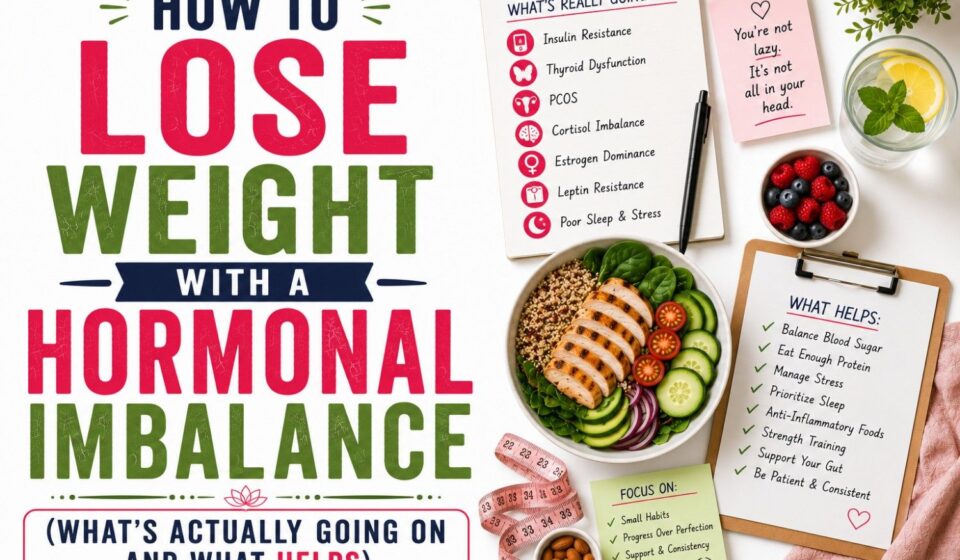

Hormones control fat storage, hunger, metabolism, and muscle — here’s how to work with them instead of against them

“My hormones are out of balance” has become one of the most common explanations for weight loss resistance — and it’s often dismissed as an excuse. It shouldn’t be.
Hormonal imbalances genuinely and significantly affect weight. They don’t make fat loss impossible — but they do change the approach required. Understanding which hormones are involved and how they affect weight is the first step to finding what actually works.
The Hormones That Most Affect Weight
Insulin — The Primary Fat Storage Hormone
Insulin is produced by the pancreas in response to blood glucose. Its job is to signal cells to take up glucose from the bloodstream.
When insulin is chronically elevated (due to insulin resistance, poor diet, or excess body fat), it:
- Directly promotes fat storage
- Suppresses fat mobilization — making it harder for stored fat to be released for energy
- Creates a metabolic environment where fat loss is genuinely difficult regardless of calorie intake
Insulin resistance — where cells stop responding normally to insulin — affects approximately 1 in 3 adults and is one of the most common reasons people struggle to lose weight despite genuine dietary effort.
Signs of insulin resistance:
- Weight concentrated in the abdomen
- Strong carbohydrate cravings
- Energy crashes after meals
- Difficulty losing weight despite reasonable effort
- Elevated fasting blood glucose or triglycerides
- Dark skin patches (acanthosis nigricans) in skin folds
As covered in our article on how to lose weight with insulin resistance, specific dietary approaches directly address this mechanism.
Cortisol — The Stress Hormone
Cortisol directly promotes visceral belly fat accumulation through multiple mechanisms — visceral fat cells have more cortisol receptors than other fat cells, making them specifically responsive to cortisol-driven storage.
Chronic stress, poor sleep, and sustained calorie restriction all elevate cortisol — which is why people under significant life stress or following very restrictive diets often accumulate belly fat specifically, even when losing weight elsewhere.
As covered in our article on does stress cause weight gain, cortisol management is a fat loss strategy — not just a wellness recommendation.
Estrogen — The Female Fat Distribution Hormone
Estrogen in women directs fat storage toward the hips, thighs, and buttocks (the classic pear shape). When estrogen declines — during perimenopause and menopause — fat redistributes toward the abdomen and insulin sensitivity worsens.
Estrogen dominance (relatively high estrogen compared to progesterone) is also common in younger women and promotes lower abdominal fat accumulation, water retention, and inflammation.
As covered in our articles on how to lose weight during menopause and how to lose weight with endometriosis, estrogen-related hormonal imbalances require specific dietary and lifestyle approaches.
Testosterone — The Muscle and Fat Mobilization Hormone
Both men and women have testosterone, though at very different levels. It supports:
- Muscle maintenance and building
- Fat mobilization (particularly visceral fat)
- Metabolic rate (through its muscle-supporting effects)
Low testosterone — common in overweight men, older adults, and people under chronic stress — promotes muscle loss, increased fat storage, and reduced metabolic rate.
Thyroid Hormones (T3 and T4)
Thyroid hormones regulate the speed of virtually every metabolic process in the body. Hypothyroidism (underactive thyroid) significantly reduces metabolic rate, causes fatigue, and promotes weight gain that doesn’t respond to conventional dietary approaches.
As covered in our articles on how to lose weight with hypothyroidism and how to lose weight with Hashimoto’s disease, thyroid conditions are among the most common and most impactful hormonal causes of weight loss resistance.
Leptin and Ghrelin — The Hunger Hormones
Leptin (produced by fat cells) signals fullness. Ghrelin (produced by the stomach) signals hunger.
In people who are overweight, leptin resistance often develops — fat cells produce plenty of leptin, but the brain stops responding to it, eliminating the satiety signal. This produces constant hunger despite adequate body fat stores.
After weight loss, ghrelin rises and leptin falls — producing the elevated hunger that makes maintaining weight loss difficult. This is the primary biological driver of weight regain.
Progesterone
Low progesterone relative to estrogen — common in perimenopause and some younger women — causes bloating, fluid retention, disrupted sleep, and difficulty losing weight. It’s a contributing factor to the weight changes many women notice in their 40s even before menopause begins.
Signs Your Weight Loss Resistance Is Hormonal
Insulin resistance: Abdominal weight gain, carbohydrate cravings, energy crashes after meals, difficulty losing weight despite calorie management
High cortisol: Belly fat specifically despite weight loss elsewhere, poor sleep, fatigue, chronic stress
Low thyroid: Cold intolerance, fatigue, hair loss, slow pulse, weight gain with no dietary change, difficulty losing despite significant effort
Estrogen imbalance: Lower abdominal and hip weight, water retention, mood changes, irregular periods, breast tenderness
Low testosterone (men): Reduced muscle mass, increased abdominal fat, fatigue, reduced libido
Leptin resistance: Constant hunger despite eating, difficulty feeling satisfied, weight concentrated in body fat stores
Getting Tested: What to Ask Your Doctor
If hormonal imbalance is suspected, these tests are worth requesting:
- Fasting glucose and insulin (HOMA-IR calculates insulin resistance)
- Full thyroid panel (TSH, free T3, free T4, anti-TPO antibodies)
- Comprehensive metabolic panel (cortisol, kidney and liver function)
- Sex hormones (estradiol, progesterone, testosterone, DHEA)
- Full lipid panel (triglycerides are a key insulin resistance marker)
These tests together provide a comprehensive picture of the hormonal landscape affecting weight.
Dietary Approaches for Hormonal Weight Loss
For Insulin Resistance: Reduce Refined Carbohydrates
The most direct dietary intervention for insulin resistance is reducing the foods that produce the largest insulin spikes:
- Eliminate sugar-sweetened beverages and added sugar
- Replace refined carbohydrates (white bread, white rice, white pasta) with whole food versions or legumes
- Increase fiber — soluble fiber specifically reduces post-meal glucose spikes
- Increase protein — produces the lowest insulin response of any macronutrient
As covered in our guide to how to lose weight with insulin resistance, low-carbohydrate approaches produce disproportionate benefits for insulin-resistant people compared to the general population.
For High Cortisol: Anti-Inflammatory Eating and Stress Reduction
The dietary approach for cortisol-driven weight gain:
- Mediterranean eating pattern — strong anti-inflammatory evidence
- Adequate protein — cortisol promotes muscle breakdown; high protein resists this
- Reduce caffeine if excessive — caffeine elevates cortisol
- Reduce alcohol — directly elevates cortisol
- Prioritize magnesium-rich foods (leafy greens, pumpkin seeds) — magnesium reduces cortisol response
For Thyroid Conditions: Specific Nutritional Support
- Selenium (200mcg daily) — supports T4-to-T3 conversion
- Iodine adequacy — essential for thyroid hormone production (but don’t supplement without testing)
- Consider gluten elimination — evidence for reduced antibody levels in Hashimoto’s
- Adequate protein and calories — severe restriction worsens thyroid function
For Estrogen Imbalance: Support Healthy Estrogen Metabolism
- Cruciferous vegetables (broccoli, cauliflower, kale) — DIM and I3C support estrogen metabolism
- High fiber — supports estrogen clearance through the digestive tract
- Reduce alcohol — directly raises estrogen levels
- Flaxseeds — phytoestrogens that modulate estrogen activity
Universal: High Protein
Regardless of which specific hormonal imbalance is present, adequate protein is the most important dietary variable for body composition. As covered in our guide to how much protein you actually need per day, 0.7–1g per pound of bodyweight supports muscle maintenance and metabolic rate — both of which are threatened by hormonal imbalances.
Lifestyle Interventions That Directly Affect Hormones
Sleep — The Hormonal Reset
Sleep is when the body rebalances multiple hormones:
- Growth hormone is primarily secreted during deep sleep
- Cortisol follows its lowest point at night — poor sleep prevents this normalization
- Insulin sensitivity improves with adequate sleep
- Testosterone is primarily produced during sleep
7–9 hours of quality sleep is the single most powerful hormonal intervention available — and it’s free. As covered in our article on why sleep is the most underrated weight loss tool, sleep deprivation produces hormonal changes that directly impair fat loss regardless of dietary effort.
Strength Training — Hormonal Optimization
Strength training improves hormonal balance in multiple ways:
- Improves insulin sensitivity (the most impactful exercise intervention for insulin resistance)
- Raises testosterone acutely and chronically
- Increases growth hormone secretion
- Reduces cortisol when done at moderate intensity
Three sessions per week of compound movements provides the minimum effective hormonal benefit from strength training.
Stress Management — Cortisol Control
Active daily cortisol reduction is essential for anyone with cortisol-driven weight gain:
- Daily walking (reduces cortisol reliably)
- Breathing exercises
- Adequate sleep
- Social connection
- Reducing unnecessary stressors
When Medication Is Appropriate
Some hormonal imbalances require medical treatment alongside lifestyle changes:
Hypothyroidism: Levothyroxine (thyroid hormone replacement) is the foundation of treatment. Weight loss attempts without treating hypothyroidism are significantly impaired.
Insulin resistance/PCOS: Metformin is commonly prescribed to improve insulin sensitivity. GLP-1 medications (Ozempic, Wegovy) also significantly improve insulin sensitivity alongside producing weight loss.
Low testosterone (men): Testosterone replacement therapy, where appropriate, can significantly improve body composition and metabolic rate.
Estrogen/progesterone imbalance: Hormone therapy, where appropriate, addresses the metabolic consequences of estrogen decline.
For people whose weight loss resistance is genuinely hormonal, medical treatment alongside lifestyle changes produces dramatically better outcomes than lifestyle changes alone.
ClinicSecret offers telehealth medical evaluations to assess both hormonal factors affecting weight loss and whether prescription treatment — including GLP-1 medications that directly address insulin resistance — is appropriate for your situation.
[Check if you qualify at ClinicSecret →]
This is a paid partnership. ClinicSecret is a licensed telehealth provider. Medication is only prescribed following a medical consultation and is not guaranteed.
The Bottom Line
Hormonal imbalances genuinely impair weight loss — they’re not an excuse, they’re a real biological obstacle that requires specific approaches.
The most common hormonal causes of weight loss resistance:
- Insulin resistance — address with reduced refined carbohydrates, high protein, strength training
- High cortisol — address with sleep, stress management, moderate exercise
- Hypothyroidism — address with medical treatment and thyroid-supporting nutrition
- Estrogen imbalance — address with cruciferous vegetables, fiber, reduced alcohol
- Low testosterone — address with strength training, sleep, potentially medical treatment
Get tested. Work with your doctor. Address the specific hormonal factor — not just generic dietary advice.
For the foundational fat loss framework that works alongside hormonal optimization, our guide to how to get rid of belly fat covers everything in one place.
Have you had a hormonal imbalance diagnosed that was affecting your weight — and what helped once it was identified and treated? Share in the comments.