
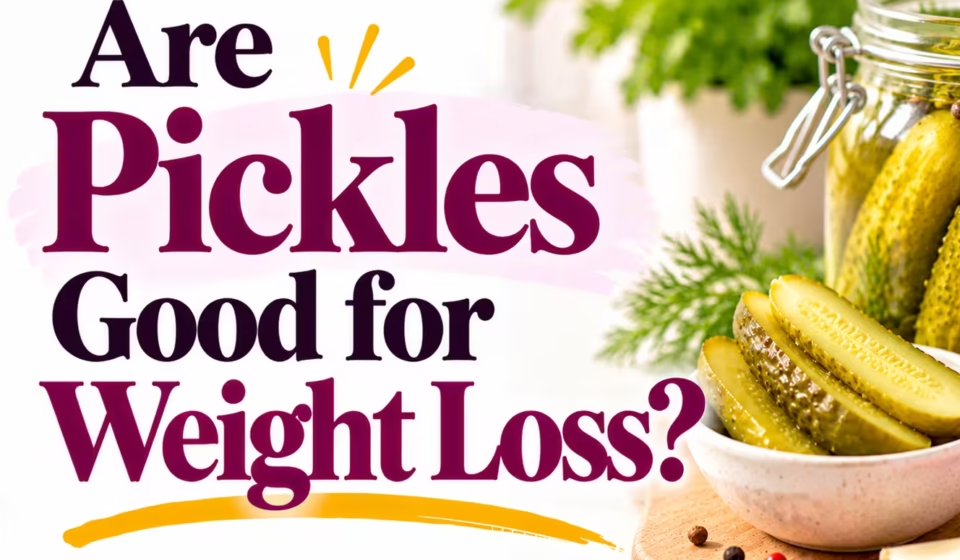

Yes, pickles can be a good snack for weight loss. They’re crunchy, flavorful, and usually contain very few calories, making them an easy addition to sandwiches, salads, or a snack plate.
A small dill pickle spear contains approximately 4–5 calories. That’s considerably less than a typical serving of chips, crackers, or other crunchy snacks.
But there’s a catch: pickles can be surprisingly high in sodium.
And while you may have heard that the vinegar in pickles burns fat, controls blood sugar, or suppresses appetite, the research doesn’t support those claims for ordinary servings of pickles.
The real benefits are much simpler.
Here’s what pickles can and can’t do for weight loss, how many calories they contain, whether fermented pickles offer extra benefits, and how to enjoy them without overlooking the sodium.
Are Pickles Actually Good for Weight Loss?
Pickles can fit comfortably into a weight-loss diet because they’re low in calories and have a strong flavor.
If you enjoy something salty and crunchy, a few pickle slices or spears may be a satisfying choice.
They’re also useful for adding flavor to meals without contributing many calories.
For example, adding sliced dill pickles to a sandwich provides extra crunch for relatively little energy.
However, pickles don’t directly cause weight loss.
They don’t contain a special fat-burning ingredient, and eating them won’t automatically reduce your appetite or create a calorie deficit.
Their usefulness depends on how they fit into your overall eating habits.
If you enjoy pickles and they help you prepare satisfying meals or snacks, there’s no reason to avoid them simply because you’re trying to lose weight.
How Many Calories Are in Pickles?
Most unsweetened cucumber pickles are very low in calories.

According to USDA food composition data, a small dill pickle spear weighing approximately 35 grams contains around 4 calories.
Here’s a practical breakdown.
| Amount of dill pickles | Approximate calories |
|---|---|
| 1 small spear (35 g) | 4 |
| 2 small spears (70 g) | 8 |
| 3 small spears (105 g) | 12 |
| 100 g | 12 |
| 150 g | 18 |
These estimates refer to plain dill or kosher-style cucumber pickles.
Actual values may differ depending on the ingredients, brand, and amount of sugar added.
What Else Is in a Dill Pickle?
A typical small dill pickle spear contains approximately:
- 4 calories.
- 0.8 grams of carbohydrates.
- 0.3 grams of fiber.
- 0.2 grams of protein.
- Very little fat.
- 283 milligrams of sodium.
Pickles also contain water and small amounts of certain vitamins and minerals.
However, they’re not particularly rich in protein or fiber.
That means a serving of pickles may satisfy a craving for something sour and crunchy without necessarily keeping you full for several hours.
For a more substantial snack, you can combine them with another food.
Why Pickles Can Be Useful During Weight Loss
There are several practical reasons to include pickles in your meals.
None requires believing that pickles have special metabolic powers.
1. They’re Very Low in Calories
The clearest advantage of dill pickles is their low calorie content.
Because cucumbers contain plenty of water, even a relatively generous serving of pickles contributes very little energy.
For example, three small dill pickle spears provide roughly 12 calories.
That makes them a reasonable choice when you want something crunchy but aren’t particularly hungry.
However, low calories don’t automatically make a food more nutritious or satisfying than alternatives.
Nuts, cheese, hummus, and whole-grain crackers contain more calories, but they also provide nutrients that pickles largely lack.
The best choice depends on what your body needs at the time.
2. They Can Satisfy Salty and Sour Cravings
Pickles have a distinctive combination of saltiness, acidity, and crunch.
If that’s what you’re craving, eating a pickle may be more satisfying than reaching for a food you don’t really want.
For example, someone who enjoys dill pickles might choose them instead of a small portion of chips on certain occasions.
That substitution could reduce calorie intake.
But it won’t happen automatically for everyone.
You may still want chips afterward, or you might prefer a different snack entirely.
The important thing is finding foods that you genuinely enjoy rather than forcing yourself to eat the lowest-calorie option available.
Our guide to low-calorie snacks for weight loss offers more choices.
3. They Add Flavor Without Much Energy
Pickles work especially well as toppings.
They can make a sandwich, burger, wrap, or salad taste more interesting without requiring a large amount of extra sauce.
Try them with:
- Chicken or tuna sandwiches.
- Homemade burgers.
- Turkey or tofu wraps.
- Potato salads.
- Grain bowls.
- Bean salads.
You don’t need to eliminate mayonnaise, cheese, or other toppings to make room for pickles.
But if you happen to enjoy the sour flavor of pickles, you may find that a smaller amount of dressing or sauce is enough.
4. They’re Convenient
Pickles are ready to eat.
There’s no chopping, cooking, or complicated preparation required if you’re buying them in a jar.
They also keep well when stored according to the product instructions.
That convenience can be helpful when you’re building a realistic eating routine.
A healthy eating pattern isn’t just about selecting nutritious ingredients. It’s also about keeping foods available that fit your time, budget, and preferences.
Does the Vinegar in Pickles Help Burn Fat?
This is one of the most common claims about pickles and weight loss.
Vinegar contains acetic acid, a compound that researchers have studied for potential effects on blood glucose, appetite, and body weight.
Some clinical trials and reviews have reported modest improvements in certain glucose measurements or weight-related outcomes following vinegar consumption.
However, these studies generally examine specific amounts of vinegar under controlled conditions.
They don’t establish that eating two or three dill pickle spears produces the same effects.
The amount of vinegar remaining in a serving of pickles varies according to the recipe and preparation method.
And some pickles are fermented without vinegar as the main acidifying ingredient.
There’s also no convincing evidence that ordinary pickle consumption directly increases fat burning.
What About the Apple Cider Vinegar Studies?
Apple cider vinegar has attracted attention because some studies suggest it may modestly influence post-meal glucose responses.
However, the evidence has limitations, including differences in study populations, vinegar amounts, and study duration.
Even when a trial finds an effect from drinking vinegar, that doesn’t mean a pickle provides an equivalent amount of acetic acid.
It certainly doesn’t mean you need to eat pickles before every carbohydrate-rich meal.
For more detail, see our article on apple cider vinegar and weight loss.
Should You Drink Pickle Juice to Lose Weight?
No reliable evidence shows that drinking pickle juice causes meaningful weight loss.
Pickle brine can also contain substantial sodium, and its acidity may irritate the mouth or digestive tract in some people.
There’s no need to drink it for appetite control, blood sugar management, or fat loss.
Enjoy pickles as food rather than treating their brine as a supplement.
Are Fermented Pickles Better for Weight Loss?
Some pickles are made with vinegar, while others are produced through fermentation.
These methods create different products, even though both can taste sour.
Vinegar-Pickled Cucumbers
Many commercial pickles are prepared using a mixture of vinegar, water, salt, and seasonings.
The vinegar gives them their sour flavor and helps preserve the food.
These products generally aren’t a meaningful source of live probiotic microorganisms.
Naturally Fermented Pickles
Traditionally fermented cucumbers are made using a saltwater brine.
During fermentation, microorganisms convert some naturally occurring sugars into acids, including lactic acid.
Certain fermented pickles contain live microorganisms when they’re eaten.
However, not every fermented pickle contains live cultures.
Some products are heat-treated after fermentation, which can destroy the microorganisms.
And even when live bacteria are present, that doesn’t automatically mean the product contains specific probiotic strains proven to produce health benefits.
How Can You Tell the Difference?
| What to look for | What it may indicate |
|---|---|
| Vinegar listed prominently | Often vinegar-pickled rather than traditionally fermented |
| “Naturally fermented” on the label | Fermentation was used in production |
| “Contains live cultures” | May contain living microorganisms |
| Refrigerated product | May be unpasteurized, but refrigeration alone isn’t proof |
| Shelf-stable jar | May have been heat-treated or preserved using vinegar |
If you specifically want live cultures, read the label rather than relying on where the product is displayed in the store.
Do Fermented Pickles Help You Lose More Weight?
There’s no convincing evidence that naturally fermented pickles produce greater weight loss than vinegar-pickled cucumbers.
Research on fermented foods and the gut microbiome is interesting, but we can’t assume that every fermented food improves appetite regulation or causes fat loss.
If you enjoy naturally fermented pickles, they’re another option to include in your diet.
You don’t need to pay extra for them just to lose weight.
Our guide to gut health and weight loss explores the relationship between the microbiome and body weight.
The Biggest Downside of Pickles: Sodium
This is where pickles deserve more attention.
Although dill pickles are low in calories, they can contain substantial sodium.
A small 35-gram dill pickle spear may contain approximately 283 milligrams of sodium.
That means eating three spears could provide around 850 milligrams.
To put that into context, the American Heart Association recommends no more than 2,300 milligrams of sodium per day, with an ideal goal of no more than 1,500 milligrams for most adults.
Three pickle spears could therefore account for a substantial portion of a day’s sodium intake.
However, sodium levels differ considerably between products.
Some reduced-sodium varieties contain far less than regular dill pickles.
The Nutrition Facts label is more useful than assuming every pickle has the same amount of salt.
Can Pickles Make You Gain Water Weight?
Yes, a salty meal can contribute to temporary changes in fluid balance.
If you eat several pickles alongside other sodium-rich foods, you might notice a higher number on the scale afterward.
That doesn’t mean you’ve gained body fat.
Daily weight changes can reflect water retention, digestive contents, carbohydrate stores, and other normal factors.
If the scale is temporarily higher after a salty meal, avoid assuming your weight-loss plan has stopped working.
Our guide to salt and weight loss explains the difference between water weight and fat gain.
Who Should Be More Careful With Pickles?
People with high blood pressure, kidney disease, heart failure, or medical instructions to limit sodium may need to restrict regular pickles.
The amount that’s appropriate depends on the person’s condition and overall diet.
If you have been advised to follow a low-sodium eating plan, choose products accordingly and discuss questions with your healthcare professional.
Reduced-sodium pickles may be useful, but some salt substitutes contain potassium, which can matter for people with certain kidney conditions or medications.
Dill Pickles vs. Sweet Pickles: Which Are Better?
Not all pickles have the same nutritional profile.
Traditional dill pickles generally contain little added sugar.
Sweet varieties, including bread-and-butter pickles, often contain added sugar in the brine.
That can increase their calorie content.
| Type | Typical characteristic | Weight-loss consideration |
|---|---|---|
| Dill pickles | Sour, usually low in sugar | Very low calorie, often high sodium |
| Kosher dill pickles | Garlic-forward dill flavor | Similar calorie and sodium considerations |
| Bread-and-butter pickles | Sweet and tangy | Often contain added sugar |
| Sweet gherkins | Small, sweet pickles | Usually more sugar than unsweetened dill |
| Reduced-sodium pickles | Made with less sodium | Useful for people monitoring salt intake |
| Naturally fermented pickles | Fermented in brine | May contain live cultures; sodium still matters |
Sweet pickles aren’t automatically bad for weight loss.
They simply provide a different combination of calories and sugar.
A small amount of sweet pickle relish on a sandwich may fit into your eating plan perfectly well.
If you enjoy sweeter pickles, compare labels rather than feeling that you must avoid them entirely.
Pickles vs. Other Crunchy Snacks
Pickles have a clear calorie advantage over many snack foods, but their nutritional differences are worth considering.
| Snack | Example serving | Approximate calories | Main consideration |
|---|---|---|---|
| Dill pickles | 3 small spears | 12 | Very low calorie, potentially high sodium |
| Air-popped popcorn | 3 cups | 90–110 | Provides whole-grain fiber |
| Potato chips | 28 g | 150–160 | Higher in calories, but sodium varies |
| Pretzels | 28 g | 105–115 | Convenient, generally lower in fiber |
| Almonds | 28 g | 160–170 | Provide protein, fat, and fiber |
| Carrots with hummus | Moderate snack serving | 130–190 | Provides fiber and other nutrients |
The figures are estimates; check product labels for actual values.
There isn’t a single winner for everyone.
Pickles may be useful when you want something sour and crunchy without many calories.
Popcorn provides a larger snack with whole-grain fiber.
Almonds offer healthy fats and protein.
Carrots with hummus can be a more nutritionally substantial choice.
You can include any of these foods in a weight-loss diet.
6 Easy Ways to Eat Pickles for Weight Loss
If you already enjoy pickles, here are some practical ways to use them.
1. Add Them to a Chicken Sandwich
Include pickle slices with grilled chicken, lettuce, tomato, and your favorite bread.
The pickles add acidity and crunch.
They work particularly well with mustard or a yogurt-based sauce.
2. Make a Dill Pickle Yogurt Dip
Finely chop a small dill pickle and mix it with plain Greek yogurt, dill, garlic powder, and a little lemon juice.
Serve with carrots, cucumber slices, or bell pepper strips.
This provides the familiar pickle flavor while adding protein from the yogurt.
You can adjust the amount of pickle to control the saltiness.
3. Include Pickles in a Tuna Salad
Combine tuna, chopped pickles, a small amount of mayonnaise or yogurt, and seasonings.
Serve in a sandwich, wrap, or alongside vegetables.
The pickles add flavor without needing a large quantity.
4. Make a Crunchy Snack Plate
Try a plate with:
- One or two pickle spears.
- Cucumber or carrot sticks.
- A boiled egg.
- A small portion of cheese or hummus.
This gives you the salty crunch of pickles alongside other foods that contribute protein, fiber, or fat.
It’s more nutritionally balanced than relying on pickles alone when you’re genuinely hungry.
5. Add Chopped Pickles to Potato Salad
Potatoes can fit into a nutritious weight-loss diet.
Chopped dill pickles add a tangy flavor to potato salad, particularly when combined with mustard, herbs, and a dressing you enjoy.
You can use a mixture of yogurt and mayonnaise if you want a lighter-style dressing.
6. Use a Little Pickle Brine in Dressing
A small amount of pickle brine can add acidity and saltiness to a dressing.
Try combining a little brine with olive oil, mustard, and herbs.
However, pickle brine can be high in sodium.
Use it primarily as a flavor ingredient rather than a health treatment.
There’s no established blood sugar or fat-loss advantage to using it instead of ordinary vinegar or lemon juice.
Can You Eat Pickles Every Day While Losing Weight?
Yes, if they fit your nutritional needs and sodium intake.
There’s no rule that pickles must be eaten only occasionally.
But there’s also no reason to eat large quantities every day.
If you enjoy a few slices on your sandwich or one spear with lunch, that may be a perfectly reasonable habit.
If you regularly eat several large pickles, it’s worth checking how much sodium you’re consuming.
Remember that even foods with very few calories can have other nutritional limitations.
Pickles provide little protein or fiber, so they shouldn’t replace meals or more substantial snacks when you’re hungry.
Are Pickles Good for People Taking GLP-1 Medications?
Some people using GLP-1 medications experience reduced appetite, nausea, heartburn, or other digestive symptoms.
Whether pickles are comfortable to eat depends on the individual.
Their strong, sour flavor may appeal to some people, but acidic or salty foods may aggravate nausea or reflux in others.
There’s no evidence that pickles improve the effectiveness of GLP-1 medications or produce additional weight loss.
If you’re using a medication such as semaglutide or tirzepatide, prioritize adequate nutrition and hydration rather than choosing foods solely because they contain very few calories.
For meal-planning ideas, see our guide to GLP-1-friendly foods.
What About Pickle Juice for Muscle Cramps?
Pickle juice occasionally appears in sports nutrition discussions.
A small 2010 study found that pickle juice shortened the duration of experimentally induced muscle cramps compared with water.
Researchers suggested the effect might involve a neural reflex rather than rapid electrolyte replacement.
However, this doesn’t establish pickle juice as a universal treatment for exercise-related cramps.
And the evidence doesn’t support using it for weight loss.
If you experience recurring muscle cramps, consider factors such as activity demands, medications, hydration, and possible medical causes.
Drinking salty pickle juice isn’t necessary for routine exercise recovery.
Frequently Asked Questions
Do Pickles Burn Belly Fat?
No.
There’s no evidence that pickles specifically burn abdominal fat.
Their low calorie content may make them useful in some meals or snacks, but overall fat loss depends on broader factors, including energy intake and activity.
How Many Pickles Can I Eat a Day to Lose Weight?
There’s no recommended number of pickles for weight loss.
One or two spears may fit into many people’s diets, but an appropriate amount depends largely on the product’s sodium content and your individual health needs.
Check the label rather than following a fixed number.
Are Pickles Good for Late-Night Snacking?
They can be, especially if you’re craving something sour and crunchy.
But if you’re genuinely hungry, a snack containing protein, fiber, or other nutrients may be more satisfying.
There’s nothing inherently wrong with eating at night.
For more guidance, see our article on managing late-night snacking.
Are Pickles Keto-Friendly?
Most unsweetened dill pickles contain very few carbohydrates and can fit into a ketogenic eating plan.
Sweet pickles may contain more sugar, so check the label.
You don’t need to follow keto to lose weight, however.
Do Pickles Help With Blood Sugar?
Pickles generally contain very little digestible carbohydrate, so plain dill pickles themselves are unlikely to cause a large glucose rise.
But that doesn’t mean eating them lowers blood sugar or treats diabetes.
Research on vinegar shouldn’t be treated as proof that ordinary servings of pickles improve glucose regulation.
Are Pickles a Probiotic Food?
Some naturally fermented pickles contain live microorganisms.
Vinegar-preserved or heat-treated pickles usually don’t contain meaningful live cultures.
Even when live cultures are present, specific probiotic health benefits aren’t guaranteed.
Look for appropriate labeling if live cultures are important to you.
Are Pickles Better Than Cucumbers for Weight Loss?
Both are very low in calories.
Fresh cucumbers generally contain much less sodium and provide a milder flavor.
Pickles offer a stronger sour and salty taste.
Neither is universally better for weight loss. Choose according to your preferences and dietary needs.
The Bottom Line: Are Pickles Good for Weight Loss?
Pickles can be a useful low-calorie snack or meal addition, especially if you enjoy salty, crunchy foods.
A small dill pickle spear contains only around 4–5 calories, making it easy to add flavor without substantially increasing a meal’s energy content.
However, pickles don’t burn fat, and the vinegar in ordinary servings hasn’t been shown to produce predictable weight-loss or blood sugar benefits.
Some naturally fermented pickles contain live cultures, but that doesn’t mean they cause weight loss or provide proven probiotic effects.
The main nutritional consideration is sodium, which can add up quickly if you eat several pickles.
Pickles don’t need a special fat-burning benefit to be worth eating. Sometimes a food is useful simply because it’s flavorful, convenient, and fits comfortably into your meals.
If you like pickles, enjoy them in reasonable portions, compare sodium levels when shopping, and pair them with other nutritious foods when you need a more satisfying snack.
You don’t need to drink pickle juice, eat pickles before every meal, or replace your favorite foods with them.
They’re just one enjoyable option in a balanced eating pattern, and that’s more than enough reason to keep a jar in the fridge.
Stop Wondering What to Eat This Week
Get my free 7-Day High-Protein Weight Loss Meal Plan delivered straight to your inbox — a simple week of satisfying, protein-focused meals designed to make healthy eating easier without complicated calorie tracking.
- 7 full days of breakfast, lunch, dinner & snacks
- One complete shopping list for the whole week
- A quick high-protein food cheat sheet
- Simple daily tips to help you stay on track
Free PDF • Delivered by email • Unsubscribe anytime
Check your inbox 💜
Your free 7-day high-protein meal plan is on its way.