
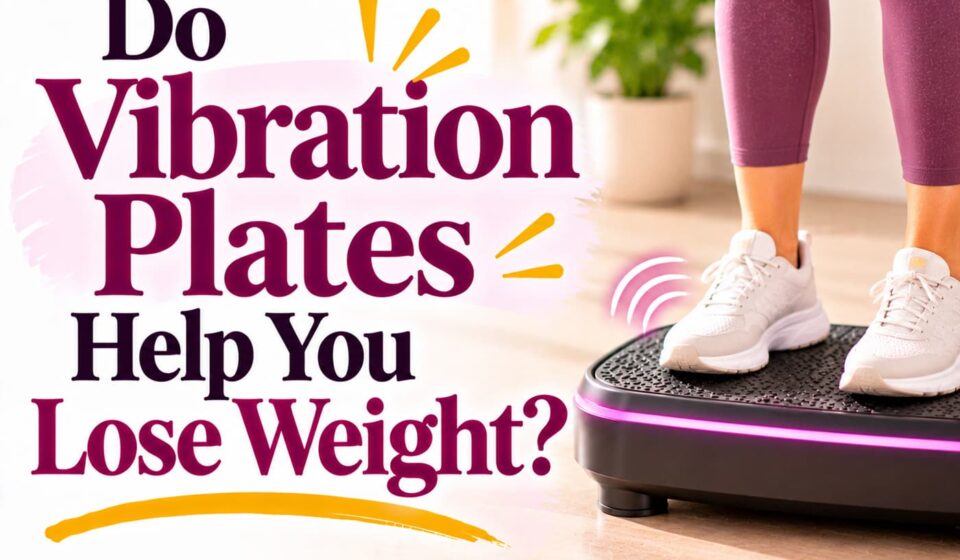

Standing on a vibrating platform for 15 minutes a day sounds like a surprisingly easy way to lose weight. And if you’ve spent any time browsing fitness products or watching wellness videos on social media, you’ve probably come across someone claiming that a vibration plate helped them lose belly fat, tone their legs, or burn calories without breaking a sweat.
It’s an appealing idea, especially if you struggle to find time for exercise or find traditional workouts uncomfortable.
But how much of it is supported by research?
Vibration plates can increase muscle activity and may offer some worthwhile fitness benefits. When it comes to weight loss, however, the results are considerably more modest than the advertising suggests.
What Is a Vibration Plate and How Does It Work?
A vibration plate is a motorized platform that produces rapid mechanical vibrations. You can stand on it, hold certain positions, or perform exercises such as squats while the platform moves beneath you.
This form of exercise is known as whole-body vibration (WBV).
As the platform vibrates, your muscles respond with rapid contractions and adjustments to help stabilize your body. Even when you’re relatively still, some of your muscles are working harder than they would on a stationary surface.
Most vibration plates use either vertical movements or side-to-side oscillations, although some machines combine different movement patterns. The frequency and intensity of these vibrations vary considerably between devices.
The important distinction is that increased muscle activity does not automatically translate into substantial calorie burning or fat loss. A muscle can be working without using anywhere near the amount of energy required during a conventional workout.
Do Vibration Plates Actually Help With Weight Loss?
There is some scientific evidence suggesting that whole-body vibration training can help reduce body fat. However, the size and consistency of these effects leave plenty of room for doubt about its usefulness as a standalone weight loss method.
A 2021 systematic review and meta-analysis examined 23 studies involving 884 participants with overweight or obesity. Researchers found an average reduction in fat mass of approximately 1.07 kg (2.4 pounds), an improvement they considered too small to be clinically meaningful.
More importantly, the analysis found no significant improvements in overall body weight, BMI, or muscle mass.
An earlier 2019 systematic review reported more encouraging results for fat loss, particularly when vibration training was combined with established weight management strategies such as dietary changes and exercise.
That last detail matters. Many of the studies showing positive results involved structured exercise sessions on vibration platforms, dietary interventions, or both. They weren’t simply testing whether standing on a machine for a few minutes every morning would make people thinner.
There’s also considerable variation between the machines, training programs, and populations studied. Results from a supervised rehabilitation program cannot necessarily be reproduced with an inexpensive vibration plate purchased online.

If you’re looking to lose weight, establishing a sustainable calorie deficit remains far more important than adding vibration training to your routine.
How Many Calories Does a Vibration Plate Burn?
This is one of the most difficult questions to answer accurately because calorie expenditure depends on your body weight, the machine’s settings, your posture, and whether you’re performing exercises or simply standing.
A small 2016 study published in PLOS ONE found that intermittent whole-body vibration increased energy expenditure by approximately 36% compared with standing on a non-vibrating platform.
That sounds impressive until you consider the starting point. Standing still requires relatively little energy, so increasing that amount by 36% doesn’t necessarily result in a meaningful calorie burn.
The researchers found that the overall energy demand remained below 2 METs, a measure of exercise intensity. That places the activity in the light-intensity range.
Performing exercises on a vibration plate can increase energy expenditure further. A 2018 crossover study found that adding vibration to a 20-minute bodyweight workout increased estimated calorie expenditure by approximately 20% compared with performing the same workout without vibration.
Again, this was an active exercise session, not passive standing.
Be skeptical of advertisements promising that a 10-minute vibration plate session burns hundreds of calories or replaces an hour at the gym. There isn’t convincing evidence to support those claims.
If you’re curious about how much energy different physical activities use, our calories burned calculator can help you compare more conventional exercise options.
Can Vibration Plates Help You Lose Belly Fat?
Vibration plates are frequently marketed as a way to reduce stubborn abdominal fat, partly because the movement creates a noticeable shaking sensation around the stomach.
But that sensation isn’t evidence of fat being broken down.
One interesting 2010 preliminary study found that participants following a calorie-restricted diet alongside whole-body vibration training experienced encouraging reductions in visceral fat, the fat stored around internal organs.
The findings were promising, but the study was relatively small and involved a structured weight loss intervention. It doesn’t establish that vibration plates can independently target abdominal fat.
Your body doesn’t selectively remove fat from an area simply because that area is moving, vibrating, or being exercised. Where you lose fat first depends on factors such as genetics, hormones, and your overall body composition.
If you’re concerned about abdominal fat, it’s worth understanding the difference between visceral fat and subcutaneous fat, since they have different health implications.
A vibrating stomach isn’t necessarily a shrinking stomach. The movement you feel and the fat loss you achieve are two entirely different things.
Are There Any Real Benefits of Using a Vibration Plate?
Although vibration plates aren’t particularly impressive as weight loss machines, dismissing them entirely would overlook some potentially useful applications.
Improved muscle strength
Whole-body vibration may help improve muscle strength, particularly in the lower body.
The 2021 meta-analysis mentioned earlier found improvements in lower-limb strength, even though participants did not experience significant increases in muscle mass.
This distinction is important. Becoming stronger doesn’t necessarily mean you’ve built substantial amounts of new muscle. Some improvements may result from changes in how your nervous system activates and coordinates your muscles.
For someone already following a progressive resistance training program, a vibration plate is unlikely to be essential. For someone who struggles with conventional strength exercises, supervised vibration training may offer another option.
Better balance and physical function
Some of the more interesting applications of whole-body vibration involve older adults and people with reduced physical function.
The small, repeated muscular adjustments required to maintain stability may help train balance and coordination. Certain supervised programs have reported improvements in these areas, although results vary.
People with poor balance or significant mobility limitations should not assume that standing on a moving platform is automatically safe. In these circumstances, working with a physical therapist is particularly important.
Potential benefits for bone health
Vibration training has also been investigated as a way to stimulate bone tissue, especially in older adults and postmenopausal women.
The research is mixed. Some studies have reported improvements in bone mineral density at specific skeletal sites, while others have found little or no meaningful benefit.
It is not an established replacement for osteoporosis treatment, appropriate resistance training, or other medically recommended strategies for maintaining bone health.
This becomes especially relevant when losing weight after menopause, when preserving both muscle and bone deserves greater attention.
Exercise accessibility
For some people, conventional exercise is difficult because of pain, physical limitations, or reduced strength.
In carefully selected cases, whole-body vibration can be incorporated into a rehabilitation or adapted exercise program. Its usefulness depends on the individual’s condition, the equipment, and the way the exercises are performed.
It shouldn’t be treated as a universally suitable alternative for anyone unable to exercise, but it may have a place in a professionally supervised program.
What About Lymphatic Drainage, Cellulite and Detoxification?
These claims have become increasingly common in vibration plate advertising, particularly on social media.
Muscle contractions and physical movement contribute to the circulation of blood and lymphatic fluid. Vibration may influence circulation temporarily, but evidence supporting commercial vibration plates as a reliable lymphatic drainage treatment remains limited.
There is also insufficient evidence that vibration plates produce lasting improvements in cellulite or meaningfully increase the body’s ability to eliminate toxins.
A temporary change in swelling, fluid distribution, or skin appearance should not be confused with fat loss.
If you experience persistent or unexplained swelling, it’s better to have the underlying cause assessed rather than attempting to treat it with a fitness device.
Vibration Plate vs. Walking and Other Forms of Exercise
If weight loss is your main goal, it’s worth considering what you could achieve by spending the same amount of time doing other activities.
| Activity | Contribution to weight loss | Main benefit |
|---|---|---|
| Passive vibration plate use | Very limited | Light muscle activation |
| Active vibration training | Modest | Muscle activation and strength |
| Walking | Useful with regular participation | Daily activity and cardiovascular health |
| Incline walking | Higher energy demand than level walking at the same speed | Cardiovascular fitness and endurance |
| Resistance training | Supports weight management | Muscle preservation and strength |
| Cycling | Depends on duration and intensity | Cardiovascular fitness |
| Swimming | Depends on duration and intensity | Low-impact, whole-body exercise |
Walking is particularly attractive because it doesn’t require specialized equipment, can be adapted to different fitness levels, and is relatively easy to incorporate into everyday life.
If regular walking no longer feels challenging enough, incline walking for weight loss can increase the intensity without requiring you to start running.
Resistance training offers another benefit that passive vibration sessions cannot reliably provide: a measurable, progressive stimulus for maintaining and building muscle.
You can learn more about how these approaches complement each other in our guide to cardio vs. weights for fat loss.
How to Use a Vibration Plate if You Already Own One
There’s no reason to abandon your vibration plate if you enjoy using it and can do so safely. The key is to give it a realistic role in your fitness routine.
Rather than spending the entire session standing still, consider incorporating simple movements appropriate for your fitness level.
Depending on the machine and its instructions, these might include:
- Shallow bodyweight squats
- Supported squat holds
- Gentle weight shifts
- Controlled calf raises
- Supported standing exercises
Start with short sessions at a low intensity, keeping your knees slightly bent rather than locked. Use a stable support if necessary, and avoid exercises that you cannot already perform comfortably on solid ground.
There is no scientifically established vibration frequency, session duration, or daily routine that guarantees weight loss. Different machines deliver different levels of vibration, even when their displayed settings appear similar.
Continue with regular aerobic activity and resistance training rather than gradually replacing them with longer vibration sessions.
If you prefer exercising at home, our guide to building a home workout routine can help you put together a more balanced program.
Are Vibration Plates Safe?
Whole-body vibration is not suitable for everyone, and the intensity of consumer machines can vary substantially.
Speak with a healthcare professional before using one if you:
- Are pregnant.
- Have severe osteoporosis or a recent fracture.
- Have undergone recent surgery.
- Have cardiovascular problems or an implanted medical device.
- Have a history of retinal detachment or uncontrolled epilepsy.
- Experience back pain, sciatica, or an acute musculoskeletal injury.
- Have significant balance difficulties or an increased risk of falling.
People with a known or suspected blood clot should avoid using a vibration plate until they have received medical clearance.
Stop using the machine if you experience dizziness, unusual pain, numbness, or other concerning symptoms.
The Mayo Clinic recommends checking with your doctor before using whole-body vibration equipment, particularly if you have an existing health condition.
Is a Vibration Plate Worth Buying for Weight Loss?
That depends largely on why you’re buying it.
If you’re interested in experimenting with a different form of exercise, already have a consistent fitness routine, and enjoy the sensation of vibration training, it may be a worthwhile addition.
If you’re purchasing one primarily because you expect it to make losing weight easier without changing your eating habits or activity levels, you’re likely to be disappointed.
There’s also the question of cost. Before spending several hundred dollars on a vibration plate, consider whether a pair of adjustable dumbbells, resistance bands, comfortable walking shoes, or another piece of equipment would be more useful to you.
The best investment is often something that makes regular physical activity easier to maintain, rather than something that promises to make physical activity unnecessary.
Frequently Asked Questions
Can you lose weight just by standing on a vibration plate?
Standing on a vibration plate can slightly increase energy expenditure, but there is insufficient evidence that passive vibration alone produces meaningful, sustained weight loss.
Is 10 minutes on a vibration plate equivalent to 30 minutes of walking?
There is no reliable evidence supporting a universal equivalence between vibration plate sessions and walking. The two activities place different demands on your muscles and cardiovascular system.
How long does it take to see weight loss results from a vibration plate?
There is no established timeline. Research programs typically involve several weeks or months of structured training, and even then, changes in body weight are often small or absent.
Can vibration plates tone your legs?
Vibration training may improve lower-body strength. However, a more defined appearance generally requires a combination of muscle development and changes in overall body fat.
Can you use a vibration plate every day?
There is no proven weight loss advantage to daily use. Appropriate frequency depends on your health, the intensity of the machine, the exercises performed, and your ability to recover between sessions.
The Bottom Line
Vibration plates occupy an interesting space between fitness equipment and rehabilitation technology. They can stimulate muscles, may improve certain aspects of physical function, and could provide a small additional benefit when incorporated into an active exercise program.
What they cannot reliably do is replace regular exercise or produce substantial weight loss while you stand still.
If you already own one and enjoy using it, there’s nothing wrong with incorporating it into a safe, well-rounded fitness routine. But you don’t need one to lose weight successfully.
Consistent movement, sustainable eating habits, and maintaining your muscle mass remain much more dependable ways to improve your body composition over time.
Stop Wondering What to Eat This Week
Get my free 7-Day High-Protein Weight Loss Meal Plan delivered straight to your inbox — a simple week of satisfying, protein-focused meals designed to make healthy eating easier without complicated calorie tracking.
- 7 full days of breakfast, lunch, dinner & snacks
- One complete shopping list for the whole week
- A quick high-protein food cheat sheet
- Simple daily tips to help you stay on track
Free PDF • Delivered by email • Unsubscribe anytime
Check your inbox 💜
Your free 7-day high-protein meal plan is on its way.