
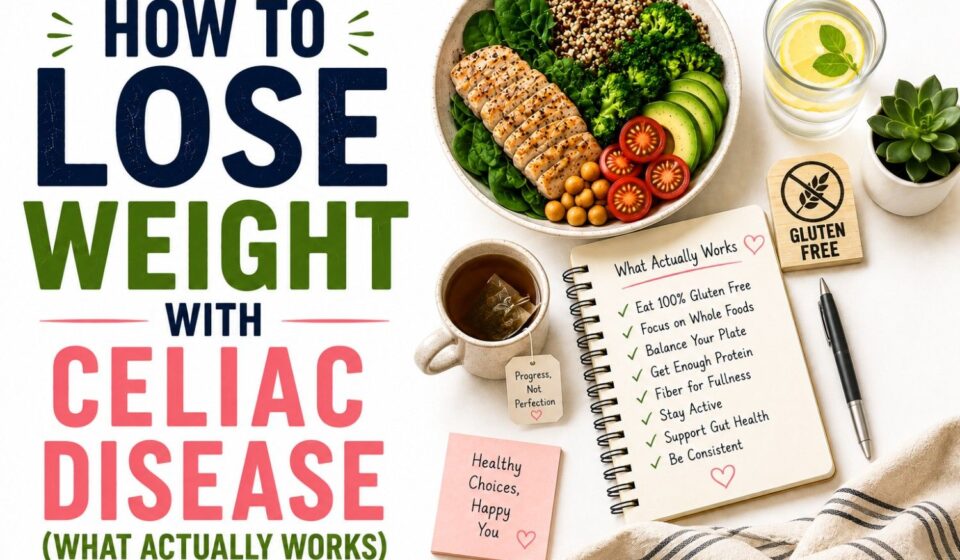

The gluten-free diet doesn’t automatically mean weight loss — here’s the specific approach that does
Celiac disease and weight have a complicated relationship. Many people assume that going gluten-free automatically leads to weight loss — it often doesn’t, and for specific reasons that require a targeted approach. Whether you’ve recently been diagnosed and want to manage your weight alongside celiac management, or you’ve been gluten-free for years and struggling to lose weight, this guide addresses the specific challenges and solutions.
The Celiac Disease-Weight Relationship
Celiac disease affects weight in ways that are counterintuitive and often misunderstood:

Before Diagnosis: Often Underweight or Normal Weight
Classic celiac disease — with significant malabsorption symptoms — often produces underweight or normal weight due to malabsorption of calories, protein, fat, and nutrients. Many people lose weight before diagnosis because they’re not absorbing what they eat.
This is why the stereotype of celiac disease is someone who is thin and malnourished. But this stereotype misses a significant portion of celiac patients:
Increasingly: Overweight at Diagnosis
A growing body of evidence shows that a significant proportion of newly diagnosed celiac patients are actually overweight or obese at diagnosis. The reasons include:
- Subclincal celiac disease with less dramatic malabsorption but significant inflammation
- Compensatory overeating in response to nutrient deficiency signals
- Fatigue-driven reduced activity
- Inflammatory effects on insulin sensitivity and metabolism
After Starting Gluten-Free Diet: Often Weight Gain
This surprises many newly diagnosed patients: starting a strict gluten-free diet frequently causes weight gain rather than weight loss — particularly in people who were overweight at diagnosis.
Why:
- Improved absorption: As the intestinal villi heal on a gluten-free diet, nutrient absorption dramatically improves — the same food intake now produces more absorbed calories
- Gluten-free processed food: Many gluten-free substitute products (bread, pasta, crackers, cookies) are higher in calories, sugar, and refined starch than their gluten-containing equivalents — and lower in fiber and protein
- Recovery eating: People who were restricting food to avoid symptoms often eat more liberally once symptoms resolve
- Reduced inflammation: While generally beneficial, reduced gut inflammation can also improve calorie absorption from previously malabsorbed food
Why the Gluten-Free Diet Doesn’t Automatically Cause Weight Loss
This is the central misunderstanding that leads many celiac patients to frustration.
“Gluten-free” means removing gluten — a protein found in wheat, barley, and rye. It does not mean:
- Lower calorie
- Lower carbohydrate
- Higher protein
- Better for weight loss
Gluten-free junk food is still junk food. Gluten-free bread, pasta, crackers, and cookies are calorie-dense foods that contribute to weight gain just as readily as their gluten-containing equivalents — often more so, because:
- Most gluten-free breads and crackers use refined rice flour, tapioca starch, or potato starch — higher glycemic index than whole wheat equivalents
- Gluten-free products often add extra fat and sugar to compensate for the texture lost when gluten is removed
- The fiber content of most gluten-free substitutes is significantly lower than whole grain gluten-containing products
As covered in our guide to how to read nutrition labels, evaluating actual nutritional content rather than health claims is essential for celiac patients making food choices.
Dietary Approach for Weight Loss With Celiac Disease
1. Build Around Naturally Gluten-Free Whole Foods — Not Substitutes
This is the most important principle for weight loss with celiac disease — and the one that most directly contradicts what many newly diagnosed patients do.
The most effective dietary approach for celiac weight loss is not finding better gluten-free substitutes — it’s building meals around naturally gluten-free whole foods that don’t need substituting:
Naturally gluten-free protein sources:
- All unprocessed meat and poultry
- All fish and seafood
- Eggs
- Dairy (milk, cheese, yogurt, cottage cheese)
- Legumes (lentils, chickpeas, black beans)
- Tofu and tempeh
Naturally gluten-free carbohydrates:
- Rice (brown and white)
- Potatoes and sweet potatoes
- Quinoa (complete protein + naturally gluten-free)
- Oats (certified gluten-free only — regular oats are cross-contaminated)
- Corn and polenta
- All fruits
- All vegetables
Naturally gluten-free fats:
- Olive oil, avocado oil, coconut oil
- Avocado
- Nuts and seeds
- Butter and ghee
A diet built around these foods is naturally gluten-free, nutritionally complete, and better for weight loss than one built around gluten-free substitute products.
2. Minimize Gluten-Free Processed Foods
This is the most practically impactful dietary change for celiac patients trying to lose weight.
Gluten-free products to minimize:
- Gluten-free bread (high calorie density, low fiber, high GI)
- Gluten-free pasta (lower fiber than whole grain conventional pasta)
- Gluten-free crackers (often high in refined starch and fat)
- Gluten-free cookies, cakes, and pastries (calorie-dense, high sugar)
- Gluten-free granola bars
What to eat instead:
- Rice or quinoa instead of gluten-free bread or pasta
- Vegetables and legumes instead of gluten-free crackers
- Fruit and nuts instead of gluten-free cookies and bars
This shift dramatically reduces calorie intake and improves nutritional quality without any additional dietary restriction.
3. Adequate Protein — Critical for Celiac Recovery and Weight Loss
Celiac disease commonly causes protein deficiency through malabsorption — and protein intake needs to be prioritized both for intestinal healing and for weight loss.
As covered in our guide to how much protein you actually need per day, targeting 0.8–1g of protein per pound of bodyweight supports muscle preservation during fat loss — and for celiac patients, adequate protein also supports intestinal repair as villi heal.
Best naturally gluten-free protein sources for celiac:
- Eggs (highly digestible, anti-inflammatory, naturally gluten-free)
- Greek yogurt (protein + probiotics supporting gut recovery)
- Fish and seafood
- Chicken and turkey
- Lentils and legumes (fiber + protein)
- Quinoa (complete protein, naturally gluten-free)
Watch for: Many protein powders and nutrition bars contain gluten or are cross-contaminated — always check for certified gluten-free labeling.
4. Anti-Inflammatory Eating — Supporting Gut Healing and Fat Loss
Celiac disease produces significant intestinal inflammation that extends systemically. As covered in our guide to how to reduce inflammation to lose weight, chronic inflammation directly impairs fat loss through insulin resistance and metabolic dysfunction.
An anti-inflammatory dietary pattern directly supports both celiac recovery and fat loss:
Emphasize:
- Fatty fish (omega-3s reduce intestinal and systemic inflammation)
- Extra virgin olive oil (oleocanthal reduces inflammatory enzyme activity)
- Berries (antioxidants support intestinal healing)
- Leafy greens and colorful vegetables
- Turmeric with black pepper (curcumin has specific anti-inflammatory effects in gut tissue)
- Fermented dairy (probiotics support gut microbiome recovery)
Reduce:
- Processed sugar and refined carbohydrates
- Ultra-processed food (inflammatory regardless of gluten content)
- Industrial seed oils
5. Address Nutritional Deficiencies Before Aggressive Restriction
This is essential and frequently overlooked: celiac disease commonly causes nutritional deficiencies that impair metabolism and energy — making weight loss harder:
Common celiac deficiencies:
- Iron (most common — deficiency causes fatigue that reduces activity and impairs fat metabolism)
- Vitamin B12 (deficiency causes fatigue and neurological symptoms)
- Vitamin D (deficiency worsens insulin resistance and inflammation)
- Folate
- Calcium and magnesium
- Zinc
Blood testing for these deficiencies — and supplementation where indicated — should precede aggressive dietary restriction. Trying to lose weight while significantly iron-deficient or vitamin D-deficient is fighting an uphill metabolic battle.
6. Adequate Calorie Deficit — Not Excessive
For celiac patients in the recovery phase (first 1–2 years after diagnosis), the intestinal villi are healing — a process that benefits from adequate nutrition rather than aggressive restriction.
Recommended approach:
- First 6–12 months post-diagnosis: focus on nutritional adequacy and gluten elimination rather than aggressive weight loss
- After intestinal healing is established: a moderate 300–500 calorie deficit is appropriate
- Aggressive restriction during active healing impairs gut recovery
As covered in our article on what happens if you eat too few calories, severe restriction causes hormonal changes that impair both metabolism and healing.
Cross-Contamination and Weight Loss Stalls
A specific concern for celiac patients: ongoing gluten exposure through cross-contamination produces persistent intestinal inflammation that impairs both gut health and fat loss.
Symptoms of ongoing gluten exposure aren’t always obvious — many celiac patients develop “silent” reactions where intestinal damage continues without obvious digestive symptoms.
Sources of cross-contamination to review:
- Shared cooking surfaces, toasters, colanders
- Shared cooking oils and condiments
- Oats not certified gluten-free
- Medications and supplements (many contain gluten fillers)
- Restaurants with inadequate celiac protocols
- Shared kitchen equipment
If weight loss is stalling despite appropriate dietary and exercise effort, a review of potential ongoing gluten exposure is worth doing — persistent inflammation from silent celiac exposure directly impairs fat loss.
Exercise With Celiac Disease
During Active Disease or Early Recovery
Significant fatigue is common with active celiac disease and in the early recovery phase — exercise capacity may be limited. Walking is the most appropriate starting point — accessible, adjustable to energy levels, and provides metabolic benefit without excessive demand.
After Adequate Recovery
Once intestinal healing is established and nutritional deficiencies are corrected — typically 6–18 months after strict gluten elimination — exercise capacity typically improves significantly.
Recommended approach:
- Strength training 2–3x per week (muscle building raises metabolic rate, improves body composition)
- Daily walking (sustainable calorie burn, low recovery demand)
- Gradually increasing intensity as energy improves
As covered in our guide to how many steps to lose weight, building toward 8,000–10,000 daily steps provides meaningful metabolic benefit accessible at any fitness level.
Iron-Deficiency Anemia and Exercise
Iron deficiency anemia — common in celiac disease — severely limits exercise capacity. Correcting iron deficiency before attempting intensive exercise produces dramatically better results.
Reading Labels With Celiac — Weight Loss Edition
Celiac patients are often excellent label readers for gluten — but may miss weight loss-relevant label information:
What to check beyond gluten content:
- Calorie density — many gluten-free products are more calorie-dense than they appear
- Sugar content — gluten-free products often compensate for texture with added sugar
- Fiber content — most gluten-free substitutes are low in fiber
- Protein content — many gluten-free products are low in protein
- Serving size — often smaller than a realistic portion
The gluten-free certification label tells you it’s safe for celiac disease. The nutrition facts panel tells you whether it supports weight loss.
Probiotics — Supporting Gut Microbiome Recovery
Celiac disease significantly disrupts the gut microbiome — the diversity and composition of gut bacteria that influence metabolism, immune function, and inflammation.
As covered in our guide to how to reduce inflammation to lose weight, gut microbiome health increasingly appears to influence metabolic function and fat storage.
Probiotic support for celiac:
- Certified gluten-free probiotic supplements (many probiotic capsules contain gluten fillers — check carefully)
- Naturally gluten-free fermented foods: plain yogurt, kefir, kimchi (check for gluten-containing additives), naturally gluten-free miso
When Additional Medical Support Is Appropriate
For celiac patients who have established good gluten elimination, corrected nutritional deficiencies, and implemented appropriate dietary and exercise changes without adequate weight loss, additional medical support may be appropriate.
Breeze Meds offers telehealth evaluations to assess whether prescription weight loss support is appropriate alongside celiac disease management.
Check eligibility & pricing at Breeze Meds →Affiliate disclosure: We may earn a commission if you use this link. Breeze Meds provides telehealth weight-loss services. Prescription medication is only provided following an evaluation by a licensed healthcare professional and is not guaranteed.
The Bottom Line
Losing weight with celiac disease requires understanding the specific ways celiac and gluten-free eating affect weight:
- Gluten-free doesn’t mean weight-loss-friendly — minimize processed gluten-free substitutes
- Build meals around naturally gluten-free whole foods — meat, fish, eggs, rice, quinoa, vegetables, fruit
- Address nutritional deficiencies first — iron, vitamin D, B12, calcium
- Adequate protein (0.8–1g per pound) for both healing and fat loss
- Anti-inflammatory dietary pattern — supports gut healing and fat loss simultaneously
- Moderate calorie deficit — not aggressive, especially during first year of recovery
- Review cross-contamination if weight loss stalls despite appropriate effort
- Exercise after recovery — strength training + daily walking
- Check probiotic and supplement labels for gluten — common hidden source
- Work with a celiac-experienced dietitian for individualized guidance
For the complete anti-inflammatory framework that supports both celiac recovery and fat loss, our guide to how to reduce inflammation to lose weight covers everything in one place.
Do you have celiac disease and have found a weight loss approach that works alongside strict gluten elimination? Share in the comments — real experience from people navigating this is invaluable.
Stop Wondering What to Eat This Week
Get my free 7-Day High-Protein Weight Loss Meal Plan delivered straight to your inbox — a simple week of satisfying, protein-focused meals designed to make healthy eating easier without complicated calorie tracking.
- 7 full days of breakfast, lunch, dinner & snacks
- One complete shopping list for the whole week
- A quick high-protein food cheat sheet
- Simple daily tips to help you stay on track
Free PDF • Delivered by email • Unsubscribe anytime
Check your inbox 💜
Your free 7-day high-protein meal plan is on its way.