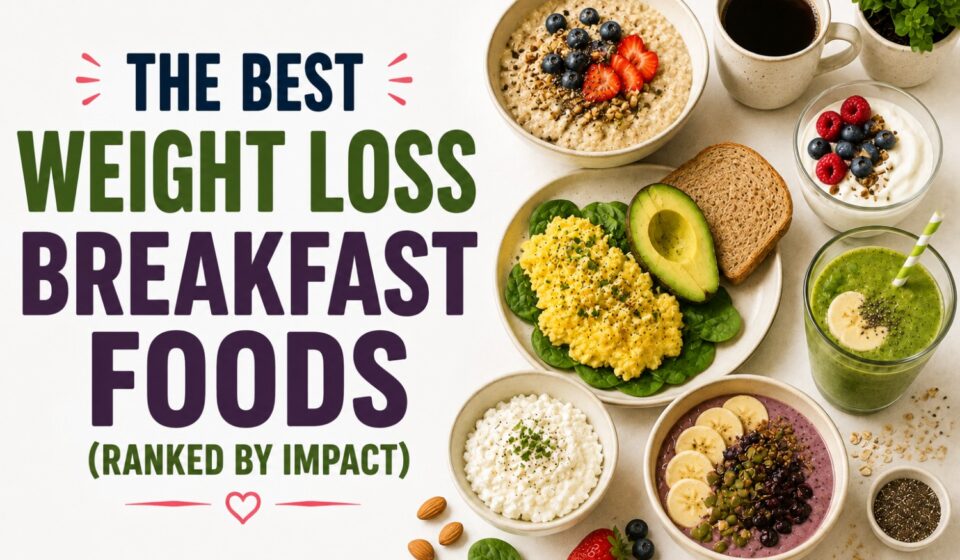

The meal that sets the tone for everything that follows — here’s which breakfast foods produce the best fat loss results and why
Breakfast is the most contested meal in weight loss. Some research suggests it’s the most important meal of the day. Other research finds skipping it entirely (intermittent fasting) produces equivalent weight loss outcomes. The truth lies in understanding what breakfast actually does metabolically — and which foods make it work for fat loss rather than against it.
The short version: breakfast matters most in terms of WHAT you eat, not whether you eat it. A high-protein, high-fiber breakfast produces measurably different outcomes than a high-carbohydrate, low-protein one — regardless of total daily calories.

Here’s the complete ranked guide.
Why Breakfast Composition Matters for Weight Loss
The First Meal Sets the Hormonal Tone
What you eat at breakfast affects blood sugar, insulin, and hunger hormones for hours afterward — not just until lunch.
A high-glycemic breakfast (white toast, cereal, fruit juice, pastry) produces a rapid blood sugar spike followed by a crash — triggering hunger, cravings, and often overeating at lunch. Studies tracking calorie intake throughout the day consistently find people who eat high-glycemic breakfasts consume more total calories — not less — than people who eat high-protein, lower-glycemic breakfasts.
A high-protein, lower-glycemic breakfast produces stable blood sugar, suppressed ghrelin (hunger hormone), and elevated satiety hormones (GLP-1, PYY) that reduce calorie intake throughout the day.
The Protein Leverage Effect
Research from the University of Missouri and others finds that a high-protein breakfast (35g+ protein) reduces evening snacking, late-night cravings, and total daily calorie intake more effectively than lower-protein breakfasts — even when total calories are identical at breakfast.
The mechanism: protein consumed in the morning activates dopamine pathways that reduce reward-driven eating later in the day. People who eat adequate protein at breakfast are significantly less likely to reach for high-calorie snacks in the afternoon and evening.
Fiber and Blood Sugar Stability
As covered in our guide to the best high fiber foods for weight loss, fiber slows glucose absorption — preventing the blood sugar spikes and crashes that drive mid-morning hunger. A fiber-rich breakfast extends satiety significantly beyond its calorie content.
The Best Weight Loss Breakfast Foods — Ranked
Tier 1: The Most Powerful Breakfast Foods
1. Eggs — The Gold Standard
Per 3 large eggs: 210 calories, 18g protein, 0g fiber
Eggs are the most studied breakfast food for weight loss — with consistent evidence across multiple controlled trials:
- A landmark study found people who ate eggs for breakfast consumed 330 fewer calories over the following 36 hours compared to people who ate a calorie-matched bagel breakfast — despite identical breakfast calorie counts
- Eggs produce significantly higher satiety hormone responses than carbohydrate-equivalent breakfasts
- The protein quality of eggs is exceptionally high — biological value of 100, meaning all essential amino acids in optimal ratios
Preparation matters: Scrambled, poached, or boiled eggs with vegetables are the weight loss preparation. Adding significant butter, cream, or oil adds calories that reduce the satiety-per-calorie advantage.
The choline advantage: Eggs are the primary dietary source of choline — essential for liver fat metabolism and brain function. As covered in our guide to how to lose weight with fatty liver disease, choline deficiency directly impairs liver fat export.
Practical: 3 scrambled eggs with spinach, mushrooms, and cherry tomatoes — 280 calories, 20g protein, a genuinely complete breakfast.
2. Greek Yogurt (Plain, Non-Fat) — Most Convenient
Per 200g serving: 116 calories, 17-20g protein, 0g fiber
Plain non-fat Greek yogurt has an extraordinary protein-to-calorie ratio — better than most meat sources by this metric. It also provides:
- Casein protein — slow-digesting, providing sustained amino acid release
- Probiotics — supporting the gut microbiome increasingly linked to metabolic health
- Calcium — which has independent evidence for modest fat loss support
The plain requirement: Flavored Greek yogurts add 10-20g of sugar that significantly worsens the glycemic response. Plain Greek yogurt with berries and a drizzle of honey (if needed) is dramatically better than pre-flavored varieties.
Practical: 200g plain Greek yogurt + 1/2 cup frozen blueberries + 1 tablespoon chia seeds + cinnamon — approximately 200 calories, 20g protein, 8g fiber. Takes 90 seconds to assemble.
3. Overnight Oats — Best Fiber + Protein Combination
Base recipe (oats + Greek yogurt + chia): ~300-350 calories, 25g protein, 9g fiber
Overnight oats combine the beta-glucan fiber of oats (one of the most studied satiety fibers) with Greek yogurt’s protein — producing one of the most satiating breakfasts available.
Beta-glucan specifically:

- Forms a viscous gel that slows gastric emptying dramatically
- Reduces post-breakfast blood sugar spike by 20-30%
- Lowers LDL cholesterol significantly with regular consumption
- Feeds beneficial gut bacteria that produce satiety-signaling short-chain fatty acids
Preparation: Mix 50g rolled oats + 150g Greek yogurt + 150ml almond milk + 1 tablespoon chia seeds + cinnamon the night before. Refrigerate. Top with berries in the morning. Zero morning effort.
4. Cottage Cheese — Most Underrated Breakfast
Per 200g serving: 160 calories, 22g protein, 0g fiber
Cottage cheese has the highest protein content of any common dairy breakfast food — yet is almost never recommended despite this. Its mild flavor works both sweet (with fruit and honey) and savory (with cucumber and herbs).
The casein protein in cottage cheese is particularly valuable at breakfast — slow digestion means amino acid release continues for 7-8 hours, supporting muscle preservation throughout the morning even without additional protein intake.
Practical: 200g cottage cheese + diced pear + cinnamon + walnuts — approximately 300 calories, 25g protein. Takes 2 minutes.
5. Smoked Salmon — Highest Protein + Omega-3 Breakfast
Per 100g: 117 calories, 18g protein, omega-3 fatty acids
Smoked salmon on whole grain toast or in eggs provides high-quality protein alongside EPA and DHA omega-3 fatty acids — the most bioavailable anti-inflammatory fats available. As covered in our guide to the best anti-inflammatory foods for weight loss, omega-3 fatty acids reduce the inflammation that impairs fat metabolism.
The protein-omega-3 combination at breakfast is nutritionally exceptional — addressing both satiety and metabolic inflammation simultaneously.
Practical: 2 poached eggs + 75g smoked salmon + spinach — approximately 300 calories, 30g protein.
Tier 2: Excellent Weight Loss Breakfasts
6. Protein Smoothie (Built Correctly)
Per serving: 300-380 calories, 30-40g protein, 6-8g fiber
As covered in our guide to the best smoothies for weight loss, a properly built protein smoothie — with protein powder or Greek yogurt as the base, berries, spinach, and chia seeds — is a convenient, portable, high-protein breakfast.
The key distinction: protein-first smoothies vs. fruit-first smoothies. The former supports weight loss; the latter undermines it.
Best for: People with early morning schedules who need portability and speed.
7. Chia Pudding
Per serving (4 tablespoons chia + 240ml almond milk): 230 calories, 8g protein, 16g fiber
Chia pudding has an extraordinary fiber content — 16g fiber per serving from the chia seeds alone. The fiber forms a gel that produces exceptional physical satiety. Add protein powder or Greek yogurt to increase protein content to weight loss-appropriate levels.
Preparation: Mix chia seeds + almond milk + cinnamon + vanilla + protein powder the night before. Refrigerate. Ready in the morning.
8. Avocado Toast (Done Right)
Per serving (1 slice whole grain + 1/2 avocado + 2 eggs): 380-420 calories, 20g protein, 9g fiber
Avocado toast has a reputation for being overpriced and diet-forward. Done right — on 100% whole grain bread with eggs — it’s a genuinely nutritious high-fiber, high-protein breakfast.
Done wrong — white bread, full avocado, no protein — it’s a high-calorie, low-protein meal that leaves most people hungry by 10am.
The rule: Always add eggs or smoked salmon. Never use white bread.
9. Kefir
Per 240ml: 110 calories, 11g protein, high probiotic content
Kefir is fermented dairy — higher in protein than regular milk, with 30+ probiotic strains vs. the 2-7 typically found in yogurt. The probiotic diversity supports gut microbiome health increasingly linked to metabolic function and fat loss.
Works as a breakfast drink or as the liquid base for smoothies and overnight oats.
10. Whole Grain Toast With Nut Butter and Cottage Cheese
Per serving: 320-350 calories, 20g protein, 6g fiber
Combining whole grain bread’s fiber with nut butter’s healthy fat and cottage cheese’s protein produces a balanced breakfast that hits multiple satiety mechanisms simultaneously.
The key: use 1 tablespoon of nut butter (not 3), and add cottage cheese as the primary protein source rather than relying on nut butter’s modest protein content.
The Worst Breakfast Foods for Weight Loss
Understanding what to avoid is as important as knowing what to eat:
Sweetened cereal: 200-400 calories, 2-4g protein, 1-2g fiber, high glycemic — sets up blood sugar crash and morning hunger within 90 minutes.
Granola: Marketed as healthy but typically 400-500 calories per cup with 20-30g added sugar. Most people eat 2-3x the labeled serving size.
Fruit juice: As covered in our guide to the best and worst drinks for weight loss, fruit juice is concentrated sugar without the fiber that makes whole fruit appropriate. Orange juice at breakfast spikes blood sugar and sets up insulin-driven hunger within hours.
Flavored yogurt: Pre-flavored yogurts contain 15-25g added sugar — undermining all the protein benefits of the dairy base.
Bagels and white toast (alone): Refined carbohydrate with minimal protein or fiber — produces the worst blood sugar response of common breakfast foods. If eating toast, always with a significant protein source.
Muffins and pastries: Essentially dessert with a breakfast label. A commercial muffin is typically 400-500 calories with minimal protein and fiber.
“Healthy” breakfast bars: Most contain 20-30g sugar alongside 5-8g protein — worse than the granola bars they’re meant to replace.
The Breakfast Protein Target
The research is clear on one number: 30g of protein at breakfast produces the most consistent downstream effects on daily calorie intake, evening snacking, and weight loss outcomes.
Most people consume 10-15g of protein at breakfast. Moving to 30g:
- Reduces lunchtime calorie intake by 15-20%
- Reduces evening snacking significantly
- Reduces total daily calorie intake by 200-300 calories without deliberate restriction
Achieving 30g protein at breakfast:
- 3 eggs + Greek yogurt: 35g
- Protein smoothie: 30-40g
- Cottage cheese + eggs: 30g
- Greek yogurt + protein powder: 35-40g
- Smoked salmon + eggs: 30g
As covered in our guide to how much protein you actually need per day, front-loading protein at breakfast is one of the most effective single dietary changes for weight loss.
Does Breakfast Need to Be Eaten in the Morning?
For people following intermittent fasting — no. The “breakfast” in this context refers to the first meal of the day regardless of timing. Whether eaten at 7am or noon, the same principles apply: protein-first, fiber-rich, low-glycemic.
The evidence for breakfast specifically supports eating within 1-2 hours of waking for people who are hungry in the morning — but doesn’t suggest people who aren’t hungry should force-feed themselves breakfast.
The Bottom Line
The best weight loss breakfast foods — ranked:
Tier 1 (Highest Impact):
- Eggs — gold standard protein, extraordinary satiety evidence
- Greek yogurt (plain) — most convenient high-protein option
- Overnight oats — best fiber + protein combination
- Cottage cheese — most underrated, highest dairy protein
- Smoked salmon — best protein + omega-3 combination
Tier 2 (Excellent): 6. Protein smoothie (built correctly) 7. Chia pudding 8. Avocado toast (with eggs) 9. Kefir 10. Whole grain toast + nut butter + cottage cheese
The non-negotiable rule: 30g protein at breakfast. Everything else is secondary.
Avoid: Sweetened cereal, granola, fruit juice, flavored yogurt, bagels alone, muffins, pastries, “healthy” breakfast bars.
For the complete dietary framework, our guide to how to get rid of belly fat covers everything in one place.
What’s your go-to weight loss breakfast — and have you noticed a difference in hunger and energy when you eat high protein vs. high carb in the morning? Share in the comments.
Stop Wondering What to Eat This Week
Get my free 7-Day High-Protein Weight Loss Meal Plan delivered straight to your inbox — a simple week of satisfying, protein-focused meals designed to make healthy eating easier without complicated calorie tracking.
- 7 full days of breakfast, lunch, dinner & snacks
- One complete shopping list for the whole week
- A quick high-protein food cheat sheet
- Simple daily tips to help you stay on track
Free PDF • Delivered by email • Unsubscribe anytime
Check your inbox 💜
Your free 7-day high-protein meal plan is on its way.