
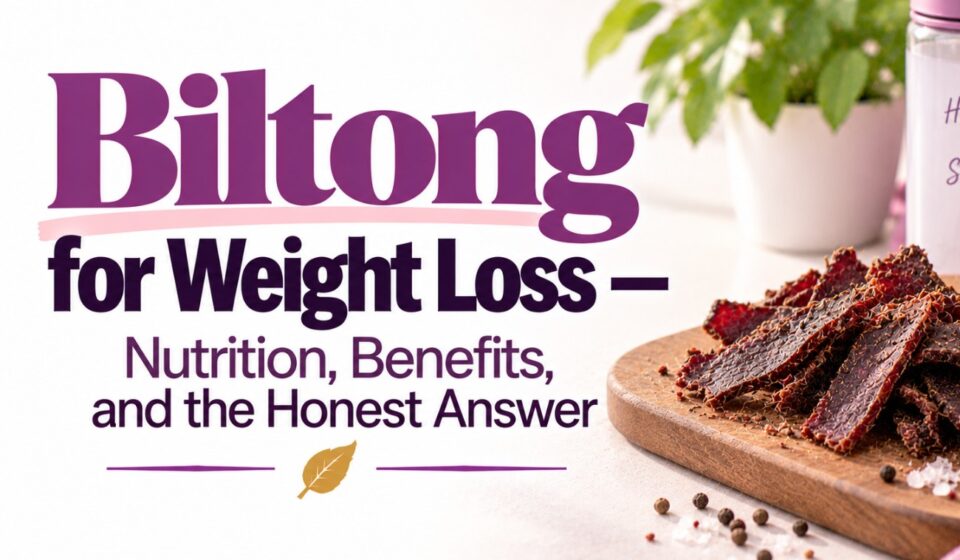

The South African dried meat that’s genuinely one of the best high-protein snacks for weight loss — here’s why
Biltong has been a staple in South Africa for centuries — and is rapidly gaining popularity globally as people discover it’s one of the most weight-loss-friendly snacks available. High protein, low carbohydrate, minimal processing, genuinely satisfying — biltong deserves more attention in the weight loss conversation than it currently gets.
Here’s the complete honest guide.

What Is Biltong?
Biltong is a South African cured meat — traditionally made from beef, but also available in game meats (ostrich, kudu, springbok) and occasionally chicken or fish. The name comes from Dutch: “bil” (buttock) and “tong” (strip).
Traditional biltong production:
- Meat is cut into strips
- Marinated in vinegar (typically apple cider or malt vinegar)
- Coated with salt, coriander, black pepper, and spices
- Air-dried for several days at controlled temperature and humidity
The key distinction from jerky:
Biltong is air-dried (not heat-dried or smoked), uses vinegar as a curing agent, and contains no added sugars in traditional recipes. These differences produce a meaningfully different nutritional profile — particularly for weight loss purposes.
Biltong Nutritional Profile
Per 30g serving of traditional beef biltong (approximate):
- Calories: 75-90
- Protein: 16-18g
- Fat: 1.5-3g (lean cuts) — up to 5-6g (fattier cuts)
- Carbohydrates: 0-1g
- Sodium: 400-600mg
- Iron: approximately 15-20% daily value
- Zinc: approximately 20-25% daily value
- B12: approximately 30-40% daily value
The headline numbers:
16-18g of protein per 30g serving — with essentially zero carbohydrates. This protein density is exceptional for a snack food.
Why Biltong Is Excellent for Weight Loss
1. Extraordinary Protein-to-Calorie Ratio
Biltong provides approximately 60% of its calories from protein — one of the highest protein percentages of any commonly available snack.
As covered in our guide to how much protein you actually need per day — protein is the most important dietary variable for weight loss quality:
- Suppresses appetite more powerfully than carbohydrates or fat
- Produces the highest thermic effect — burning approximately 25-30% of its calories through digestion
- Preserves muscle during a calorie deficit
- Reduces ghrelin (hunger hormone) and increases satiety hormones
A 30g serving of biltong (approximately 80 calories, 17g protein) produces significantly more satiety than the same calories from almost any other snack category.
2. Zero or Near-Zero Carbohydrates
Traditional biltong contains essentially no carbohydrates — making it compatible with virtually every dietary approach:
- Standard calorie deficit — fits easily within any calorie target
- Low-carb — zero net carbs
- Keto — perfect fit with no carbohydrate concern
- High-protein — exceptional protein-to-calorie ratio
- Intermittent fasting — minimal caloric impact, high protein
As covered in our guide to high-protein low-carb diets explained — zero-carbohydrate protein sources are the most diet-compatible foods available.
3. Genuine Satiety Per Calorie
Protein is the most satiating macronutrient — and biltong delivers it in concentrated form. The combination of:
- High protein (satiety hormone stimulation)
- Chewy texture (requires more chewing — slows eating rate)
- Intense flavor (small amounts satisfy)
- Low calorie density
Makes biltong one of the most genuinely satisfying snack options per calorie available.
As covered in our guide to best low-calorie high-protein snacks — the combination of high protein and low calorie density is the gold standard for weight loss snacks. Biltong exemplifies this combination better than most options.
4. Minimal Processing — Real Food Ingredients
Traditional biltong contains:
- Beef
- Vinegar
- Salt
- Coriander
- Black pepper
- Sometimes: chilli, garlic
That’s it. No preservatives beyond the salt and vinegar curing process. No artificial colors, flavors, or additives.
As covered in our guide to what’s wrong with ultra-processed food — minimally processed whole foods behave differently in the body than ultra-processed alternatives. Biltong’s clean ingredient profile puts it in a genuinely different category from most commercial snack foods.
5. Micronutrient Density
Biltong provides meaningful amounts of nutrients that support weight loss:
Iron: Important for energy metabolism and oxygen transport. Iron deficiency — extremely common, particularly in women — causes fatigue that limits both exercise capacity and dietary adherence. As covered in our guide to how to lose weight with anemia — adequate iron supports the energy levels needed for consistent weight loss effort.
Zinc: Supports thyroid hormone production and insulin sensitivity — both directly relevant to metabolic rate and fat metabolism.
Vitamin B12: Supports energy metabolism and is often low in people who eat limited red meat.
Creatine: Beef is one of the primary dietary sources of creatine — which supports muscle performance and recovery from exercise.
Biltong vs. Beef Jerky — An Important Distinction
Biltong and beef jerky are often compared — but they’re meaningfully different for weight loss:

| Biltong | Beef Jerky | |
|---|---|---|
| Drying method | Air-dried | Heat-dried/smoked |
| Added sugar | None (traditional) | Often 5-8g per serving |
| Carbohydrates | 0-1g | 5-10g typical |
| Protein per 30g | 16-18g | 9-12g |
| Additives | Minimal | Often significant |
| Texture | Moist, tender | Dry, tough |
| Calorie density | Lower | Higher (due to sugar) |
The sugar difference is the most significant:
Most commercial beef jerky contains added sugar — sometimes as much as 8g per serving (equivalent to 2 teaspoons of sugar). Traditional biltong contains none.
As covered in our guide to does sugar cause weight gain — even small amounts of added sugar in snack foods affect blood sugar response and satiety. Biltong’s zero-sugar profile produces a fundamentally different metabolic response than sugar-containing jerky.
Types of Biltong — Which Is Best for Weight Loss?
Beef biltong:
The most common and most researched. Lean beef cuts (silverside, topside) produce lower-fat biltong. Fattier cuts increase caloric density but also increase satiety.
Ostrich biltong:
Exceptionally lean — lower fat than even lean beef biltong. Higher protein percentage than beef. Excellent for people minimizing fat intake alongside protein maximization.
Kudu and game biltong:
Wild game meats are typically leaner than farmed beef with higher omega-3 content. Nutritionally excellent — less commonly available outside South Africa.
Droëwors (dried sausage):
A related South African product — dried sausage rather than whole muscle meat. Higher fat content than biltong due to sausage fat content. Less favorable protein-to-fat ratio for weight loss purposes.
Wet vs. dry biltong:
Biltong can be dried to different moisture levels. Wetter biltong has slightly lower caloric density per gram. Drier biltong is more concentrated — more protein and calories per gram but longer shelf life.
The Sodium Consideration
Biltong contains meaningful sodium — typically 400-600mg per 30g serving. This is the primary dietary consideration alongside its excellent protein profile.
As covered in our guide to is salt bad for weight loss — sodium doesn’t cause fat gain but does cause fluid retention that affects scale weight. Regular high biltong consumption may contribute to fluid retention that masks fat loss progress on the scale.
Practical sodium management:
- Be aware of total daily sodium intake if eating biltong regularly
- Look for lower-sodium biltong varieties where available
- Account for biltong’s sodium when planning other meal choices
Biltong as a Weight Loss Tool — Practical Applications
High-Protein Snack Between Meals
The most valuable use of biltong for weight loss — a 30g portion between meals:
- Provides 16-18g protein to maintain satiety
- Prevents the blood sugar drops that drive poor food choices
- Requires zero preparation
- Is genuinely satisfying without being calorie-dense
As covered in our guide to snacking for adults — protein-forward snacking between meals reduces total daily calorie intake by managing hunger more effectively than carbohydrate snacks.
Pre-Workout Protein
A small biltong portion (20-30g) before exercise provides protein without the digestive load of a larger meal. As covered in our guide to what to eat before and after a workout for weight loss — pre-workout protein supports both performance and muscle preservation.
Travel and On-the-Go Protein
Biltong requires no refrigeration, no preparation, and minimal packaging. For people who travel frequently — as covered in our guide to how to lose weight when you travel a lot — having high-protein snacks that don’t require refrigeration or preparation is genuinely valuable.
Replacing Ultra-Processed Snacks
The most impactful use — replacing chips, crackers, chocolate bars, and other ultra-processed snacks with biltong:
| Snack swap | Calories saved | Protein gained |
|---|---|---|
| Biltong (30g) vs chips (30g) | Save 80 calories | Gain 12g protein |
| Biltong (30g) vs chocolate bar (30g) | Save 80 calories | Gain 14g protein |
| Biltong (30g) vs crackers (30g) | Save 50 calories | Gain 13g protein |
This swap is one of the highest-return dietary changes available for people who currently snack on processed foods.
GLP-1 Medication Users
As covered in our guide to GLP-1 friendly foods — protein adequacy is the primary nutritional challenge on GLP-1 medications. Biltong’s high protein density in small, easy-to-eat portions makes it particularly valuable for GLP-1 users who struggle to consume adequate protein within reduced appetite.
Potential Considerations
Sodium content:
As noted — meaningful sodium per serving. People managing hypertension should account for this. As covered in our guide to how to lose weight with high blood pressure — sodium management is particularly important for people with hypertension.
Red meat and processed meat considerations:
Biltong is a processed meat — the WHO classifies processed meats as Group 1 carcinogens based on epidemiological evidence. The absolute risk increase from moderate consumption is small, but worth knowing. Most nutrition guidelines recommend limiting processed meat consumption rather than eliminating it entirely.
Quality variation:
Commercial biltong quality varies significantly. Some products add sugars, artificial preservatives, or flavor enhancers that undermine the clean ingredient profile. Read ingredient lists — traditional biltong should contain meat, vinegar, salt, and spices only.
Price:
Quality biltong is more expensive than most snack alternatives. Per gram of protein — it’s competitive with quality protein bars but more expensive than eggs or Greek yogurt.
Biltong vs. Other High-Protein Snacks
| Snack | Protein/30g | Calories/30g | Carbs/30g | Preparation |
|---|---|---|---|---|
| Biltong | 16-18g | 75-90 | 0-1g | None |
| Beef jerky | 9-12g | 80-100 | 5-10g | None |
| Greek yogurt (150g) | 15g | 90 | 6g | None |
| Hard-boiled egg (1) | 6g | 70 | 0g | Prep ahead |
| Protein bar | 10-20g | 150-250 | 15-30g | None |
| Canned tuna (60g) | 14g | 65 | 0g | Minimal |
| Edamame (30g) | 4g | 37 | 2g | None |
Biltong compares extremely favorably — particularly on the protein-to-carbohydrate ratio and the absence of preparation requirement.
The Bottom Line
Is biltong good for weight loss?
Yes — genuinely and for multiple specific reasons:
- ✅ Exceptional protein density (16-18g per 30g serving)
- ✅ Zero carbohydrates in traditional recipes
- ✅ Minimal processing — clean ingredient profile
- ✅ Genuinely satisfying — chewy texture slows eating
- ✅ Meaningful iron, zinc, and B12 content
- ✅ No refrigeration needed — convenient
- ✅ Compatible with virtually every dietary approach
The considerations:
- ⚠️ Sodium content — account for in overall daily intake
- ⚠️ Processed meat classification — moderate consumption appropriate
- ⚠️ Quality varies — check ingredient lists for added sugar
- ⚠️ More expensive than some protein alternatives
The practical recommendation:
Biltong is one of the best high-protein convenience snacks available for weight loss — particularly as a replacement for ultra-processed snack foods. A 30g portion between meals provides genuine hunger management at minimal caloric cost.
If you can find quality traditional biltong without added sugar — it deserves a regular place in a weight loss diet.
For the complete high-protein snack framework, our guides to best low-calorie high-protein snacks and how much protein you actually need per day cover where biltong fits in the broader picture.
Do you eat biltong regularly — and have you found it useful for managing hunger between meals? Share in the comments.
Stop Wondering What to Eat This Week
Get my free 7-Day High-Protein Weight Loss Meal Plan delivered straight to your inbox — a simple week of satisfying, protein-focused meals designed to make healthy eating easier without complicated calorie tracking.
- 7 full days of breakfast, lunch, dinner & snacks
- One complete shopping list for the whole week
- A quick high-protein food cheat sheet
- Simple daily tips to help you stay on track
Free PDF • Delivered by email • Unsubscribe anytime
Check your inbox 💜
Your free 7-day high-protein meal plan is on its way.


