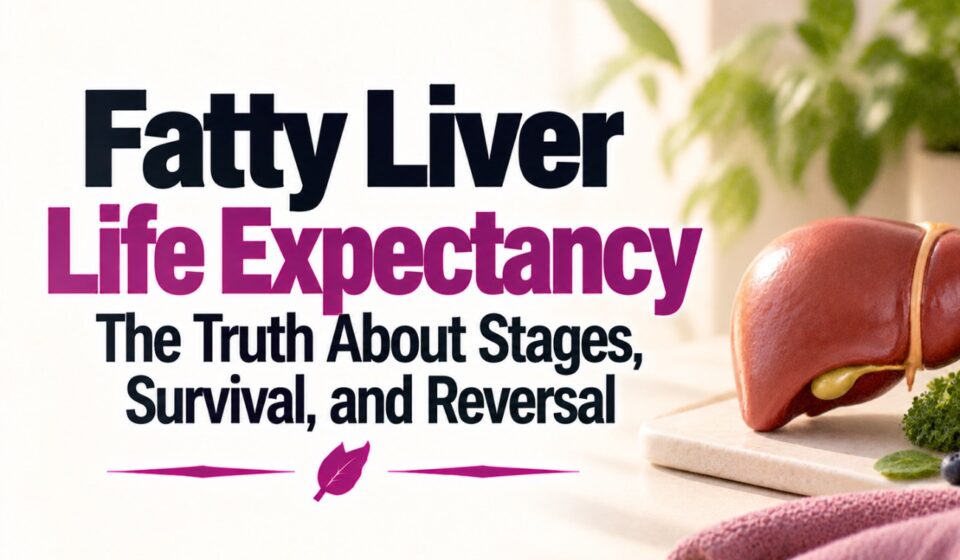
Fatty Liver Life Expectancy — The Truth About Stages, Survival, and Reversal

What a fatty liver diagnosis actually means for your long-term health — and why weight loss changes everything
A fatty liver diagnosis is frightening. People search “fatty liver life expectancy” because they want to know whether this condition will shorten their life — and they deserve an honest, clear answer rather than vague reassurances or alarming statistics without context.
The honest answer: it depends enormously on the stage of the disease and whether lifestyle changes are made. Fatty liver in its early stages is one of the most reversible conditions in medicine. Advanced stages carry serious risk. And weight loss is the most powerful intervention available at every stage.

What Fatty Liver Disease Actually Is
Fatty liver disease (medically called hepatic steatosis) occurs when excess fat accumulates in liver cells — typically when more than 5-10% of the liver’s weight is fat.
The two main types:
Alcoholic Fatty Liver Disease (AFLD): Caused by excessive alcohol consumption. The primary intervention is alcohol cessation.
Non-Alcoholic Fatty Liver Disease (NAFLD): The most common liver disease worldwide — affecting approximately 25% of the global population. Caused by metabolic factors rather than alcohol — particularly obesity, insulin resistance, and type 2 diabetes.
This guide focuses primarily on NAFLD — the type most directly connected to weight and metabolic health.
The Four Stages — What Each Means
Understanding fatty liver life expectancy requires understanding where in the disease progression you are:
Stage 1: Simple Steatosis (Simple Fatty Liver)
What it is: Fat has accumulated in liver cells but there is no significant inflammation or liver cell damage. The liver is functioning normally or near-normally.
Life expectancy impact: Simple steatosis alone does not significantly reduce life expectancy. Many people live their entire lives with simple fatty liver without it progressing to serious disease.
The risk: Without lifestyle intervention — particularly weight loss — simple steatosis can progress to NASH over years.
Reversibility: Highly reversible with weight loss. Studies consistently show that losing 5-10% of body weight reduces liver fat significantly. Losing 10%+ often resolves simple fatty liver completely.
Stage 2: NASH (Non-Alcoholic Steatohepatitis)
What it is: Fat accumulation combined with inflammation and liver cell damage. “Steatohepatitis” means fatty liver with hepatitis (liver inflammation). NASH is the more serious form of NAFLD.
Life expectancy impact: NASH does reduce life expectancy compared to the general population — primarily through increased cardiovascular disease risk (the leading cause of death in NASH patients) and progression to cirrhosis.
Studies find that people with NASH have meaningfully higher rates of cardiovascular events and liver-related mortality than the general population.
Reversibility: Still reversible with sufficient weight loss — studies show that losing 7-10% of body weight can resolve NASH histologically (on liver biopsy). This is genuinely remarkable — a condition with inflammation and cell damage can resolve with lifestyle intervention.
Stage 3: Fibrosis
What it is: Scar tissue begins forming in the liver as a result of ongoing inflammation and cell death. The liver starts losing its normal architecture.
Life expectancy impact: Fibrosis significantly increases risk of progression to cirrhosis. However — importantly — fibrosis is still potentially reversible, particularly in earlier fibrosis stages (F1-F2).
Studies have found that fibrosis regression (reversal of scar tissue) is possible with sustained weight loss — a finding that has fundamentally changed the medical understanding of fatty liver disease.
Reversibility: Partial reversal is possible with significant, sustained weight loss. The degree of reversibility decreases as fibrosis advances — but early to moderate fibrosis can genuinely improve with intervention.
Stage 4: Cirrhosis
What it is: Extensive scarring has replaced normal liver tissue. The liver can no longer perform its normal functions adequately. This is the most serious stage.
Life expectancy impact: Cirrhosis does meaningfully reduce life expectancy. The degree depends on:
- Whether the cirrhosis is compensated (liver still functioning adequately) or decompensated (liver function failing)
- Presence of complications (ascites, varices, hepatic encephalopathy)
- Underlying metabolic health
People with compensated cirrhosis can live many years. Decompensated cirrhosis carries a significantly worse prognosis.
Reversibility: Cirrhosis was long considered irreversible — but emerging research suggests some early cirrhosis may partially reverse with sustained weight loss. Advanced cirrhosis with decompensation is largely irreversible and may require liver transplant evaluation.

Life Expectancy — What the Numbers Actually Show
Rather than alarming statistics without context — here’s what the research actually shows:
Simple fatty liver (no NASH, no fibrosis): Life expectancy is not significantly different from the general population when cardiovascular risk factors are managed. Most people with simple fatty liver do not die from liver disease.
NASH without advanced fibrosis: Cardiovascular disease — not liver disease — is the leading cause of death in NASH patients. This is important context: the primary risk is heart disease, which is directly addressable through weight loss, diet, and cardiovascular risk factor management.
Advanced fibrosis and cirrhosis: Risk of liver-related mortality increases significantly. However — people who achieve significant weight loss and sustained lifestyle changes have meaningfully better outcomes than those who don’t.
The most important finding across all stages: Fibrosis stage is the strongest predictor of long-term outcomes — more important than the presence of NASH itself. People who prevent fibrosis progression — or reverse it through weight loss — dramatically improve their prognosis.
“Fatty liver disease is one of the few conditions where the most powerful treatment available — weight loss — is entirely within reach, free, and produces benefits at every stage of the disease.”
Why Weight Loss Is the Primary Treatment
There is currently no FDA-approved medication specifically for NAFLD/NASH — though several are in late-stage trials. The primary evidence-based treatment is weight loss through lifestyle intervention.
What different levels of weight loss produce:
3-5% body weight loss: Reduces liver fat content. Some improvement in metabolic markers.
5-7% body weight loss: Significant reduction in liver fat. Improvement in liver enzyme levels (ALT, AST) that reflect inflammation.
7-10% body weight loss: Can resolve NASH — eliminating the inflammation and cell damage that drives progression. This is the threshold most clinical guidelines target.
10%+ body weight loss: Associated with fibrosis regression — actual reversal of scar tissue. Multiple studies have now documented this previously thought-impossible outcome.
As covered in our guide to how to lose weight with fatty liver disease — the weight loss approach for fatty liver requires specific attention to the rate of loss and dietary composition alongside the overall deficit.
The Rate of Weight Loss Matters
This is a critical point specific to fatty liver disease:
Rapid weight loss can worsen fatty liver: Very rapid weight loss (more than 1.5-2 lbs per week) can temporarily worsen liver inflammation — through the release of fatty acids from adipose tissue faster than the liver can process them.
As covered in our guide to is losing 2 pounds a week safe — for fatty liver disease specifically, a moderate rate of weight loss (0.5-1 lb per week) is recommended over rapid approaches.
Crash diets are particularly harmful: Extended fasting, very low calorie diets (under 800 calories), and juice cleanses can trigger rapid liver fat mobilization that worsens NASH. These approaches should be avoided with fatty liver disease.
The Dietary Approach for Fatty Liver
Reduce Fructose and Added Sugar — The Most Important Dietary Change
Fructose is metabolized primarily in the liver and converted to fat through de novo lipogenesis — directly contributing to liver fat accumulation. High fructose corn syrup and added sugars are the primary dietary drivers of NAFLD.
As covered in our guide to is one type of sugar healthier than another — fructose’s liver metabolism is fundamentally different from glucose metabolism and is directly relevant to fatty liver disease.
Primary targets:
- Sweetened beverages — the single most important elimination as covered in our guide to the best and worst drinks for weight loss
- Processed foods with added sugar
- Fruit juice — concentrated fructose without fiber
Reduce Ultra-Processed Food
As covered in our guide to what’s wrong with ultra-processed food — ultra-processed foods are simultaneously high in fructose, refined carbohydrates, and inflammatory fats that directly promote liver fat accumulation and inflammation.
Prioritize Anti-Inflammatory Whole Foods
As covered in our guide to best anti-inflammatory foods for weight loss:
Particularly beneficial for fatty liver:
- Fatty fish — omega-3s directly reduce liver fat and inflammation in multiple clinical trials
- Coffee — one of the most consistent findings in fatty liver research is that regular coffee consumption is associated with reduced liver fibrosis risk. As covered in our guide to does coffee help you lose weight — coffee’s chlorogenic acids have specific hepatoprotective effects
- Olive oil — oleocanthal reduces liver inflammation
- Walnuts — omega-3 and polyphenol content supports liver health
- Green tea — catechins reduce liver fat in some studies
The Mediterranean Diet — Best Evidence for NAFLD
The Mediterranean dietary pattern has the strongest evidence of any dietary approach for NAFLD — multiple studies showing meaningful reductions in liver fat and inflammation. As covered in our guide to how to lose weight on the Mediterranean diet — this pattern naturally emphasizes the foods that benefit liver health while minimizing the fructose and processed foods that harm it.
Adequate Protein
As covered in our guide to how much protein you actually need per day — adequate protein preserves muscle during weight loss and supports liver function. Target 0.8-1g per pound of bodyweight from lean sources.
Exercise for Fatty Liver
Exercise reduces liver fat independently of weight loss — through mechanisms including improved insulin sensitivity, reduced de novo lipogenesis, and direct fatty acid oxidation.
The exercise finding: Studies find that aerobic exercise reduces liver fat even without significant scale weight loss — making it valuable even when the dietary deficit is modest.
As covered in our guide to aerobic exercise for weight loss — 150-250 minutes per week of moderate aerobic exercise produces meaningful liver fat reduction alongside general fat loss benefits.
Resistance training: As covered in our guide to cardio vs weights for fat loss — resistance training improves insulin sensitivity that is central to NAFLD development. The combination of aerobic and resistance training produces the best outcomes for fatty liver.
Alcohol — Complete Avoidance Is Recommended
Even moderate alcohol consumption worsens fatty liver disease:
- Alcohol is directly hepatotoxic — toxic to liver cells
- Compounds the fat accumulation and inflammation of NAFLD
- Accelerates fibrosis progression
Most hepatology guidelines recommend complete alcohol avoidance for people with NAFLD — particularly those with NASH or fibrosis. As covered in our guide to is alcohol bad for weight loss — alcohol’s effects on liver health make it particularly worth eliminating for people with fatty liver.
Monitoring and Medical Follow-Up
Regular liver function tests: ALT and AST — liver enzymes that indicate inflammation — typically improve with weight loss within weeks to months. Normalizing liver enzymes is one of the earliest signs that the approach is working.
Liver imaging: Ultrasound can assess liver fat content — useful for monitoring improvement over time.
FibroScan: A non-invasive test that measures liver stiffness — a proxy for fibrosis. More informative than ultrasound for assessing fibrosis stage.
The follow-up schedule: Your gastroenterologist or hepatologist will recommend monitoring intervals based on disease stage — typically every 6-12 months for NASH, more frequently for advanced fibrosis.
When Medical Weight Loss Support Is Appropriate
For people with fatty liver disease who have struggled to achieve the 7-10% weight loss that produces NASH resolution — medical support is particularly appropriate given the direct hepatic benefit of weight loss.
As covered in our guide to what are weight loss injections — GLP-1 medications have shown specific benefits for NAFLD beyond their weight loss effects:
- Semaglutide has shown resolution of NASH in clinical trials
- Direct effects on liver inflammation independent of weight loss
- Improvement in fibrosis in some studies
This makes GLP-1 medications particularly relevant for people with fatty liver — they address both the weight and the liver disease simultaneously.
Breeze Meds offers telehealth evaluations to assess whether prescription weight loss support is appropriate for your situation.
Check eligibility & pricing at Breeze Meds →Affiliate disclosure: We may earn a commission if you use this link. Breeze Meds provides telehealth weight-loss services. Prescription medication is only provided following an evaluation by a licensed healthcare professional and is not guaranteed.
The Bottom Line
Fatty liver life expectancy — the honest summary:
Simple fatty liver (Stage 1): Does not significantly reduce life expectancy. Highly reversible with 5-10% weight loss.
NASH (Stage 2): Increases cardiovascular risk — the primary cause of death in NASH is heart disease, not liver failure. Reversible with 7-10% weight loss.
Fibrosis (Stage 3): Increases progression risk. Early fibrosis can reverse with significant sustained weight loss. Prevention of progression is the primary goal.
Cirrhosis (Stage 4): Most serious stage with significant life expectancy impact. Still benefits from weight loss and lifestyle intervention.
The most important message: Fatty liver disease is not a passive diagnosis to monitor — it’s a condition that responds dramatically to intervention. Weight loss of 7-10% — achievable over 6-12 months with consistent effort — can resolve NASH and even reverse early fibrosis.
The life expectancy question has a better answer than most people expect — because the most powerful treatment is in your hands.
For the complete weight loss approach specific to fatty liver disease, our guide to how to lose weight with fatty liver disease covers the detailed protocol. For the dietary foundation, our guide to best anti-inflammatory foods for weight loss covers the most relevant foods.
Have you been diagnosed with fatty liver disease — and has your doctor discussed weight loss as treatment? Share your experience in the comments.
Stop Wondering What to Eat This Week
Get my free 7-Day High-Protein Weight Loss Meal Plan delivered straight to your inbox — a simple week of satisfying, protein-focused meals designed to make healthy eating easier without complicated calorie tracking.
- 7 full days of breakfast, lunch, dinner & snacks
- One complete shopping list for the whole week
- A quick high-protein food cheat sheet
- Simple daily tips to help you stay on track
Free PDF • Delivered by email • Unsubscribe anytime
Check your inbox 💜
Your free 7-day high-protein meal plan is on its way.