
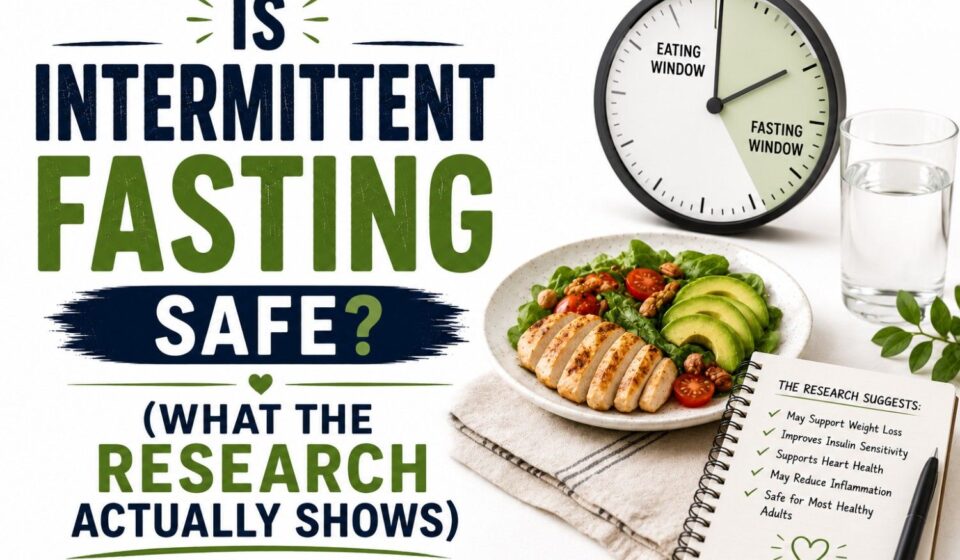

For most healthy adults, yes — but there are specific groups for whom it’s not appropriate

Intermittent fasting has gone from fringe diet to mainstream recommendation in the space of a decade. With popularity comes both enthusiasm and concern — and legitimate questions about whether fasting is actually safe, who it’s appropriate for, and what the risks actually are.
Here’s the honest, evidence-based answer.
For Most Healthy Adults: Yes, Intermittent Fasting Is Safe
The evidence base for intermittent fasting safety in healthy adults is substantial. Multiple clinical trials, meta-analyses, and long-term observational studies have found that common IF protocols — particularly 16:8 time-restricted eating and 5:2 — are safe for most healthy adults without significant adverse effects.
The human body is well-adapted to periods without food. For most of human history, eating on a rigid schedule of three meals plus snacks was not the norm. The body has sophisticated mechanisms for managing periods without food — including gluconeogenesis (producing glucose from non-carbohydrate sources), ketone production, and fat mobilization.
Common IF protocols don’t push the body into dangerous territory for healthy adults — they simply extend the overnight fasting period that everyone already does during sleep.
The Established Benefits
Beyond weight loss, research has found meaningful health benefits from intermittent fasting in healthy adults:
Improved insulin sensitivity: One of the most consistent findings — IF improves cells’ response to insulin, reducing blood sugar spikes and the fat-storage hormonal environment.
Reduced inflammation: Fasting periods reduce inflammatory markers (CRP, IL-6) that drive chronic disease.
Cellular autophagy: Fasting triggers autophagy — the body’s cellular cleanup process, removing damaged proteins and organelles. This process is associated with reduced cancer risk and slower aging in animal models, though human evidence is still developing.

Cardiovascular markers: Several studies have found improvements in blood pressure, LDL cholesterol, and triglycerides with IF protocols.
Cognitive function: Some research suggests fasting improves brain-derived neurotrophic factor (BDNF) — associated with improved cognitive function and mood.
As covered in our guide to how to lose weight with intermittent fasting, these benefits are additional to the weight loss effects — making IF potentially more broadly beneficial than simple calorie restriction.
Who Should NOT Do Intermittent Fasting
Despite its general safety for healthy adults, IF is not appropriate for everyone:
People With Type 1 Diabetes
Type 1 diabetics who take insulin face significant hypoglycemia risk during fasting periods. Blood glucose management during fasting requires very careful medical supervision. IF is not recommended without explicit guidance from an endocrinologist experienced with IF protocols.
People With Type 2 Diabetes on Medication
Type 2 diabetics on insulin or sulfonylureas (medications that lower blood sugar) face hypoglycemia risk during fasting. IF may be appropriate under medical supervision — and some research suggests it’s beneficial for type 2 diabetes — but medication adjustment is required. Not a DIY decision.
Pregnant and Breastfeeding Women
Calorie and nutrient restriction during pregnancy and breastfeeding can impair fetal development and milk production. IF is not appropriate during these periods.
People With a History of Eating Disorders
IF’s restriction framework can trigger or reinforce disordered eating patterns — restriction, obsessive food thinking, binge-restrict cycles — in people with a history of anorexia, bulimia, or binge eating disorder. IF is generally contraindicated for this group without specific professional guidance.
Children and Teenagers
Growing bodies require consistent nutrition. IF is not appropriate for anyone under 18 without specific medical indication and supervision.
People Who Are Underweight
IF is a calorie-reduction tool — inappropriate for people who are already underweight or who need to maintain or gain weight.
People on Certain Medications
Some medications require food for proper absorption or to avoid stomach irritation. Metformin, certain blood pressure medications, and NSAIDs are examples. Check with your doctor or pharmacist before starting IF if you take regular medications.
Common Side Effects (Usually Temporary)
For people who are appropriate candidates for IF, side effects are common in the first 1–2 weeks but typically resolve:
Hunger: The most common early experience. The body is accustomed to eating at certain times — habitual hunger at those times is real initially. It typically reduces significantly after 1–2 weeks of adaptation.
Headaches: Common in the first few days — often from reduced caffeine intake or slightly lower blood sugar. Adequate hydration and electrolytes (salt) typically resolve these.
Irritability (“hangry”): Short-term, related to adjustment period and blood sugar fluctuation. Usually resolves within the first week.
Low energy: Initial fatigue as the body adapts to using fat for fuel during the fasting window. Most people report improved energy after adaptation.
Difficulty concentrating: Early in adaptation, some people find concentration impaired during the fasting window. This typically improves significantly after 1–2 weeks.
Digestive changes: Some people experience constipation or changes in bowel habits — usually related to eating patterns and fiber intake changes rather than fasting itself.
These side effects distinguish IF from being dangerous — they’re adaptation symptoms, not harm. They resolve. If they’re severe or persistent beyond 3–4 weeks, reconsideration of the approach is warranted.
The Muscle Loss Question
A concern for people who do resistance training: does fasting cause muscle loss?
The evidence: When protein intake is adequate and resistance training is maintained, intermittent fasting does not cause significant muscle loss compared to continuous calorie restriction.
The key conditions:
- Adequate daily protein (0.7–1g per pound of bodyweight) — must be hit within the eating window
- Continuing strength training — the muscle preservation stimulus is essential
- Not using extreme fasting protocols (OMAD or multi-day fasting increases muscle loss risk significantly more than 16:8)
As covered in our guide to how much protein you actually need per day, protein targets don’t change with IF — they need to be met within fewer hours, which requires intentional protein-focused eating during the eating window.
Does Fasting Slow Metabolism?
This is a common concern — the idea that fasting puts the body into “starvation mode” and lowers metabolic rate.
The evidence for common IF protocols (16:8, 5:2):
Short-term fasting (up to 72 hours in some studies) does not significantly reduce resting metabolic rate — and may actually slightly increase it in the early hours through norepinephrine release.
The “starvation mode” metabolic slowdown is a real phenomenon — but it occurs with sustained, significant calorie restriction over weeks and months, not with daily 16-hour fasting windows.
As covered in our article on what happens if you eat too few calories, metabolic adaptation is driven by prolonged energy restriction — not by normal daily fasting periods.
Is Long-Term Intermittent Fasting Safe?
Most research on IF safety has examined periods of weeks to months. Longer-term data is more limited — though people in cultures that practice regular fasting (Ramadan fasting, religious fasting traditions) have been doing so for generations without clear adverse long-term health effects.
A 2024 study raised questions about cardiovascular risk with time-restricted eating — specifically finding associations between 8-hour eating windows and cardiovascular mortality. This received significant media attention and warrants monitoring, though the study had methodological limitations (observational, self-reported diet data, couldn’t establish causation). The existing body of evidence on IF and cardiovascular markers is generally positive.
The honest position: Long-term safety data is less robust than short-term data. Common IF protocols (16:8, 5:2) appear safe for healthy adults based on current evidence — but this is a developing area of research.
Signs IF Is Not Working for You
Beyond the contraindications above, stop or reconsider IF if you experience:
- Severe, persistent hunger that doesn’t improve after 3–4 weeks
- Significant muscle weakness or rapid strength loss
- Hair loss or other signs of nutritional deficiency
- Obsessive thoughts about food or eating that feel disordered
- Fainting or severe dizziness during fasting periods
- Worsening mood, anxiety, or depression
- Eating very large amounts during the eating window and feeling out of control
These are signals to reassess rather than push through.
The Bottom Line
Is intermittent fasting safe?
For most healthy adults: yes. The evidence supports 16:8 time-restricted eating and 5:2 protocols as safe for healthy adults, with meaningful potential benefits beyond weight loss.
Not appropriate for:
- Type 1 diabetics or type 2 diabetics on blood-sugar-lowering medication (without medical supervision)
- Pregnant or breastfeeding women
- People with a history of eating disorders
- Children and teenagers
- People who are underweight
- People on medications that require food
Common early side effects — hunger, headaches, irritability, fatigue — typically resolve within 1–2 weeks and don’t indicate harm.
Key safety conditions: Adequate protein within the eating window, continued strength training, appropriate hydration and electrolytes.
For the complete beginner’s guide to starting intermittent fasting correctly, our article on how to lose weight with intermittent fasting covers everything in one place.
Have you tried intermittent fasting — and did you experience side effects that resolved, or did you find it wasn’t right for you? Share in the comments.