
Two extreme low-carb approaches — here’s exactly what separates them and the honest pros and cons of each

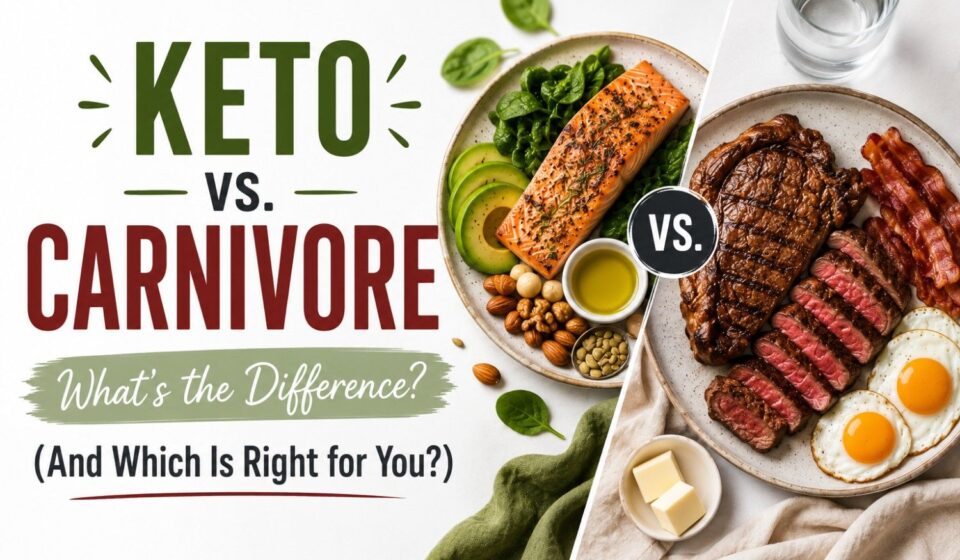
The carnivore diet has emerged from the fringes of nutrition into mainstream conversation over the past several years — driven largely by social media advocates reporting dramatic results. It’s often compared to keto, and with good reason: both eliminate carbohydrates almost entirely. But the carnivore diet takes restriction significantly further in specific ways that matter.
The Core Philosophies
Keto: A metabolic approach targeting ketosis — the body’s fat-burning metabolic state. Achieved by keeping net carbs under 20–30g daily. Plant foods are encouraged within carb limits; the focus is on macronutrient ratios.
Carnivore: An elimination approach based on the idea that animal foods are optimally nutritious and that plant foods — particularly their antinutrients, lectins, and oxalates — drive inflammation and health problems. Only animal products are consumed.
This is a fundamental philosophical difference: keto is about hitting a metabolic state; carnivore is about eliminating an entire food category based on specific health claims.
What They Share
Both keto and carnivore:
- Produce ketosis (carnivore produces deep, consistent ketosis due to zero carbohydrate intake)
- Eliminate all grains, legumes, refined carbohydrates, and processed foods
- Are very high in protein and fat
- Produce rapid initial weight loss from glycogen and water depletion
- Improve blood sugar management and insulin sensitivity
- Have devoted communities with anecdotal reports of dramatic health improvements
The Key Differences
Food Allowed
| Food | Keto | Carnivore |
|---|---|---|
| Meat (all types) | ✅ | ✅ |
| Fish and seafood | ✅ | ✅ |
| Eggs | ✅ | ✅ |
| Dairy | ✅ | Sometimes (depends on version) |
| Non-starchy vegetables | ✅ | ❌ |
| Nuts and seeds | ✅ (limited) | ❌ |
| Berries | ✅ (very limited) | ❌ |
| Avocado | ✅ | ❌ |
| Olive oil | ✅ | Sometimes |
| Seasonings and spices | ✅ | Usually ❌ |
| Coffee and tea | ✅ | Usually ❌ |
Carnivore eliminates everything plant-based — including vegetables, nuts, coffee, tea, spices, and cooking oils from plant sources.
Versions of Carnivore
The carnivore diet exists on a spectrum:
Strict carnivore: Only meat, fish, eggs, and water. Nothing else.
Standard carnivore: Meat, fish, eggs, and some dairy (butter, hard cheese). Salt permitted.

Animal-based (Paul Saladino’s approach): Meat, organs, eggs, dairy, and some fruit (particularly honey and low-toxin fruits like berries). A softer version that reintroduces some plant foods.
Lion diet: The most extreme — only ruminant meat (beef, lamb), salt, and water. Used as an elimination protocol.
Fiber and Gut Health
Keto: Includes significant dietary fiber from non-starchy vegetables, nuts, and seeds. Fiber supports gut microbiome diversity and digestive health.
Carnivore: Zero dietary fiber. Advocates claim the gut microbiome adapts; critics argue chronic zero-fiber intake poses long-term gut health risks. This is a genuinely unresolved question — long-term carnivore gut microbiome data is very limited.
Micronutrient Profile
Keto: With adequate vegetable intake, provides a broad range of vitamins, minerals, antioxidants, and phytonutrients.
Carnivore: Relies entirely on animal foods for nutrition. Well-designed carnivore diets including organ meats (particularly liver) can be surprisingly complete — liver is extraordinarily nutrient-dense. However, vitamin C is low (though advocates claim carnivores need less), and plant-derived antioxidants are absent.
The Anti-Nutrient Argument
Carnivore’s central claim is that plants contain antinutrients — lectins, oxalates, phytates, and other compounds — that drive inflammation and various health problems in susceptible individuals.
The evidence for this position:
- Some people with specific conditions (oxalate sensitivity, lectin sensitivity, autoimmune conditions) do genuinely improve when eliminating plant foods
- Specific plant compounds do impair nutrient absorption in some contexts
- The elimination effect of removing all potential irritants can be significant for people with unidentified food sensitivities
The counterargument:
- Most humans have consumed plants throughout evolution without systematic harm
- The Mediterranean diet — very high in plant foods — has some of the strongest long-term health evidence of any dietary pattern
- The “antinutrient” argument is often overstated — cooking and preparation largely neutralize most antinutrients
- Population data consistently shows plant-rich diets associated with better health outcomes
This is genuinely contested territory — the answer appears to depend significantly on individual variation.
Weight Loss: Which Produces Better Results?
Short term: Comparable — both produce rapid initial weight loss from glycogen depletion and the significant calorie restriction that comes from eliminating entire food categories.
Medium term: Some carnivore advocates report better results, attributed to:
- The extreme simplicity reducing decision fatigue and overeating
- Possible hormonal benefits from very high animal fat and protein intake
- Elimination of plant foods that some people react to
Long term: Very limited data. Carnivore is a newer dietary approach with minimal long-term controlled research. Keto has more long-term evidence, though as covered in our article on is keto safe long term, even keto’s long-term evidence is limited beyond 2 years.
For most people: Keto produces comparable weight loss results with better nutritional variety and more flexibility. Carnivore may offer advantages for specific individuals — particularly those with inflammatory conditions, autoimmune issues, or food sensitivities — but isn’t necessary for most weight loss goals.
Who Might Consider Carnivore
The primary legitimate use case for carnivore is as an elimination diet — identifying food sensitivities or managing inflammatory and autoimmune conditions.
For people who have:
- Tried multiple dietary approaches without success
- Significant digestive issues, IBS, or inflammatory bowel conditions
- Autoimmune conditions that haven’t responded to other interventions
- Suspected food sensitivities they haven’t been able to identify
…a 30–90 day strict carnivore elimination period can be genuinely informative — identifying which specific foods were causing problems when plant foods are systematically reintroduced.
As a permanent long-term dietary approach for otherwise healthy people seeking weight loss: keto or low-carb with plant foods is generally a better-supported choice.
The Honest Concerns About Carnivore
No fiber: The long-term effects of zero fiber on gut microbiome diversity are unknown and potentially concerning.
Limited long-term research: Most carnivore evidence is anecdotal and short-term. We don’t know what decades of zero plant food intake does to most people.
Nutritional completeness requires organ meat: A carnivore diet based only on muscle meat (without liver and other organs) is nutritionally incomplete. Many carnivore dieters don’t eat adequate organ meats.
Social and practical difficulty: Carnivore is extremely restrictive socially — restaurant eating, social meals, and travel become very challenging with no plant foods whatsoever.
LDL cholesterol: Some carnivore dieters experience very significant LDL increases — more so than typical keto dieters. The long-term cardiovascular implications are unclear.
The Honest Concerns About Keto (In This Comparison)
Keto is also highly restrictive — and produces its own set of challenges, as covered in our article on is keto safe long term.
Keto includes plants — which means it doesn’t fully eliminate potential plant-based irritants for people with specific sensitivities.
A Practical Recommendation
For weight loss in generally healthy people: Keto — more nutritionally complete, better long-term evidence, includes the fiber and phytonutrients from vegetables that support gut and overall health.
For people with inflammatory conditions, autoimmune issues, or unresolved digestive problems: A temporary carnivore elimination protocol (30–90 days) may be worth trying under medical supervision to identify food sensitivities — with a systematic reintroduction phase afterward.
For people who have tried keto without satisfying results: A 30-day carnivore trial is a legitimate next step — the extreme simplicity and elimination effect may produce results where keto didn’t.
As covered in our guide to what is the best diet for weight loss, the right approach is always the one that works for you specifically — and individual variation in dietary response is significant enough that one person’s miracle diet is another person’s misery.
The Bottom Line
Keto vs. carnivore — key distinctions:
| Keto | Carnivore | |
|---|---|---|
| Core principle | Metabolic (ketosis) | Elimination (animal only) |
| Plants | Allowed within carb limits | Excluded entirely |
| Fiber | Yes (from vegetables) | Zero |
| Dairy | Yes | Sometimes |
| Coffee/tea | Yes | Usually no |
| Ketosis | Yes | Deep, consistent |
| Evidence base | Moderate (more than carnivore) | Limited (mostly anecdotal) |
| Best for | General weight loss, metabolic conditions | Elimination protocol, inflammatory conditions |
Both produce ketosis and weight loss. Keto is better supported and more nutritionally complete for most people. Carnivore may offer specific advantages for people with inflammatory conditions, autoimmune issues, or those who’ve not responded to keto.
For the complete keto framework, our guide to how to lose weight on keto for beginners covers everything in one place.
Have you tried carnivore — and if so, what drove you to it and what were your results? Share in the comments.