
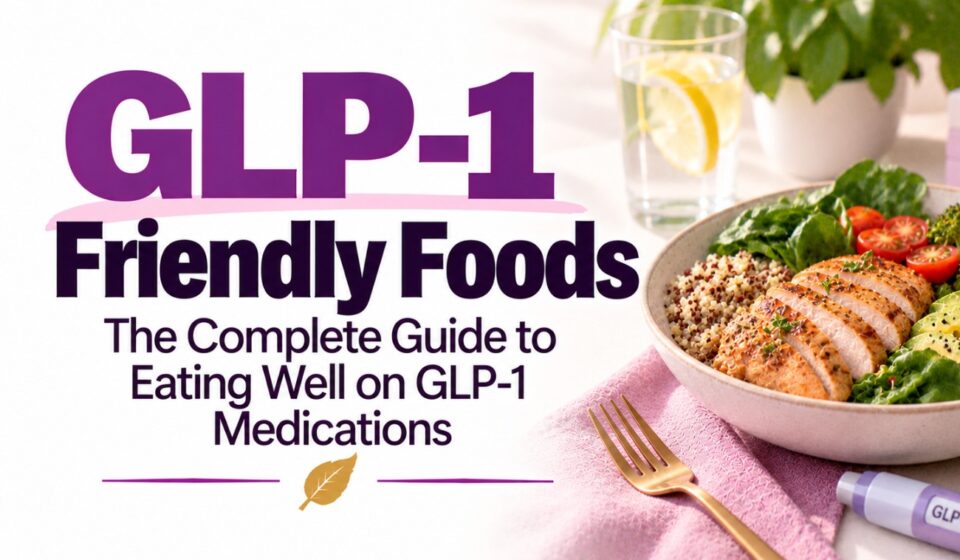
GLP-1 Friendly Foods — The Complete Guide to Eating Well on GLP-1 Medications

What to eat, what to avoid, and how to maximize results on Ozempic, Wegovy, Mounjaro, and other GLP-1 medications
GLP-1 medications — semaglutide (Ozempic, Wegovy), tirzepatide (Mounjaro, Zepbound), and others — dramatically reduce appetite and slow gastric emptying. This changes not just how much you eat, but which foods work best given these physiological changes.
Eating the wrong foods on GLP-1 medications produces nausea, digestive discomfort, and missed nutritional opportunities. Eating the right foods maximizes fat loss, preserves muscle, and minimizes side effects.

This is the complete guide.
How GLP-1 Medications Change Your Relationship With Food
Understanding the physiological changes GLP-1 medications produce clarifies why certain foods work better than others:
Dramatically reduced appetite: GLP-1 medications suppress appetite so effectively that many people struggle to eat enough — particularly enough protein. The challenge shifts from eating too much to eating enough of the right things.
Slowed gastric emptying: Food moves through the stomach more slowly than usual. This is beneficial for satiety — but means certain foods that already digest slowly can sit uncomfortably in the stomach for extended periods.
Reduced stomach capacity: Many GLP-1 users find they can comfortably eat only 50-70% of their previous meal volumes. Large meals that would have been comfortable before medication become uncomfortable or impossible.
Heightened food sensitivity: Foods that were previously well-tolerated may cause nausea or discomfort on GLP-1 medications — particularly fatty, fried, spicy, or very rich foods.
As covered in our guide to what are weight loss injections — GLP-1 medications work through appetite suppression and gastric emptying — which is exactly why dietary choices matter more, not less, while on them.
The Most Important Priority — Protein
“On GLP-1 medications, the primary dietary challenge isn’t managing calories — it’s getting enough protein within dramatically reduced appetite and meal volume. Protein adequacy is the single most important nutritional priority.”
Why protein is critical on GLP-1:
When appetite is significantly suppressed and total food intake drops dramatically — the body is in a significant calorie deficit. Without adequate protein, a substantial proportion of the weight lost comes from muscle rather than fat.
As covered in our guide to how much protein you actually need per day — muscle loss during weight loss has serious long-term consequences: lower resting metabolic rate, worse body composition, harder weight maintenance.
The specific challenge: Many GLP-1 users find that when they eat reduced amounts, they tend to eat less protein (which requires deliberate preparation) and more carbohydrates (which are more convenient and easier to eat). This pattern produces worse body composition outcomes.
Target: 0.8-1g of protein per pound of bodyweight — at the same or higher level as before starting medication, despite eating significantly less overall.
Best GLP-1 friendly protein sources — high protein, easy to eat in small amounts:
Greek yogurt: As covered in our guide to is Greek yogurt good for weight loss — 150-200g provides 15-20g protein in an easy-to-eat, gentle-on-stomach format. One of the best GLP-1 protein sources because it’s soft, cold (often better tolerated than hot food on GLP-1), and protein-dense.
Cottage cheese: Similar to Greek yogurt — high protein, soft texture, cold, easy to eat in small quantities. 150g provides approximately 17g protein.
Eggs: Soft-scrambled eggs are gentle on the stomach and highly protein-dense. 2 eggs provide approximately 12g of complete protein. Hard-boiled eggs for convenient portable protein.
Canned fish (tuna, salmon, sardines): As covered in our guide to is tuna good for weight loss — canned fish provides excellent protein in small portions. Cold or room temperature — well-tolerated by most GLP-1 users. 100g canned tuna: 25g protein, 116 calories.
Chicken breast (well-cooked, moist): Lean, high-protein — but can be dry and difficult to eat in large quantities on GLP-1. Chicken thighs or moist cooking methods (poaching, slow cooking) are better tolerated than dry-cooked breast.
Protein shakes: Particularly valuable on days when solid food is unappealing. As covered in our guide to is protein powder good for weight loss — a whey or plant-based protein shake provides 25g+ protein in liquid form that’s typically well-tolerated even on high-nausea days.
Tofu and tempeh: Soft tofu in particular — gentle texture, good protein, easily incorporated into soups and soft dishes.
Foods That Work Well on GLP-1 Medications
Vegetables — Especially Cooked and Soft
Non-starchy vegetables remain the foundation of good eating on GLP-1 — but preparation matters more than before:
Best options:
- Cooked leafy greens (spinach, kale) — wilted down to small volume, easy to eat
- Roasted or steamed zucchini, broccoli, cauliflower
- Cooked carrots and sweet potato
- Soups with blended vegetables — excellent for getting nutrition in liquid form
Why cooked over raw: Raw vegetables take significant stomach volume and can be slow to digest. On GLP-1 medications where gastric emptying is already slowed — large volumes of raw vegetables can sit uncomfortably. Cooked vegetables provide similar nutrition in easier-to-digest form.
Soups and Broths
One of the most GLP-1-compatible food formats available:
- Liquid volume fills the stomach gently without the heaviness of solid food
- Provides nutrition in easily digestible form
- Protein-rich soups (bone broth, chicken soup, lentil soup) combine protein and liquid in one
As covered in our guide to best soups for weight loss — soup’s satiety and nutritional density make it excellent for weight loss generally. On GLP-1 medications specifically — soup is often the most comfortable way to get adequate nutrition.
Eggs — Versatile and Gentle
Eggs are one of the most GLP-1-friendly foods for multiple reasons:
- Complete protein with excellent amino acid profile
- Soft scrambled preparation is very gentle on the stomach
- Versatile — breakfast, lunch, or dinner
- Quick and easy to prepare
- Highly tolerated even on higher-nausea days
As covered in our guide to are eggs good for weight loss — eggs are one of the most protein-dense, satiating foods available. On GLP-1 medications their gentle digestibility is an additional advantage.
Fish — Particularly Salmon and White Fish
Fish tends to be well-tolerated on GLP-1 medications — easier to digest than red meat, high protein, lower fat than many protein alternatives.
Salmon: Omega-3s reduce the inflammation that can occur with rapid weight loss. As covered in our guide to is salmon good for weight loss — salmon’s protein and omega-3 content make it one of the best protein sources available.
White fish (cod, tilapia, halibut): Very lean, easy to digest, mild flavor — often better tolerated than richer fish on sensitive GLP-1 stomachs.
Avocado
Avocado is one of the best GLP-1 foods — healthy fat that provides energy density in a small volume, easy to eat, gentle on the stomach, and contributes to satiety and nutrient absorption. A quarter to half an avocado added to a small meal significantly increases its caloric and nutritional value without requiring large volume.
Oatmeal
Gentle on the stomach, provides sustained energy, and can be prepared to any consistency. Steel-cut or rolled oats with protein powder or Greek yogurt mixed in provides a protein-adequate, easy-to-eat meal particularly useful for mornings when appetite is lowest.
Smoothies and Protein Shakes
When solid food is unappealing — a blended smoothie can provide:
- Complete protein (protein powder, Greek yogurt)
- Healthy fats (avocado, nut butter)
- Micronutrients (spinach, berries)
- Hydration
In a format that’s easy to consume even on low-appetite, higher-nausea days. As covered in our guide to best smoothies for weight loss — the protein-first smoothie approach is particularly relevant for GLP-1 users.
Berries and Soft Fruits
Low sugar, high fiber, gentle on digestion. Berries mixed into Greek yogurt or cottage cheese provide antioxidants and flavor alongside protein. Easier to tolerate than high-sugar fruits that can cause more significant blood sugar fluctuation.
Foods to Avoid or Limit on GLP-1 Medications
Fatty and Fried Foods
The most important avoidance category on GLP-1 medications. Fat slows gastric emptying — and GLP-1 medications already slow gastric emptying significantly. The combination produces:
- Prolonged nausea
- Severe stomach discomfort
- Prolonged fullness that prevents eating adequate protein at the next meal
Specific items to avoid:
- Deep fried food (fries, fried chicken, tempura)
- Very fatty cuts of meat
- Rich cream sauces and gravies
- Buttery preparations
High-Fat Fast Food
The combination of high fat, large portions, and low nutritional density makes fast food particularly problematic on GLP-1. As covered in our guide to can you lose weight eating fast food — fast food is difficult to incorporate into a weight loss approach generally. On GLP-1 medications — the high fat content specifically worsens nausea and discomfort.
Carbonated Beverages
Carbonation adds gas to an already-slow digestive system — causing significant bloating and discomfort on GLP-1 medications. As covered in our guide to is sparkling water good for weight loss — sparkling water is generally fine for weight loss. On GLP-1 medications specifically — it’s worth switching to still water until tolerance is established.
Alcohol
As covered in our guide to weight loss injections and alcohol — alcohol is particularly problematic on GLP-1 medications. The medications increase alcohol sensitivity — meaning smaller amounts produce stronger effects. Additionally alcohol’s empty calories and appetite-disrupting effects work against GLP-1’s benefits.
Spicy Foods
Spicy foods can worsen the nausea that some GLP-1 users experience — particularly in the early weeks of treatment. Once tolerance is established, individual responses vary significantly.
Ultra-Processed Snack Foods
As covered in our guide to what’s wrong with ultra-processed food — ultra-processed foods are engineered to override satiety signals. On GLP-1 medications — the reduced appetite that should direct eating toward nutritious food can be bypassed by the engineered palatability of ultra-processed snacks. Many GLP-1 users report that chips, crackers, and similar foods remain easy to eat even when nutritious food seems unappealing.
Very Large Portions of Any Food
GLP-1 reduces stomach capacity. Attempting to eat the same portion sizes as before medication — even of healthy foods — causes discomfort. Smaller, more frequent eating occasions (within whatever eating window is comfortable) work better than large single meals.
Practical Meal Patterns on GLP-1 Medications
The Protein-First Rule
At every eating occasion — eat protein first. Given reduced capacity, if carbohydrates and protein compete for stomach space, protein wins by default when eaten first.
Practical application:
- Eat the chicken before the rice
- Eat the Greek yogurt before the fruit
- Drink the protein shake before adding other foods
Small Frequent Eating vs. Large Meals
Many GLP-1 users find 3 small meals work better than 2 medium ones — which work better than 1 large meal. The reduced capacity means spreading nutrition across the day is more comfortable and nutritionally complete than concentrating it.
The “Protein Snack” Strategy
On days when main meals are very small — protein snacks between meals maintain protein intake:
- Hard-boiled egg
- Small Greek yogurt
- Protein shake
- Handful of edamame
- Slice of turkey
These additions fill protein gaps without requiring large meal volume.
Hydration — Separately From Meals
Drinking during meals takes up stomach volume that food needs. Many GLP-1 users find drinking 30+ minutes before or after meals rather than during them allows more food intake at mealtimes while maintaining adequate hydration.
As covered in our guide to how much water to drink to lose weight — adequate hydration remains important on GLP-1. The timing adjustment makes it more compatible with the reduced stomach capacity.
Sample Day of GLP-1 Friendly Eating
Breakfast: Greek yogurt (150g) with berries and a teaspoon of honey — 18g protein, easy to eat, gentle on stomach
Mid-morning (if hungry): Hard-boiled egg or small protein shake — 12-25g additional protein
Lunch: Soft-scrambled eggs (2-3) with wilted spinach and half an avocado — 20-25g protein, nutrient-dense, small volume
Afternoon (if hungry): Cottage cheese (100g) — 11g protein, zero preparation
Dinner: Salmon fillet (120g) with cooked zucchini and sweet potato — 30g protein, omega-3s, gentle digestion
Total protein: approximately 90-120g — sufficient for most people on GLP-1 to preserve muscle
Total calories: approximately 1,000-1,200 — a significant deficit for most people, producing meaningful fat loss
When to Adjust Your Eating Pattern
If nausea is significant: Move toward more liquid nutrition — protein shakes, soups, smoothies. Reduce fat intake to minimum. Cold foods often better tolerated than hot.
If weight loss has stalled despite medication: As covered in our guide to best diet on weight loss injections — GLP-1 medications reduce but don’t eliminate the need for dietary attention. Review whether ultra-processed “slider foods” are being consumed — foods that bypass the GLP-1 satiety effect.
If losing weight too fast (more than 1.5-2 lbs/week consistently): As covered in our guide to is losing 2 pounds a week safe — very rapid weight loss on GLP-1 increases muscle loss risk. Increase protein intake and consider adding calorie-dense nutritious foods (avocado, nuts, olive oil) to slow the rate of loss to a safer pace.
The Bottom Line
GLP-1 friendly foods — the essential principles:
Always prioritize:
- ✅ Protein first at every meal — Greek yogurt, eggs, fish, cottage cheese, protein shakes
- ✅ Soft, easily digestible preparations — cooked vegetables, soups, moist proteins
- ✅ Small portions — work with reduced capacity rather than against it
- ✅ Hydration between meals rather than during
Avoid or minimize:
- ❌ Fried and high-fat foods — worsen nausea significantly
- ❌ Carbonated beverages — bloating and discomfort
- ❌ Alcohol — increased sensitivity on GLP-1
- ❌ Ultra-processed snack foods — bypass the medication’s satiety effect
- ❌ Very large portions of anything
The overarching principle: GLP-1 medications do the appetite work. Your job is ensuring the reduced food intake is nutritionally complete — particularly protein-adequate. The medication creates the deficit. Your food choices determine whether the weight lost is primarily fat or fat-and-muscle.
For the complete GLP-1 dietary framework, our guides to best diet on weight loss injections and what are weight loss injections cover the broader context. For the protein strategy specifically, our guide to how much protein you actually need per day covers the most important nutritional priority on GLP-1 medications.
Are you on a GLP-1 medication — and which foods have you found most comfortable and satisfying? Share in the comments — real experience from this community is invaluable for others starting their GLP-1 journey.
Stop Wondering What to Eat This Week
Get my free 7-Day High-Protein Weight Loss Meal Plan delivered straight to your inbox — a simple week of satisfying, protein-focused meals designed to make healthy eating easier without complicated calorie tracking.
- 7 full days of breakfast, lunch, dinner & snacks
- One complete shopping list for the whole week
- A quick high-protein food cheat sheet
- Simple daily tips to help you stay on track
Free PDF • Delivered by email • Unsubscribe anytime
Check your inbox 💜
Your free 7-day high-protein meal plan is on its way.


